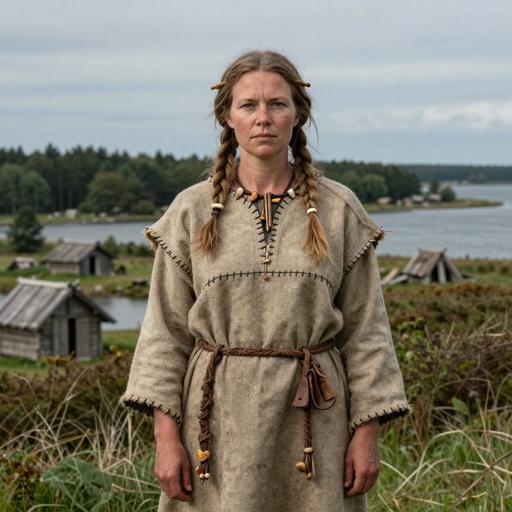
The Syltholm site in Denmark offers a fascinating glimpse into the transition from the Late Mesolithic to the Early Neolithic period, roughly covering a timeframe from about 5400 to 3950 BCE. This era marks a significant cultural transformation in Northern Europe, representative of broader changes experienced by Western European hunter-gatherers as they gradually encountered and integrated with agrarian societies.
Geographical and Environmental Context
Located on the island of Lolland, the Syltholm site provides a unique environmental context that is crucial for understanding the lifestyle and adaptations of its inhabitants. Around the transition period, Denmark's landscape was characterized by a mixture of dense forests, open landscapes, and a rich network of waterways, marshes, and coastlines. The generally mild climate allowed for diverse ecosystems, which supported abundant wildlife, providing a plethora of resources for hunter-gatherer communities.
Late Mesolithic Culture
During the Late Mesolithic, the inhabitants of areas like Syltholm primarily lived as hunter-gatherers. They were adept at exploiting marine and terrestrial resources, which is evident from archaeological findings that include tools made from stone, bone, and antler. The microlithic technology typical of this period reflects a highly specialized adaptation to the environment, featuring items such as projectile points for hunting and fishing equipment for exploiting aquatic life.
Communities were generally small, consisting of mobile bands that engaged in seasonal migrations. This lifestyle demanded an intimate knowledge of the environment and sophisticated strategies for hunting and gathering. The Syltholm site yields evidence of varied subsistence activities, including hunting deer and boar, fishing for freshwater and marine species, and gathering plant materials and shellfish.
Transition to the Early Neolithic
The transition from the Mesolithic to the Neolithic period in this region is characterized by the gradual introduction of farming and domesticated animals, likely through contact with neighboring agrarian cultures. This process was not uniform or sudden but involved a complex interplay of adoption and adaptation tailored to local conditions. The Neolithic revolution, characterized by the advent of agriculture, brought changes in settlement patterns, social structures, and material culture.
Archaeological findings at Syltholm show evidence of early farming practices, such as cereal cultivation and the presence of domesticated animals like cattle, pigs, and sheep. However, hunting and gathering did not disappear immediately; instead, communities adopted a mixed economy, combining traditional and new subsistence practices.
Social and Cultural Aspects
The introduction of agriculture catalyzed changes in social organization and cultural expression. Sedentism became more common, leading to the development of larger and more permanent settlements. This shift resulted in more complex social structures and possibly the beginnings of social stratification. Artefacts from this period include pottery, which indicates shifts in daily life and food storage practices.
Burial Practices and Ideology
Burial practices provide insights into the ideological shifts accompanying the transition to the Neolithic. Finds at Syltholm suggest a continuation of Mesolithic mortuary traditions alongside emerging Neolithic practices. This hybridization can reflect broader ideological adaptations as communities integrated new economic and social realities.
Conclusion
The Syltholm site is a key locus for understanding the Late Mesolithic to Early Neolithic transition in Scandinavia. It exemplifies the dynamic interplay between hunter-gatherer traditions and the emerging Neolithic lifestyle, unveiling the complexities of cultural adaptation and resilience. Through a detailed analysis of its archaeological record, Syltholm helps illuminate the broader transformations that shaped the prehistoric landscapes of Europe during this pivotal epoch.