mtDNA · Maternal lineage

L1B1

mtDNA Haplogroup L1B1

A reference profile for one lineage branch. Shared haplogroups do not establish a family relationship or cultural identity.

Reference profile

Branch background

Historical context for mtDNA lineage branch L1B1

Origins and Evolution

mtDNA haplogroup L1B1 is a subclade of L1B within macro-haplogroup L1, a lineage with deep roots in Africa. Given the parent haplogroup L1B's estimated origin in West/Central Africa during the Late Pleistocene (~55 kya), L1B1 is best interpreted as a later branching event within this regional context. Based on the phylogenetic position of L1B1 and comparative coalescent times for neighboring L1 subclades, a conservative estimate places the origin of L1B1 in the Late Pleistocene to early Holocene (roughly 10–40 kya), with population continuity and local diversification through the Holocene.

Over time L1B1 diversified locally among West African hunter-gatherer and early Holocene communities and later persisted in expanding farming and pastoralist groups. Its presence in diverse West and Central African groups today, and in the African diaspora of the Americas, reflects both deep regional continuity and historical movements including trans-Saharan contacts and the trans-Atlantic slave trade.

Subclades

L1B1 functions as an intermediate clade within L1B; specific internal substructure has been reported in regional sequencing studies but remains less well resolved than some other L haplogroups because of sampling gaps across West and Central Africa. Where full mtDNA genomes have been analyzed, L1B1 branches into local variants that show geographic clustering (for example, variants more common in coastal West Africa versus Sahelian communities). Continued whole-mtGenome sequencing and better sampling of understudied Central African populations will refine the internal topology and divergence dates of L1B1 subclades.

Geographical Distribution

The highest frequencies and diversities of L1B1 are found in West Africa, especially among populations in the Gulf of Guinea and adjacent interior regions. L1B1 occurs at moderate frequencies in some Central African groups, including certain Pygmy populations, reflecting ancient regional connections or gene flow. Low frequencies appear in North Africa and Sahelian populations consistent with historical north–south movements, and L1B1 is observed in African-descended populations in the Americas as a result of the trans-Atlantic slave trade.

Historical and Cultural Significance

While mitochondrial lineages do not map neatly onto archaeological cultures, the distribution and age of L1B1 align it with several important demographic processes in West/Central Africa. These include continuity from Late Pleistocene and early Holocene hunter-gatherer populations through later Holocene developments (local food-production systems, regional networks), and major historical events that redistributed African maternal lineages, most notably the trans-Atlantic slave trade which introduced L1B1 into American populations. L1B1 therefore serves as a useful maternal marker for studies of ancient population structure in West/Central Africa and the maternal component of African diasporas.

Conclusion

L1B1 is a regionally informative mtDNA clade that highlights deep West/Central African maternal ancestry. It reflects both ancient local diversification and later historical movements that shaped present-day African and African-descended populations. Improved sampling and full mitogenome analyses will continue to clarify its substructure and the timing of its expansions.

Key Points

  • Origins and Evolution
  • Subclades
  • Geographical Distribution
  • Historical and Cultural Significance
  • Conclusion
Reference profile

Tree & Relationships

Phylogenetic context and subclades

Evolution Path

Follow the recorded parent branches toward L1B1. Dates are estimates and can change as reference data is revised.

Steps Haplogroup Age Estimate Archaeology Era Time Passed Immediate Descendants Tested Modern Descendants Ancient Connections
1 L1B1 Current ~35,000 years ago Paleolithic 35,000 years 1 122 0
2 L1B ~55,000 years ago Paleolithic 55,000 years 2 150 0
3 L1 ~150,000 years ago Paleolithic 150,000 years 3 503 4
4 L1'2'3'4'5'6'7 - - - 2 31,852 0
5 L ~160,000 years ago Paleolithic 160,000 years 2 32,236 5

Siblings (1)

Other branches from the same parent haplogroup

Reference profile

Where in the World

Geographic distribution and modern presence

Recorded origin

West/Central Africa

Modern Distribution

The populations where mtDNA haplogroup L1B1 is found include:

  1. Yoruba (Nigeria, West Africa)
  2. Mende (Sierra Leone, West Africa)
  3. Akan (Ghana / Ivory Coast, West Africa)
  4. Mandinka and other Mande groups (West Africa)
  5. Fulani (West and Central Sahel)
  6. Mbuti and other Central African Pygmy groups (low to moderate frequencies in some surveys)
  7. African-descended populations in the Americas (African American, Afro-Caribbean, Afro-Brazilian) — via the trans-Atlantic slave trade
  8. Sahelian and North African populations (low frequencies consistent with historical admixture)
Historical context

A branch through time

Estimated formation in a broad historical timeline. Period markers provide context and do not imply a connection with particular cultures.

  1. ~50k years ago

    Upper Paleolithic

    Advanced tool-making, art, and cultural explosion

  2. ~35k years ago

    Haplogroup L1B1

    Estimated formation of this mtDNA branch; dates and locations are reference estimates.

    This branch
  3. ~20k years ago

    Last Glacial Maximum

    Peak of the last ice age, populations isolated

  4. ~10k years ago

    Neolithic Revolution

    Agriculture begins, settled communities form

  5. ~5k years ago

    Bronze Age

    Metalworking, writing, and early civilizations

  6. ~3k years ago

    Iron Age

    Iron tools, expanded trade networks

  7. ~2.5k years ago

    Classical Antiquity

    Greek and Roman civilizations flourish

  8. Present

    Present Day

    Modern era

Reference profile

Archaeological context

Recorded archaeological associations for mtDNA branch L1B1

Recorded associations

These labels describe archaeological contexts recorded for reference samples linked to L1B1. An association does not establish that all carriers belonged to a culture or followed a particular migration route.

Afro-Mexican Corded Ware Italy_Sicily_IA_b_IA_c_Punic Italy_Sicily_IA_b_Punic-oAfrica Jordanow-Michelsberg Culture Los Millares Mtwapa Nubian Christian St. Helena Colonial Unetice Culture
Culture assignments are based on archaeological context of ancient DNA samples and may represent regional associations during specific time periods.
Reference profile

Sample Catalog

10 subclade carriers of haplogroup L1B1 (no direct carriers in the current reference selection)

10 shown · 10 matching samples

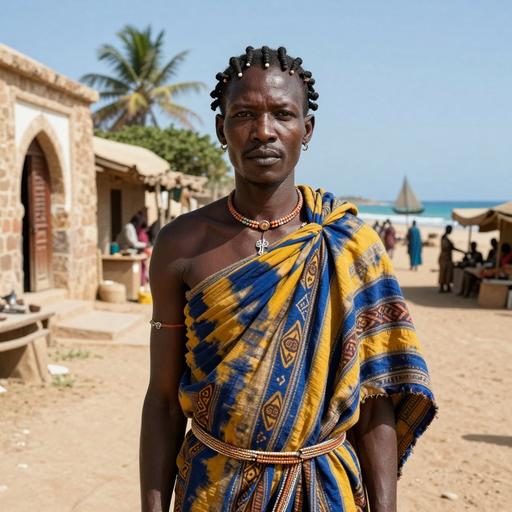
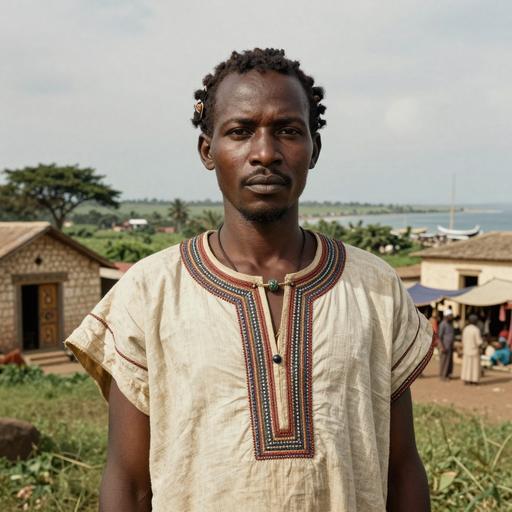
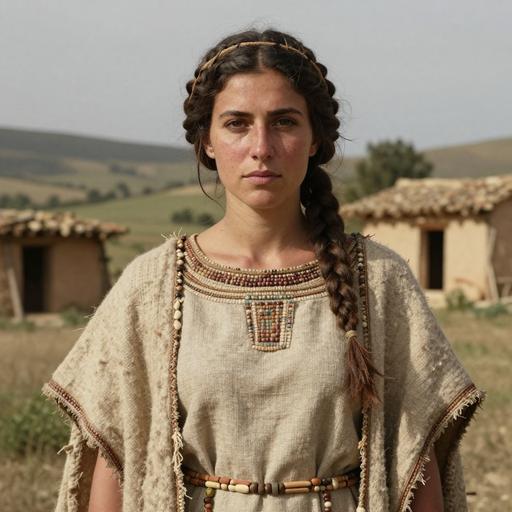
Portraits are AI-generated illustrations. Sample labels and accession IDs identify the reference records.

Portrait Sample Country Era Date Culture mtDNA Match
AI-generated illustrative portrait of Sicily IA b IA Punic individual, Lilybaeum-Via De Gasperi (Sicily, Trapani, Marsala), Italy (524-176 BCE)
Sample ID: I7453
Italy Italy Sicily IA b IA c Punic 500-200 BCE Italy_Sicily_IA_b_IA_c_Punic L1b1a Subclade
AI-generated illustrative portrait of Nubian Civilization individual, Nubia. Kulubnarti. Cemetery S, Sudan (650-1,050 CE)
Sample ID: I17482
Sudan Early Christian Era in Sudan 650 CE - 1050 CE Nubian Christian L1b1a2a Subclade
AI-generated illustrative portrait of Nubian Civilization individual, Nubia. Kulubnarti. Cemetery S, Sudan (650-1,050 CE)
Sample ID: I18518
Sudan Early Christian Era in Sudan 650 CE - 1050 CE Nubian Christian L1b1a2 Subclade
AI-generated illustrative portrait of Sicily IA b Punic-o Africa individual, Marsala (Sicily, Trapani), Italy (724-376 BCE)
Sample ID: I24673
Italy Italy Sicily IA b Punic oAfrica 700-400 BCE Italy_Sicily_IA_b_Punic-oAfrica L1b1a+189 Subclade
AI-generated illustrative portrait of Kulubnarti21 S46 Kulubnarti S Christian individual, Nubia. Kulubnarti. Cemetery S, Sudan (772-949 CE)
Sample ID: I6334
Sudan Early Christian Era in Sudan 772-949 calCE (1180±24 BP, UGAMS-34400) Nubian Christian L1b1a2a Subclade
AI-generated illustrative portrait of Medieval Swahili individual, Mtwapa (Kilifi), Kenya (1,250-1,650 CE)
Sample ID: I24662
Kenya Swahili Culture of Mtwapa 1250-1650 CE Mtwapa L1b1a Subclade
AI-generated illustrative portrait of Medieval Swahili individual, Mtwapa (Kilifi), Kenya (1,446-1,623 CE)
Sample ID: I19413
Kenya Swahili Culture of Mtwapa 1446-1623 calCE (430±25 BP, PSUAMS-12669) Mtwapa L1b1a Subclade
AI-generated illustrative portrait of Saint Helena individual, Rupert’s Valley, St. Helena (1,840-1,940 CE)
Sample ID: STH_284
St. Helena St. Helena 1840-1940 CE St. Helena Colonial L1b1a10b Subclade
AI-generated illustrative portrait of British Empire individual, Rupert’s Valley, St. Helena (1,840-1,940 CE)
Sample ID: STH_499
St. Helena St. Helena 1840 CE - 1940 CE St. Helena Colonial L1b1a10 Subclade
AI-generated illustrative portrait of Iberian Chalcolithic individual, Madrid. San Fernando de Henares. Camino de las Yeseras, Spain (2,461-2,240 BCE)
Sample ID: I4245
Spain Spain C 2461-2240 calBCE (3875±20 BP, PSUAMS-2320) Los Millares L1b1a Subclade
MATERNAL LINEAGE · ANCIENT DNA

Ancient lineage evidence map

Follow parent clades toward this branch and explore where ancient carriers were found.

Loading ancient observations…

Markers are archaeological find locations. A dashed connector is an uncertain, proposed geographic transition between consecutive branches supported by multiple dated observations; it is not an exact travel route, birthplace or proof of direct descent. Parent-clade samples may belong to other descendant branches. Gaps remain where evidence is insufficient. Sample dates differ from haplogroup formation dates.

Reference profile

Carrier Distribution Map

Geographic distribution of 10 ancient DNA samples (direct and subclade carriers of L1B1)

Subclade carrier
Time Period Filter
All Time Periods
Showing all samples
Reference profile

Temporal Distribution

Distribution of carriers across archaeological periods

Reference profile

Geographic Distribution

Counts by recorded sample country. These reflect the available reference selection, not population frequencies.

Reference profile

Country × Era Distribution

Compare recorded sample counts across countries and archaeological periods. Select a populated cell to inspect a sample.

Data

Data & Provenance

Source information and data quality

Last Updated 2026-02-16
Confidence Score 50/100
Coverage Low

Data Source

Classification, estimated dates and geographic context reflect the recorded reference data and may change as evidence is revised. Sample coverage is uneven; recorded locations and archaeological associations do not establish personal origin or cultural identity.