mtDNA · Maternal lineage

L1C3A1B

mtDNA Haplogroup L1C3A1B

A reference profile for one lineage branch. Shared haplogroups do not establish a family relationship or cultural identity.

Reference profile

Branch background

Historical context for mtDNA lineage branch L1C3A1B

Origins and Evolution

mtDNA haplogroup L1C3A1B is a subclade of L1C3A1, itself a branch of the larger L1c3a lineage that is rooted in the late Pleistocene to early Holocene history of Central and West-Central Africa. While the parent clade L1C3A1 has an estimated origin around ~9 kya within rainforest refugia, L1C3A1B represents a more recent diversification likely occurring in the mid-to-late Holocene (~3 kya) as populations remained largely within or adjacent to the central African rainforest. Its emergence is consistent with microevolutionary differentiation within small, forest-adapted groups and with demographic shifts associated with later Holocene population movements.

Subclades (if applicable)

L1C3A1B is a downstream branch of L1C3A1 and can be treated as a tip clade in many published phylogenies. Depending on sequencing resolution, further internal substructure may be identified (for example, private-control-region motifs or coding-region mutations) among different hunter-gatherer groups and adjacent Bantu-speaking communities. At present, L1C3A1B is best characterized as a recognizable sublineage within the L1C3A1 framework rather than a widely diversified set of named subclades.

Geographical Distribution

The highest frequencies of L1C3A1B are expected in Central/West-Central Africa, particularly among rainforest hunter-gatherer (Pygmy) populations such as the Mbuti, Aka, and Baka, where L1c3a-type lineages show deep continuity. Lower to moderate frequencies occur in neighboring Bantu-speaking populations in Cameroon, Gabon, Republic of the Congo and the Democratic Republic of the Congo due to long-standing gene flow and intermarriage. The lineage also appears at low frequencies in broader West African groups and is detectable in the African diaspora (African-descended populations in the Americas and the Caribbean) as a result of the transatlantic slave trade. Occasional detections farther afield (East Africa, North Africa, and the Near East) reflect historic and recent admixture events rather than primary centers of origin.

Historical and Cultural Significance

L1C3A1B carries significance as a marker of maternal continuity among Central African rainforest foragers through the Holocene. Its distribution documents the persistence of forest-adapted maternal lineages despite the widespread demographic expansions of Bantu-speaking agriculturalists beginning in the mid-Holocene. In populations where it is present today, L1C3A1B can reflect either primary inheritance within hunter-gatherer communities or assimilation of hunter-gatherer women into Bantu-speaking societies.

This haplogroup also provides a useful genetic signal in archaeo-genetic studies: when identified in ancient or historic samples from central African contexts, it supports continuity of local maternal lineages and informs reconstructions of Holocene population structure and interactions between foragers and farmers.

Ancient DNA and Research Notes

Direct ancient-DNA evidence for highly specific downstream subclades like L1C3A1B remains limited due to the scarcity of well-preserved Holocene human remains from tropical rainforest contexts. Broader L1c3a and L1C3A1-class lineages have been recovered in a small number of Holocene samples, supporting the antiquity of the broader clade. Increased whole-mitogenome sampling and improved preservation/analysis in Central Africa may clarify the age and internal branching of L1C3A1B in coming years.

Conclusion

In summary, L1C3A1B is a Central/West-Central African maternal lineage that illustrates the deep persistence of rainforest hunter-gatherer mtDNA lineages through the Holocene and their partial integration into expanding Bantu-speaking and other neighboring populations. It is most informative when used alongside other genetic, linguistic, and archaeological data to reconstruct regional demographic history and admixture patterns.

Key Points

  • Origins and Evolution
  • Subclades (if applicable)
  • Geographical Distribution
  • Historical and Cultural Significance
  • Ancient DNA and Research Notes
Reference profile

Tree & Relationships

Phylogenetic context and subclades

Evolution Path

Follow the recorded parent branches toward L1C3A1B. Dates are estimates and can change as reference data is revised.

Steps Haplogroup Age Estimate Archaeology Era Time Passed Immediate Descendants Tested Modern Descendants Ancient Connections
1 L1C3A1B Current ~3,000 years ago Iron Age 3,000 years 0 30 3
2 L1C3A1 ~8,000 years ago Neolithic 8,000 years 1 30 0
3 L1C3AA - - - 1 30 0
4 L1C3A ~12,000 years ago Neolithic 12,000 years 1 80 2
5 L1C3 ~25,000 years ago Paleolithic 25,000 years 2 103 0
6 L1c ~80,000 years ago Paleolithic 80,000 years 2 183 0
7 L1 ~150,000 years ago Paleolithic 150,000 years 3 503 4
8 L1'2'3'4'5'6'7 - - - 2 31,852 0
9 L ~160,000 years ago Paleolithic 160,000 years 2 32,236 5

Subclades (0)

Terminal branch - no recorded subclades

Reference profile

Where in the World

Geographic distribution and modern presence

Recorded origin

Central / West-Central Africa

Modern Distribution

The populations where mtDNA haplogroup L1C3A1B is found include:

  1. Mbuti (Central African Pygmies)
  2. Aka and Baka (Central African Pygmy groups)
  3. Bantu-speaking populations in Cameroon, Gabon, Republic of the Congo and DR Congo
  4. Bakongo and Fang (Central/West-Central African groups)
  5. Yoruba and other West African populations (lower/moderate frequencies)
  6. African-descended populations in the Americas (African American, Afro-Caribbean)
  7. Occasional detections in East African groups (e.g., parts of the Great Lakes/Horn region)
  8. Low-frequency presence in North African and Near Eastern samples due to historic admixture
Historical context

A branch through time

Estimated formation in a broad historical timeline. Period markers provide context and do not imply a connection with particular cultures.

  1. ~10k years ago

    Neolithic Revolution

    Agriculture begins, settled communities form

  2. ~5k years ago

    Bronze Age

    Metalworking, writing, and early civilizations

  3. ~3k years ago

    Iron Age

    Iron tools, expanded trade networks

  4. ~3k years ago

    Haplogroup L1C3A1B

    Estimated formation of this mtDNA branch; dates and locations are reference estimates.

    This branch
  5. ~2.5k years ago

    Classical Antiquity

    Greek and Roman civilizations flourish

  6. Present

    Present Day

    Modern era

Reference profile

Archaeological context

Recorded archaeological associations for mtDNA branch L1C3A1B

Recorded associations

These labels describe archaeological contexts recorded for reference samples linked to L1C3A1B. An association does not establish that all carriers belonged to a culture or followed a particular migration route.

Bungule Corded Ware Jordanow-Michelsberg Culture Kindoki Makwasinyi Mtwapa Ngongo Mbata Slab Grave Culture St. Helena Colonial Unetice Culture
Culture assignments are based on archaeological context of ancient DNA samples and may represent regional associations during specific time periods.
Reference profile

Sample Catalog

3 direct carriers of haplogroup L1C3A1B

3 shown · 3 matching samples

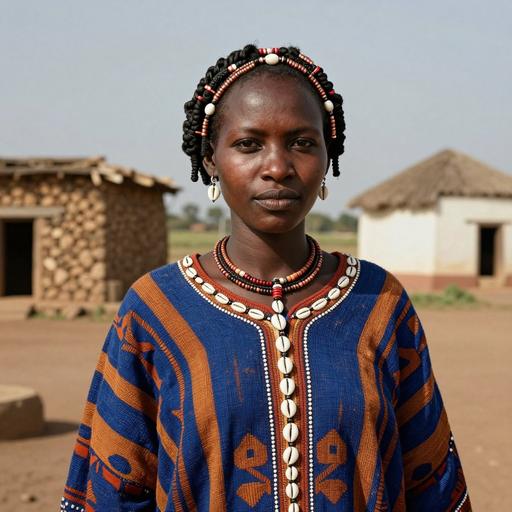
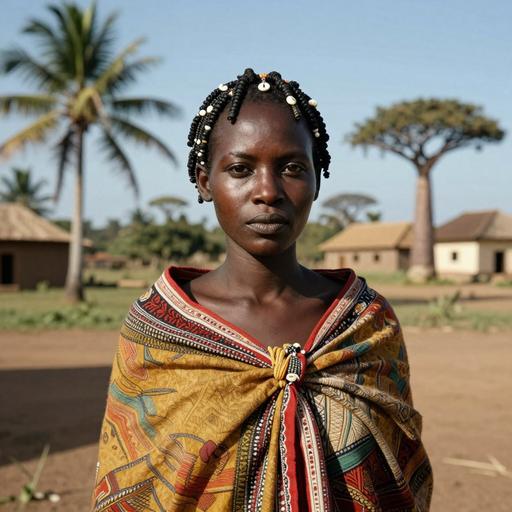
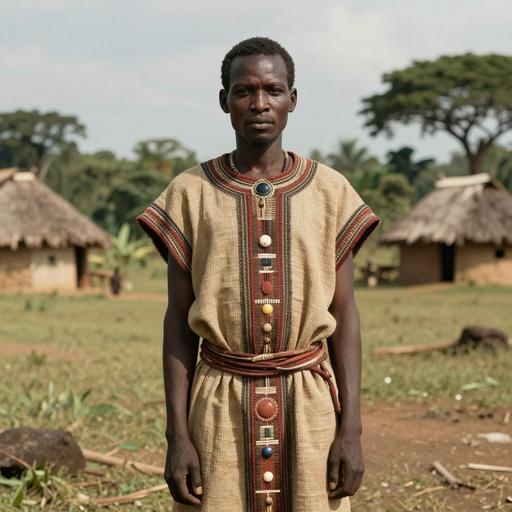
Portraits are AI-generated illustrations. Sample labels and accession IDs identify the reference records.

Portrait Sample Country Era Date Culture mtDNA Match
AI-generated illustrative portrait of Medieval Swahili individual, Mtwapa (Kilifi), Kenya (1,350-1,500 CE)
Sample ID: I19414
Kenya Swahili Culture of Mtwapa 1513-1797 calCE (285±20 BP, ISGS-A2128) Mtwapa L1c3a1b Direct
AI-generated illustrative portrait of Medieval Swahili individual, Mtwapa (Kilifi), Kenya (1,496-1,630 CE)
Sample ID: I19411
Kenya Swahili Culture of Mtwapa 1496-1630 calCE (370±15 BP, PSUAMS-12034) Mtwapa L1c3a1b Direct
AI-generated illustrative portrait of Democratic Republicofthe Congo Protohistoric individual, Kindoki, DR Congo (1,645-1,950 CE)
Sample ID: KIN002
DR Congo Kindoki Protohistoric Era in Congo 1665-1808 calCE (217±20 BP, OxA-37353) Kindoki L1c3a1b Direct
MATERNAL LINEAGE · ANCIENT DNA

Ancient lineage evidence map

Follow parent clades toward this branch and explore where ancient carriers were found.

Loading ancient observations…

Markers are archaeological find locations. A dashed connector is an uncertain, proposed geographic transition between consecutive branches supported by multiple dated observations; it is not an exact travel route, birthplace or proof of direct descent. Parent-clade samples may belong to other descendant branches. Gaps remain where evidence is insufficient. Sample dates differ from haplogroup formation dates.

Reference profile

Carrier Distribution Map

Geographic distribution of 3 ancient DNA samples (direct and subclade carriers of L1C3A1B)

Direct carrier
Time Period Filter
All Time Periods
Showing all samples
Reference profile

Temporal Distribution

Distribution of carriers across archaeological periods

Reference profile

Geographic Distribution

Counts by recorded sample country. These reflect the available reference selection, not population frequencies.

Reference profile

Country × Era Distribution

Compare recorded sample counts across countries and archaeological periods. Select a populated cell to inspect a sample.

Data

Data & Provenance

Source information and data quality

Last Updated 2026-02-16
Confidence Score 50/100
Coverage Low

Data Source

Classification, estimated dates and geographic context reflect the recorded reference data and may change as evidence is revised. Sample coverage is uneven; recorded locations and archaeological associations do not establish personal origin or cultural identity.