Menu
mtDNA Haplogroup • Maternal Lineage

L1c

mtDNA Haplogroup L1c

~80,000 years ago
Central / West-Central Africa
2 subclades
Scroll to explore
Chapter I

The Story

The journey of mtDNA haplogroup L1c

Origins and Evolution

mtDNA haplogroup L1c is a subclade of the ancient African lineage L1 and represents one of the deep maternal branches that diversified within Africa during the Late Pleistocene. Coalescence time estimates for L1c place its origin on the order of tens of thousands of years ago (commonly estimated around ~80 kya), reflecting long-term population structure in the rainforests and surrounding regions of West-Central Africa. The highest diversity of L1c is observed in the Congo Basin and nearby rainforest zones, consistent with an origin and early persistence in these environments.

Subclades

L1c contains multiple sublineages (commonly reported as L1c1, L1c2, L1c3 and further internal branches) that show geographically structured diversity. Some subclades are characteristic of Central African hunter-gatherer groups (often with deep local differentiation), while others appear more frequently among neighboring agriculturalist populations, reflecting episodes of gene flow. Ancient DNA and high-resolution mtDNA sequencing have helped resolve these subbranches and show that L1c typically partitions into clades with localized distributions within the Congo Basin and adjacent West-Central regions.

Geographical Distribution

L1c is concentrated in Central Africa, with the highest frequencies and haplotype diversity among Central African Pygmy (rainforest hunter-gatherer) groups such as the Mbuti, Aka, and Baka. It is also found among a variety of Bantu-speaking populations across Cameroon, Gabon, the Republic of the Congo and the Democratic Republic of the Congo, where admixture and demographic expansions redistributed maternal lineages. Lower-frequency occurrences are reported in some West African groups (e.g., parts of coastal West Africa), occasional presence in East Africa, and sporadic detection in North African and Middle Eastern samples attributable to historical migrations and recent admixture. Due to the Atlantic slave trade, L1c is also present in African-descended populations in the Americas, typically at low to moderate frequencies depending on source-region ancestry.

Historical and Cultural Significance

L1c's strong association with Central African rainforest hunter-gatherers links it to long-standing adaptations to forest environments and to demographic histories distinct from those of expanding agriculturalist groups. The Bantu expansions of the mid-to-late Holocene redistributed many maternal lineages across sub-Saharan Africa; in areas of close contact between Bantu agriculturalists and rainforest hunter-gatherers, L1c often persists as a marker of indigenous maternal ancestry within otherwise agriculturally-derived populations. In the context of the African diaspora, L1c contributes to the maternal ancestry profiles of African-descended communities in the Americas and the Caribbean, providing a genetic window into the regional origins of enslaved peoples transported from West and West-Central Africa.

Conclusion

mtDNA L1c is an informative regional lineage for reconstructing deep maternal population structure in West-Central Africa and for tracing interactions between rainforest hunter-gatherers and neighboring agricultural communities. Its age and localized diversity make it valuable for studies of Pleistocene and Holocene demographic events within the Congo Basin and for understanding maternal contributions to African-descended populations globally.

Key Points

  • Origins and Evolution
  • Subclades
  • Geographical Distribution
  • Historical and Cultural Significance
  • Conclusion
Chapter II

Tree & Relationships

Phylogenetic context and subclades

Evolution Path

This haplogroup's evolutionary journey from its earliest ancestor to the present.

Steps Haplogroup Age Estimate Archaeology Era Time Passed Immediate Descendants Tested Modern Descendants Ancient Connections
1 L1c Current ~80,000 years ago 🦴 Paleolithic 80,000 years 2 141 0
2 L1 ~120,000 years ago 🦴 Paleolithic 120,000 years 4 531 4
3 L ~160,000 years ago 🦴 Paleolithic 160,000 years 7 18,987 5

Siblings (3)

Other branches from the same parent haplogroup

Chapter III

Where in the World

Geographic distribution and modern presence

Place of Origin

Central / West-Central Africa

Modern Distribution

The populations where mtDNA haplogroup L1c is found include:

  1. Mbuti (Central African Pygmies)
  2. Aka and Baka (Central African Pygmy groups)
  3. Bantu-speaking populations in Cameroon, Gabon, Republic of the Congo and DR Congo
  4. Bakongo and Fang (Central/West-Central African groups)
  5. Yoruba and other West African populations (lower/moderate frequencies)
  6. African-descended populations in the Americas (African American, Afro-Caribbean)
  7. Occasional detections in East African groups (e.g., parts of the Great Lakes/Horn region)
  8. Low-frequency presence in North African and Middle Eastern samples due to historical admixture
CHAPTER IV

When in Time

Your haplogroup in the context of human history

~80k years ago

Haplogroup L1c

Your mtDNA haplogroup emerged in Central / West-Central Africa

Central / West-Central Africa
~70k years ago

Out of Africa

Major migration of modern humans out of Africa

~50k years ago

Upper Paleolithic

Advanced tool-making, art, and cultural explosion

~20k years ago

Last Glacial Maximum

Peak of the last ice age, populations isolated

~10k years ago

Neolithic Revolution

Agriculture begins, settled communities form

~5k years ago

Bronze Age

Metalworking, writing, and early civilizations

~3k years ago

Iron Age

Iron tools, expanded trade networks

~2k years ago

Classical Antiquity

Greek and Roman civilizations flourish

Present

Present Day

Modern era

Your Haplogroup
Historical Era
Chapter IV-B

Linked Cultures

Ancient cultures associated with mtDNA haplogroup L1c

Cultural Heritage

These ancient cultures have been linked to haplogroup L1c based on matching ancient DNA samples from archaeological excavations. The presence of this haplogroup in these cultures provides insights into the migrations and population movements of populations carrying this haplogroup.

Bungule Corded Ware Jordanow-Michelsberg Culture Khovd Long-Term Malawian LSA Ngongo Mbata Slab Grave Culture St. Helena Colonial Unetice Culture
Culture assignments are based on archaeological context of ancient DNA samples and may represent regional associations during specific time periods.
Chapter V

Sample Catalog

10 subclade carriers of haplogroup L1c (no exact L1c samples sequenced yet)

10 / 10 samples
Portrait Sample Country Era Date Culture mtDNA Match
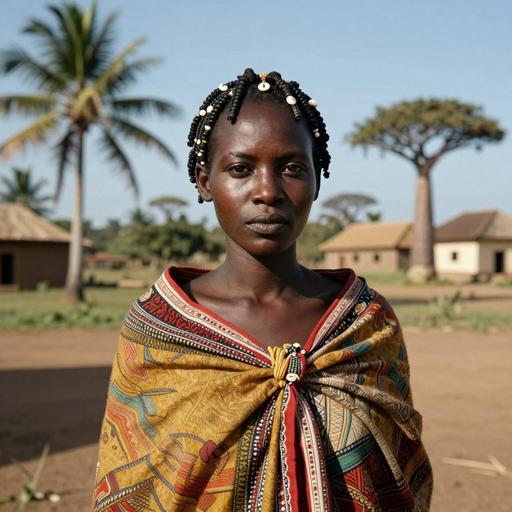
Portrait of ancient individual I10873 from Cameroon, dated 1217 BCE - 1055 BCE
I10873
Cameroon Stone Mound Architecture in Cameroon 1217 BCE - 1055 BCE Cameroon Stone Mounds L1c2a1b Downstream
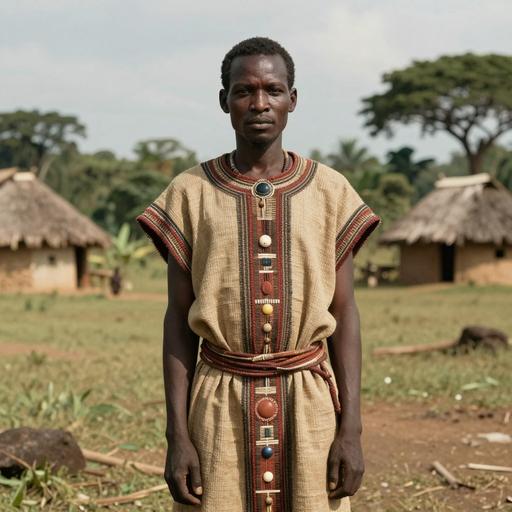
Portrait of ancient individual I10873 from Cameroon, dated 1217 BCE - 1055 BCE
I10873
Cameroon Late Holocene West Africa 1217 BCE - 1055 BCE L1c2a1b Downstream
Portrait of ancient individual I10874 from Cameroon, dated 1277 BCE - 1059 BCE
I10874
Cameroon Stone Mound Architecture in Cameroon 1277 BCE - 1059 BCE Cameroon Stone Mounds L1c2a1b Downstream
Portrait of ancient individual I10874 from Cameroon, dated 1277 BCE - 1059 BCE
I10874
Cameroon Late Holocene West Africa 1277 BCE - 1059 BCE L1c2a1b Downstream
Portrait of ancient individual I19414 from Kenya, dated 1350 CE - 1500 CE
I19414
Kenya Swahili Culture of Mtwapa 1350 CE - 1500 CE Mtwapa L1c3a1b Downstream
Portrait of ancient individual I19411 from Kenya, dated 1496 CE - 1630 CE
I19411
Kenya Swahili Culture of Mtwapa 1496 CE - 1630 CE Mtwapa L1c3a1b Downstream
Portrait of ancient individual KIN002 from DR Congo, dated 1645 CE - 1950 CE
KIN002
DR Congo Kindoki Protohistoric Era in Congo 1645 CE - 1950 CE Kindoki L1c3a1b Downstream
Portrait of ancient individual NGO001 from DR Congo, dated 1647 CE - 1950 CE
NGO001
DR Congo Ngongo Mbata Protohistoric Era in Congo 1647 CE - 1950 CE Ngongo Mbata L1c3a Downstream
Portrait of ancient individual I17402 from Kenya, dated 1650 CE - 1950 CE
I17402
Kenya Makwasinyi (Kenya) 1650 CE - 1950 CE Makwasinyi L1c3b1a Downstream
Portrait of ancient individual STH_213 from St. Helena, dated 1840 CE - 1940 CE
STH_213
St. Helena St. Helena 1840 CE - 1940 CE St. Helena Colonial L1c3a Downstream
Chapter VI

Carrier Distribution Map

Geographic distribution of 10 ancient DNA samples (direct and subclade carriers of L1c)

Subclade carrier
Time Period Filter
All Time Periods
Showing all samples
Chapter VII

Temporal Distribution

Distribution of carriers across archaeological periods

Chapter VIII

Geographic Distribution

Distribution by country of origin (direct and subclade carriers shown by default)

Chapter IX

Country × Era Distribution

Cross-tabulation of carrier countries and archaeological periods (direct and subclade carriers shown by default)

Data

Data & Provenance

Source information and data quality

Last Updated 2026-02-09
Data Source

We use the latest phylotree for MTDNA haplogroup classification and data.