mtDNA · Maternal lineage

N9A9

mtDNA Haplogroup N9A9

A reference profile for one lineage branch. Shared haplogroups do not establish a family relationship or cultural identity.

Reference profile

Branch background

Historical context for mtDNA lineage branch N9A9

Origins and Evolution

mtDNA haplogroup N9A9 is a subclade within the broader N9a maternal lineage, itself a branch of macro-haplogroup N. Given the position of N9A9 nested under N9a (which is estimated to have originated around the Late Pleistocene, ~20 kya), N9A9 most plausibly represents a Neolithic (early Holocene) diversification of maternal lineages in East Asia. The estimated time of origin for N9A9 (~8 kya) places it in the period of growing sedentary farming and post-glacial population expansions in East Asia, consistent with the pattern of many regional mtDNA subclades that emerged as human groups expanded and differentiated locally.

Phylogenetically, N9A9 is defined by private/derived control-region and coding-region mutations that distinguish it from other N9a sublineages. As with many fine-scale mtDNA branches, resolution and confidence in the internal structure of N9A9 depend on the availability of full mitogenomes; targeted whole-mitogenome sequencing and ancient DNA are the primary ways this clade's internal topology will be clarified further.

Subclades (if applicable)

Current haplogroup catalogs show that N9A9 is a relatively narrow, derived branch under N9a. Published datasets and public mtDNA tree builds indicate only a small number of recognized downstream branches or private-lineage clusters within N9A9, and some reported sequences may remain provisionally assigned until full mitogenome confirmation. In practice, N9A9 behaves as a localized maternal cluster with limited internal substructure visible in population samples so far; further sequencing of complete mitogenomes and inclusion of ancient samples could reveal additional subclades.

Geographical Distribution

N9A9 is principally an East Asian maternal lineage with its highest frequencies and greatest haplotype diversity within mainland East Asia and the Japanese archipelago. Modern occurrences are concentrated among:

  • Han Chinese regional groups (particularly eastern and northeastern provinces)
  • Japanese populations (mainland Honshu and some regional groups)
  • Korean populations across the peninsula

Lower-frequency occurrences extend into nearby regions such as Tibeto-Burman-speaking groups, Mongolic/Tungusic populations of Northeast Asia, parts of Southeast Asia (coastal and southern China-adjacent populations), and sporadically into Central Asian groups with East Asian admixture. The pattern — concentrated in East Asia with scattered peripheral occurrences — is consistent with a lineage that diversified regionally after the Last Glacial Maximum and experienced local expansions connected to Holocene demographic processes.

Historical and Cultural Significance

Although N9A9 itself is not associated exclusively with a single major archaeological culture, its inferred Neolithic origin and present-day distribution tie it to the broader story of Holocene population growth and the spread of farming in East Asia. Possible cultural associations include:

  • Participation in early Neolithic farmer expansions in the Yellow River and adjacent regions, where maternal lineages related to N9a show increased frequency in Neolithic and post-Neolithic samples.
  • Presence in later migratory and contact events, such as movements that contributed to the peopling of the Japanese archipelago in the Yayoi period and gene flow across the Korean peninsula.

Because N9A9 is relatively low-frequency and regionally concentrated, it is most informative when combined with other genetic markers (other mtDNA haplogroups, Y-DNA lineages and autosomal components) and archaeological context to reconstruct demographic history.

Conclusion

N9A9 represents a fine-scale, East Asian-derived maternal lineage that likely arose in the early Holocene and reflects local diversification during Neolithic and post-Neolithic population processes. Current knowledge is limited by the number of complete mitogenomes and ancient samples assigned to this clade; ongoing sequencing and ancient DNA studies in East Asia will improve resolution, clarify subclade structure, and better define its role in past demographic events.

Key Points

  • Origins and Evolution
  • Subclades (if applicable)
  • Geographical Distribution
  • Historical and Cultural Significance
  • Conclusion
Reference profile

Tree & Relationships

Phylogenetic context and subclades

Evolution Path

Follow the recorded parent branches toward N9A9. Dates are estimates and can change as reference data is revised.

Steps Haplogroup Age Estimate Archaeology Era Time Passed Immediate Descendants Tested Modern Descendants Ancient Connections
1 N9A9 Current ~8,000 years ago Neolithic 8,000 years 0 0 0
2 N9a ~20,000 years ago Mesolithic 20,000 years 5 152 28
3 N9 ~25,000 years ago Paleolithic 25,000 years 3 178 0
4 N ~60,000 years ago Paleolithic 60,000 years 16 26,150 13
5 L3 ~70,000 years ago Paleolithic 70,000 years 7 30,162 6
6 L3'4 - - - 2 30,212 0
7 L3'4'6 - - - 2 30,216 0
8 L2'3'4'6 - - - 2 31,333 0
9 L2'3'4'5'6'7 - - - 2 31,349 0
10 L1'2'3'4'5'6'7 - - - 2 31,852 0
11 L ~160,000 years ago Paleolithic 160,000 years 2 32,236 5

Subclades (0)

Terminal branch - no recorded subclades

Siblings (4)

Other branches from the same parent haplogroup

Reference profile

Where in the World

Geographic distribution and modern presence

Recorded origin

East Asia

Modern Distribution

The populations where mtDNA haplogroup N9A9 is found include:

  1. Han Chinese (various regional groups in eastern and northeastern China)
  2. Japanese (mainland Honshu and some regional groups)
  3. Koreans (peninsular populations)
  4. Mongolic and Tungusic-speaking groups in Northeast Asia (low to moderate frequencies)
  5. Tibeto-Burman populations (scattered, lower frequency occurrences)
  6. Southeast Asian coastal populations (Vietnamese, Thai and southern Chinese coastal groups at low-moderate frequency)
  7. Central Asian groups with East Asian admixture (e.g., some Uyghur, Kazakh, southern Siberian groups at low frequency)
  8. Indigenous and mixed populations in Northeast China and the Amur region
  9. Holocene archaeological remains from East Asia (Neolithic and later contexts in regional ancient DNA studies)
  10. Diaspora and admixed populations outside Asia at very low frequencies due to historic and recent migration
Historical context

A branch through time

Estimated formation in a broad historical timeline. Period markers provide context and do not imply a connection with particular cultures.

  1. ~10k years ago

    Neolithic Revolution

    Agriculture begins, settled communities form

  2. ~8k years ago

    Haplogroup N9A9

    Estimated formation of this mtDNA branch; dates and locations are reference estimates.

    This branch
  3. ~5k years ago

    Bronze Age

    Metalworking, writing, and early civilizations

  4. ~3k years ago

    Iron Age

    Iron tools, expanded trade networks

  5. ~2.5k years ago

    Classical Antiquity

    Greek and Roman civilizations flourish

  6. Present

    Present Day

    Modern era

Reference profile

Archaeological context

Recorded archaeological associations for mtDNA branch N9A9

Recorded associations

These labels describe archaeological contexts recorded for reference samples linked to N9A9. An association does not establish that all carriers belonged to a culture or followed a particular migration route.

Avar Avar Culture Chinese Iron Age Early Avar Hunnic Period Magyar Commoner Culture Tagar Culture Tangbalesayi Culture Uvs Multi-Period Xiongnu Buryat
Culture assignments are based on archaeological context of ancient DNA samples and may represent regional associations during specific time periods.
Reference profile

Sample Catalog

13 direct carriers of haplogroup N9A9

10 shown · 13 matching samples

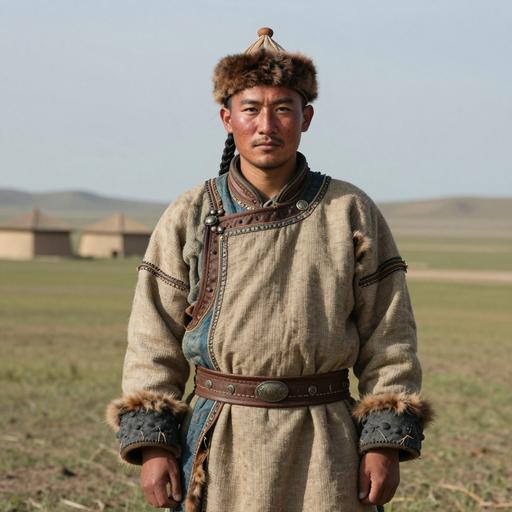
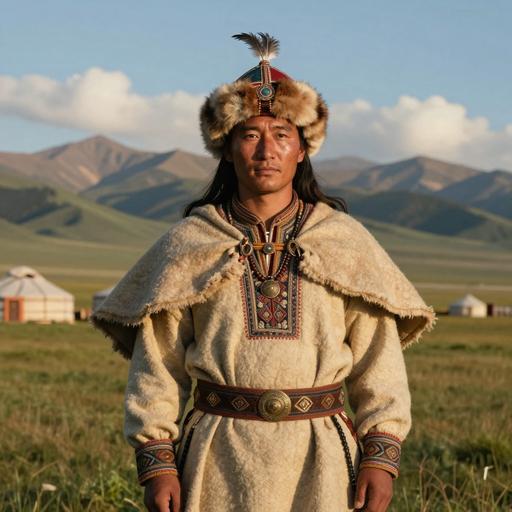
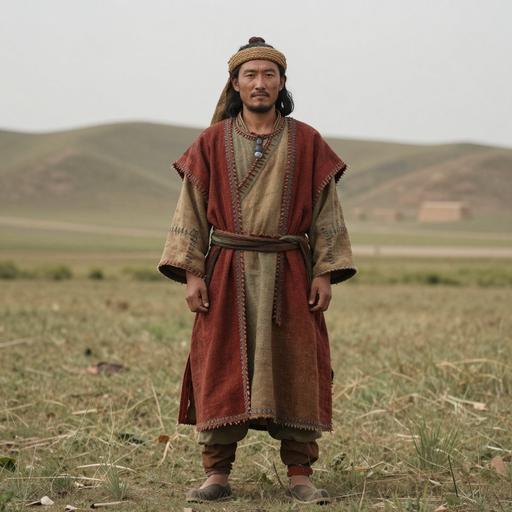
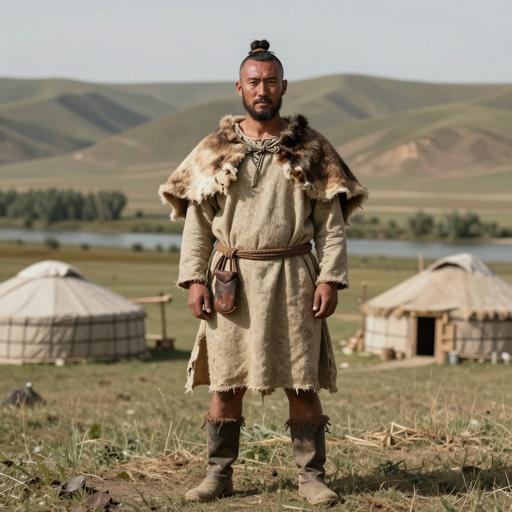
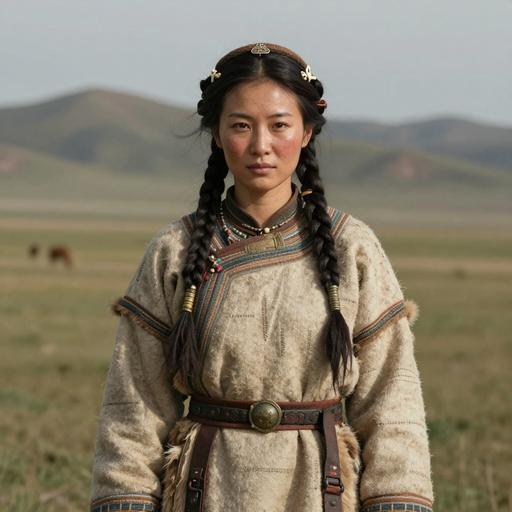
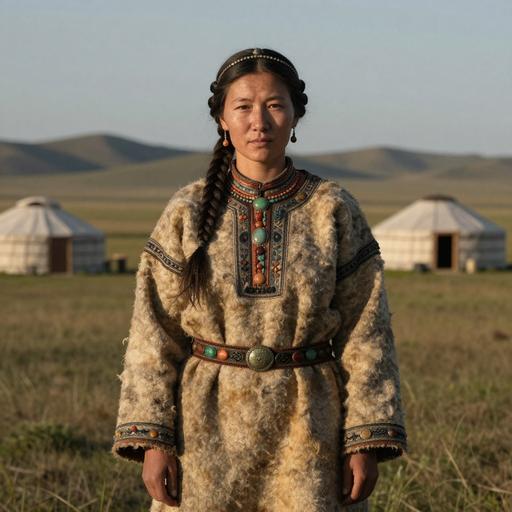
Portraits are AI-generated illustrations. Sample labels and accession IDs identify the reference records.

Portrait Sample Country Era Date Culture mtDNA Match
AI-generated illustrative portrait of Ancient Chinese Civilization individual, Inner Mongolia. Hulunbuir. Zhalainuoer. Zhalainuoer mining site, China (81-236 CE)
Sample ID: ZLNR-1
China Iron Age China 81 CE - 236 CE Chinese Iron Age N9a9 Direct
AI-generated illustrative portrait of China Ia individual, Inner Mongolia. Hulunbuir. Zhalainuoer. Zhalainuoer mining site, China (81-236 CE)
Sample ID: ZLNR-1
China Iron Age China 81 CE - 236 CE N9a9 Direct
AI-generated illustrative portrait of Nomadic Steppe Cultures individual, Tian Shan. Central Steppe, Kyrgyzstan (265-547 CE)
Sample ID: DA65
Kyrgyzstan The Hun Period in Kyrgyzstan 265 CE - 547 CE Hunnic Period N9a9 Direct
AI-generated illustrative portrait of Hun individual, Tian Shan. Central Steppe, Kyrgyzstan (265-547 CE)
Sample ID: DA65
Kyrgyzstan The Huns 265 CE - 547 CE N9a9 Direct
AI-generated illustrative portrait of Ancient Chinese Civilization individual, Xinjiang. Yili Region. Nileke County. Tangbalesayi, China (368-52 BCE)
Sample ID: C627
China Iron Age Tangbalesayi, Xinjiang, China 368 BCE - 52 BCE Tangbalesayi Culture N9a9 Direct
AI-generated illustrative portrait of Ancient Chinese Civilization individual, Xinjiang. Yili Region. Nileke County. Tangbalesayi, China (368-52 BCE)
Sample ID: C4257
China Iron Age Tangbalesayi, Xinjiang, China 368 BCE - 52 BCE Tangbalesayi Culture N9a9 Direct
AI-generated illustrative portrait of Uvs EIA Xiongnu Period Late Medieval individual, Uvs. Chandman Mountain. Ulaangom cemetery, Mongolia (400 BCE-1,500 CE)
Sample ID: CHN015
Mongolia Early Iron Age to Xiongnu to Late Medieval Uvs, Mongolia 400 BCE - 1500 CE Uvs Multi-Period N9a9 Direct
AI-generated illustrative portrait of Early Middle Avar-o High East Asia individual, Rákóczifalva-Bagi-földek (Jász-Nagykun-Szolnok Coiunty, Szolnok), Hungary (580-720 CE)
Sample ID: RKF135
Hungary Early Middle Avar Period 550-750 CE Avar N9a9 Direct
AI-generated illustrative portrait of Eurasian Nomadic individual, Csongrád-Csanád County. Makó-Mikócsa-halom, Hungary (590-654 CE)
Sample ID: MM-80
Hungary Hungary EarlyAvar 590 CE - 654 CE Early Avar N9a9 Direct
AI-generated illustrative portrait of Middle Avar-o Low East Asia individual, Rákóczifalva-Bagi-földek (Jász-Nagykun-Szolnok Coiunty, Szolnok), Hungary (661-771 CE)
Sample ID: RKC047
Hungary Hungary MiddleAvar 661-771 calCE Avar Culture N9a9 Direct
MATERNAL LINEAGE · ANCIENT DNA

Ancient lineage evidence map

Follow parent clades toward this branch and explore where ancient carriers were found.

Loading ancient observations…

Markers are archaeological find locations. A dashed connector is an uncertain, proposed geographic transition between consecutive branches supported by multiple dated observations; it is not an exact travel route, birthplace or proof of direct descent. Parent-clade samples may belong to other descendant branches. Gaps remain where evidence is insufficient. Sample dates differ from haplogroup formation dates.

Reference profile

Carrier Distribution Map

Geographic distribution of 13 ancient DNA samples (direct and subclade carriers of N9A9)

Direct carrier
Time Period Filter
All Time Periods
Showing all samples
Reference profile

Temporal Distribution

Distribution of carriers across archaeological periods

Reference profile

Geographic Distribution

Counts by recorded sample country. These reflect the available reference selection, not population frequencies.

Reference profile

Country × Era Distribution

Compare recorded sample counts across countries and archaeological periods. Select a populated cell to inspect a sample.

Data

Data & Provenance

Source information and data quality

Last Updated 2026-02-16
Confidence Score 50/100
Coverage Low

Data Source

Classification, estimated dates and geographic context reflect the recorded reference data and may change as evidence is revised. Sample coverage is uneven; recorded locations and archaeological associations do not establish personal origin or cultural identity.