mtDNA · Maternal lineage

X2E1

mtDNA Haplogroup X2E1

A reference profile for one lineage branch. Shared haplogroups do not establish a family relationship or cultural identity.

Reference profile

Branch background

Historical context for mtDNA lineage branch X2E1

Origins and Evolution

mtDNA haplogroup X2E1 sits within the broader X2E branch of mitochondrial haplogroup X2. Haplogroup X2 has deep Eurasian roots, and the X2E subclade is most plausibly associated with populations in or near Anatolia and the Levant during the early Holocene. X2E1 likely arose as a downstream daughter lineage of X2E during the Neolithic or early post-Neolithic (roughly the mid to late Holocene transition), reflecting diversification of maternal lineages carried by expanding farming and post-farming communities.

Phylogenetically, X2E1 inherits the defining mutations of X2 and X2E and adds private mutations that distinguish it from sister lineages. Its rarity and scattered distribution suggest either a localized origin with later low-level spread or survival of a previously more widespread Neolithic lineage that has since declined in frequency.

Subclades

At present, X2E1 is treated as a terminal or near-terminal subclade in many phylogenies (i.e., further internal structure is limited or sparsely sampled). As ancient and modern mitogenome sequencing increases, additional internal branches (X2E1a, X2E1b, etc.) could be resolved if consistent private mutations are found across multiple individuals. The current scarcity of confirmed samples means recognized subclades are few and often based on singletons or small clusters.

Geographical Distribution

The modern distribution of X2E1 is patchy and characterized by low frequencies across a wide area that corresponds to Neolithic and later population movements from the Near East. Confirmed occurrences include Southern Europe (Italy, Greece, Balkans), the Near East (Levant, Anatolia), the Caucasus (Armenia, Georgia), North Africa (Maghreb/Berber groups), and sporadic finds in parts of Central Asia. The haplogroup has also been observed infrequently in Central and Eastern Europe. Ancient DNA evidence for X2E1 is currently limited (one recorded archaeological sample in the referenced database), which supports a narrative of low-frequency persistence rather than high-prevalence expansion.

Historical and Cultural Significance

Because X2E1 is nested within a clade associated with Near Eastern/Anatolian Neolithic populations, its presence in Europe, the Caucasus and North Africa is plausibly tied to Neolithic farmer expansions and subsequent post-Neolithic migrations and contacts (e.g., Chalcolithic and Bronze Age movements). In regions such as the Caucasus and parts of the eastern Mediterranean, X2E1 may reflect continuity or recurrent gene flow from Anatolian/Levantine sources.

The haplogroup's low frequency means it rarely defines major population-level events on its own, but it serves as a useful marker for tracing maternal lineages associated with the Near Eastern genetic input into neighboring regions. Its occasional appearance in North African and Central Asian contexts likely reflects long-distance contacts and multiple migration episodes rather than a single coherent dispersal.

Conclusion

mtDNA X2E1 is a low-frequency maternal lineage that likely originated in the Near East/Anatolia in the early Holocene as part of the broader X2E diversification. Its scattered distribution across Southern Europe, the Caucasus, North Africa and parts of Central Asia fits expectations for a Neolithic-derived lineage that persisted at low levels through the Chalcolithic and Bronze Age and into the present. Continued mitogenome sequencing of both modern and ancient samples will clarify internal structure, refine age estimates, and better define the pathways by which X2E1 spread.

Note on interpretation: Low sample numbers and uneven geographic sampling mean frequency estimates and inferred pathways should be considered provisional. Ancient DNA confirmation and full mitogenome sequences provide the most robust phylogenetic and chronological resolution.

Key Points

  • Origins and Evolution
  • Subclades
  • Geographical Distribution
  • Historical and Cultural Significance
  • Conclusion
Reference profile

Tree & Relationships

Phylogenetic context and subclades

Evolution Path

Follow the recorded parent branches toward X2E1. Dates are estimates and can change as reference data is revised.

Steps Haplogroup Age Estimate Archaeology Era Time Passed Immediate Descendants Tested Modern Descendants Ancient Connections
1 X2E1 Current ~8,000 years ago Neolithic 8,000 years 1 0 0
2 X2E ~9,000 years ago Neolithic 9,000 years 2 2 1
3 X2a ~13,000 years ago Mesolithic 13,000 years 6 162 4
4 X2 ~22,000 years ago Mesolithic 22,000 years 5 213 48
5 X1'2'3 - - - 3 237 0
6 X ~10,000 years ago Neolithic 10,000 years 3 256 28
7 N ~60,000 years ago Paleolithic 60,000 years 16 26,150 13
8 L3 ~70,000 years ago Paleolithic 70,000 years 7 30,162 6
9 L3'4 - - - 2 30,212 0
10 L3'4'6 - - - 2 30,216 0
11 L2'3'4'6 - - - 2 31,333 0
12 L2'3'4'5'6'7 - - - 2 31,349 0
13 L1'2'3'4'5'6'7 - - - 2 31,852 0
14 L ~160,000 years ago Paleolithic 160,000 years 2 32,236 5

Siblings (1)

Other branches from the same parent haplogroup

Reference profile

Where in the World

Geographic distribution and modern presence

Recorded origin

Near East / Anatolia

Modern Distribution

The populations where mtDNA haplogroup X2E1 is found include:

  1. Southern European populations (e.g., Italy, Greece, the Balkans)
  2. Near Eastern populations (Levantine and Anatolian groups)
  3. Caucasus populations (Armenia, Georgia and surrounding groups)
  4. North African groups (Maghreb populations, Berber communities)
  5. Central Asian populations (sporadic occurrences among Turkic- and Iranian-speaking groups)
  6. Smaller, scattered occurrences in Central and Eastern European populations
Historical context

A branch through time

Estimated formation in a broad historical timeline. Period markers provide context and do not imply a connection with particular cultures.

  1. ~10k years ago

    Neolithic Revolution

    Agriculture begins, settled communities form

  2. ~8k years ago

    Haplogroup X2E1

    Estimated formation of this mtDNA branch; dates and locations are reference estimates.

    This branch
  3. ~5k years ago

    Bronze Age

    Metalworking, writing, and early civilizations

  4. ~3k years ago

    Iron Age

    Iron tools, expanded trade networks

  5. ~2.5k years ago

    Classical Antiquity

    Greek and Roman civilizations flourish

  6. Present

    Present Day

    Modern era

Reference profile

Archaeological context

Recorded archaeological associations for mtDNA branch X2E1

Recorded associations

These labels describe archaeological contexts recorded for reference samples linked to X2E1. An association does not establish that all carriers belonged to a culture or followed a particular migration route.

Albanian Modern Anatolian Bronze Age Armenian LBA-EIA Austria_Avar Byzantine Anatolia Danish Post-Medieval Early Chalcolithic Anatolia El Argar Hagios Charalambos Culture Minoan Mycenaean Varna
Culture assignments are based on archaeological context of ancient DNA samples and may represent regional associations during specific time periods.
Reference profile

Sample Catalog

1 direct carrier and 3 subclade carriers of haplogroup X2E1

4 shown · 4 matching samples

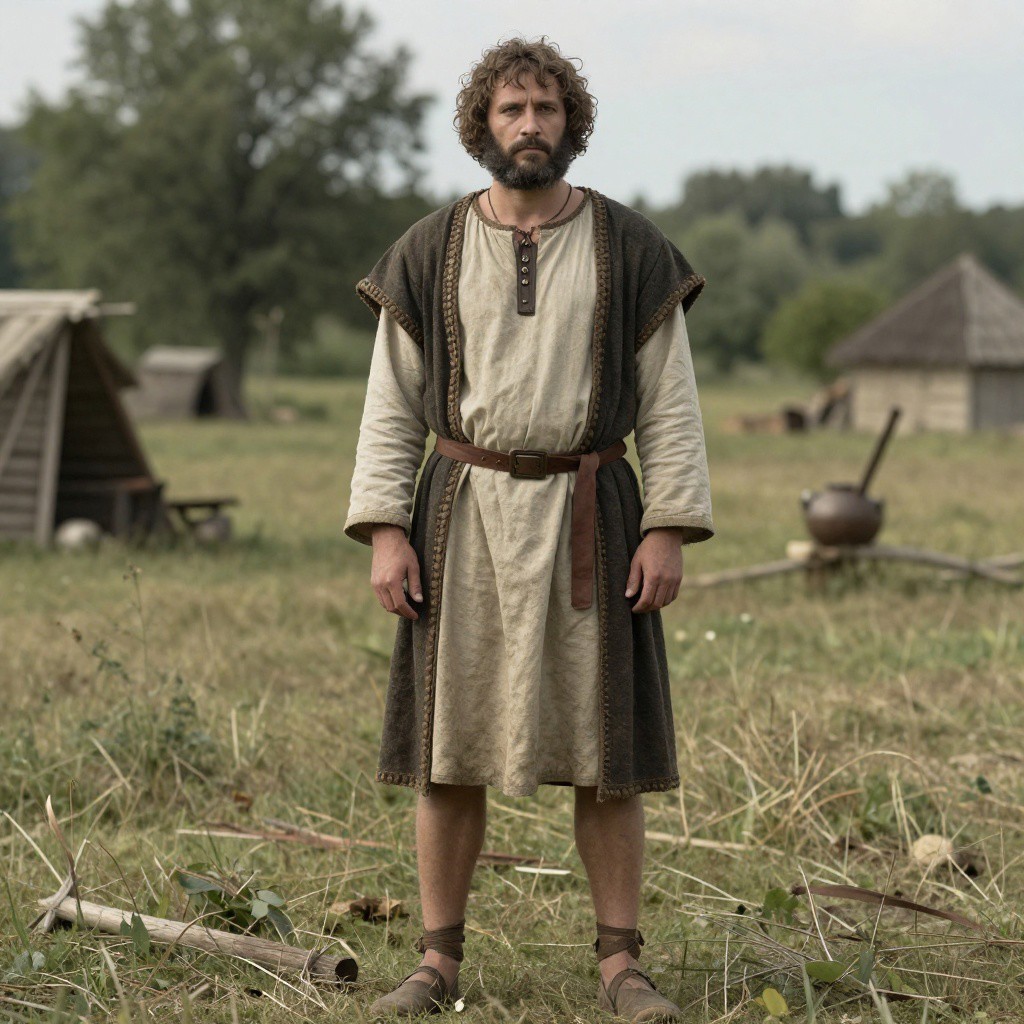
Portraits are AI-generated illustrations. Sample labels and accession IDs identify the reference records.

Portrait Sample Country Era Date Culture mtDNA Match
AI-generated illustrative portrait of Balkan Cultures individual, Barç (Southeast. Korça Basin), Albania (1,450-1,800 CE)
Sample ID: I13833
Albania Albanian Early Modern 1450 CE - 1800 CE Albanian Modern X2e1 Direct
AI-generated illustrative portrait of Avar individual, Mödling-An der Goldenen Stiege (Lower Austria, Mödling District), Austria (639-811 CE)
Sample ID: MGS020
Austria Austria Avar 650-800 CE Austria_Avar X2e1b Subclade
AI-generated illustrative portrait of Medieval Byzantine individual, Stratonikeia and Lagina (Aegean. Muğla. Yatağan), Turkey (1,000-1,200 CE)
Sample ID: I20141
Turkey Byzantine Turkey 1000-1200 CE Byzantine Anatolia X2e1a Subclade
AI-generated illustrative portrait of Medieval Byzantine individual, Stratonikeia and Lagina (Aegean. Muğla. Yatağan), Turkey (1,031-1,158 CE)
Sample ID: I20140
Turkey Byzantine Turkey 1031-1158 calCE (955±15 BP, PSUAMS-8565) Byzantine Anatolia X2e1a Subclade
MATERNAL LINEAGE · ANCIENT DNA

Ancient lineage evidence map

Follow parent clades toward this branch and explore where ancient carriers were found.

Loading ancient observations…

Markers are archaeological find locations. A dashed connector is an uncertain, proposed geographic transition between consecutive branches supported by multiple dated observations; it is not an exact travel route, birthplace or proof of direct descent. Parent-clade samples may belong to other descendant branches. Gaps remain where evidence is insufficient. Sample dates differ from haplogroup formation dates.

Reference profile

Carrier Distribution Map

Geographic distribution of 4 ancient DNA samples (direct and subclade carriers of X2E1)

Direct carrier Subclade carrier
Time Period Filter
All Time Periods
Showing all samples
Reference profile

Temporal Distribution

Distribution of carriers across archaeological periods

Reference profile

Geographic Distribution

Counts by recorded sample country. These reflect the available reference selection, not population frequencies.

Reference profile

Country × Era Distribution

Compare recorded sample counts across countries and archaeological periods. Select a populated cell to inspect a sample.

Data

Data & Provenance

Source information and data quality

Last Updated 2026-02-16
Confidence Score 50/100
Coverage Low

Data Source

Classification, estimated dates and geographic context reflect the recorded reference data and may change as evidence is revised. Sample coverage is uneven; recorded locations and archaeological associations do not establish personal origin or cultural identity.