Y-DNA · Paternal lineage

R1A1A1B1A1A1C1C

Y-DNA Haplogroup R1A1A1B1A1A1C1C

A reference profile for one lineage branch. Shared haplogroups do not establish a family relationship or cultural identity.

Reference profile

Branch background

Historical context for Y-DNA lineage branch R1A1A1B1A1A1C1C

Origins and Evolution

Y-DNA haplogroup R1A1A1B1A1A1C1C is a highly derived subclade of R1a, belonging to a paternal lineage that has a long history in Eurasia. Because it sits very far down the tree, this branch is expected to be recent in coalescent age, likely emerging in the late Holocene from a regional population already carrying upstream R1a lineages. Its formation is best understood as part of the broader post-Bronze Age diversification of R1a in the Eurasian steppe, Eastern Europe, and adjacent forest-steppe zones.

The deeper R1a haplogroup is strongly associated with major prehistoric population movements across Eastern Europe, the Pontic-Caspian steppe, Central Asia, and South Asia. This terminal branch likely represents a local founder lineage that expanded within one or a few connected populations rather than a lineage tied to a single ancient archaeological culture.

Subclades

As a downstream branch of R1A1A1B1A1A1C1, this haplogroup is part of a nested hierarchy of very recent R1a diversity. In practical population-genetic terms, such fine-scale subclades are often used to infer recent genealogical connections, surname clusters, and population structure within historically mobile Eurasian communities.

Because the branch is so specific, published literature is more likely to discuss its parent clade and sister lineages than this exact subclade. Nonetheless, its presence signals descent from a broader R1a paternal framework, with likely relationships to other Eastern European, Baltic, Scandinavian, Central Asian, and South Asian R1a-derived lineages.

Geographical Distribution

This haplogroup is expected to occur at low frequency, with strongest likelihood in regions where upstream R1a is common:

  • Eastern Europe: especially among Poles, Ukrainians, Belarusians, and Russians
  • Baltic region: Lithuanians and Latvians
  • Northern Europe: Scandinavians, particularly Swedes and Norwegians
  • Central Asia: Kazakhs, Kyrgyz, and neighboring groups
  • South Asia: some Indo-Aryan-speaking populations
  • West Asia / Iranic-speaking populations: selected Iranian-speaking groups
  • Uralic and Siberian fringe populations: occasional presence through historical gene flow

At this level of resolution, the distribution is typically patchy and founder-driven, rather than broad and uniform.

Historical and Cultural Significance

The broader R1a lineage is often linked in population-genetic literature to Bronze Age steppe expansions, including movements associated with Corded Ware and later Indo-European dispersals, though the exact historical interpretation varies by region. This very recent subclade, however, is more likely to reflect medieval to post-medieval demographic history, such as clan expansion, regional migration, social stratification, and bottleneck effects.

In Europe, such lineages can be enriched in populations with histories of Slavic ethnogenesis, Baltic continuity, and Scandinavian mobility. In Central and South Asia, R1a-derived branches may be associated with later historical processes involving Indo-Iranian, steppe-derived, or elite-mediated paternal expansions.

Because the haplogroup is a terminal branch, its cultural associations are best treated as indirect and probabilistic, not as proof of ancestry from a specific ancient culture.

Conclusion

R1A1A1B1A1A1C1C is a very recent, fine-scale paternal lineage nested within the widely distributed R1a clade. Its scientific value lies in reconstructing recent ancestry, regional founder effects, and population structure across Eurasia rather than in identifying a deep prehistoric origin on its own.

Key Points

  • Origins and Evolution
  • Subclades
  • Geographical Distribution
  • Historical and Cultural Significance
  • Conclusion
Reference profile

Tree & Relationships

Phylogenetic context and subclades

Evolution Path

Follow the recorded parent branches toward R1A1A1B1A1A1C1C. Dates are estimates and can change as reference data is revised.

Steps Haplogroup Age Estimate Archaeology Era Time Passed Immediate Descendants Tested Modern Descendants Ancient Connections
1 R1A1A1B1A1A1C1C Current ~2,000 years ago Roman Period 2,000 years 1 25 1
2 R1A1A1B1A1A1C1 ~2,000 years ago Roman Period 2,000 years 4 25 0
3 R1A1A1B1A1A1C ~2,000 years ago Roman Period 2,000 years 2 25 2
4 R1A1A1B1A1A1 ~3,000 years ago Iron Age 3,000 years 2 78 0
5 R1A1A1B1A1A ~3,000 years ago Iron Age 3,000 years 1 93 0
6 R1A1A1B1A1 ~3,000 years ago Iron Age 3,000 years 1 93 0
7 R1A1A1B1A ~3,000 years ago Iron Age 3,000 years 3 808 5
8 R1A1A1B1 ~4,000 years ago Bronze Age 3,500 years 1 852 0
9 R1A1A1B ~4,000 years ago Bronze Age 4,000 years 2 1,567 7
10 R1A1A1 ~4,000 years ago Bronze Age 4,500 years 2 1,974 0
11 R1A1A ~5,000 years ago Bronze Age 5,000 years 1 2,016 27
12 R1A1 ~5,000 years ago Bronze Age 5,000 years 2 2,052 0
13 R1a ~22,000 years ago Mesolithic 22,000 years 2 2,176 37

Siblings (3)

Other branches from the same parent haplogroup

Reference profile

Where in the World

Geographic distribution and modern presence

Recorded origin

Eurasian Steppe / Eastern Europe

Modern Distribution

The populations where Y-DNA haplogroup R1A1A1B1A1A1C1C is found include:

  1. Poles, Ukrainians, Belarusians, and Russians
  2. Lithuanians and Latvians
  3. Scandinavians, especially Swedes and Norwegians
  4. Kazakhs, Kyrgyz, and other Central Asian populations
  5. Many Indo-Aryan-speaking populations in South Asia
  6. Some Iranian-speaking groups and other West Eurasian populations
  7. Selected Siberian and Uralic-speaking populations

Regional Presence

Eastern Europe High
Central Europe High
Northern Europe (Scandinavia) Low
Baltic States Moderate
Central Asia Low
South Asia Low
Near East / Caucasus Low
West Asia Low
Historical context

A branch through time

Estimated formation in a broad historical timeline. Period markers provide context and do not imply a connection with particular cultures.

  1. ~10k years ago

    Neolithic Revolution

    Agriculture begins, settled communities form

  2. ~5k years ago

    Bronze Age

    Metalworking, writing, and early civilizations

  3. ~3k years ago

    Iron Age

    Iron tools, expanded trade networks

  4. ~2.5k years ago

    Classical Antiquity

    Greek and Roman civilizations flourish

  5. ~2k years ago

    Haplogroup R1A1A1B1A1A1C1C

    Estimated formation of this Y-DNA branch; dates and locations are reference estimates.

    This branch
  6. Present

    Present Day

    Modern era

Reference profile

Archaeological context

Recorded archaeological associations for Y-DNA branch R1A1A1B1A1A1C1C

Recorded associations

These labels describe archaeological contexts recorded for reference samples linked to R1A1A1B1A1A1C1C. An association does not establish that all carriers belonged to a culture or followed a particular migration route.

1984 Austria_Avar Gorokhovets Culture Hungary_Conqueror-oEurope Legowo Culture Medieval Ukrainian Ostrów Lednicki Culture Poznań-Sołacz Culture Russia_EarlyMedieval_Vyatichi Turkey_Catalhoyuk_MN Viking Culture Viking Denmark
Culture assignments are based on archaeological context of ancient DNA samples and may represent regional associations during specific time periods.
Reference profile

Sample Catalog

1 direct carrier of haplogroup R1A1A1B1A1A1C1C

1 shown · 1 matching samples

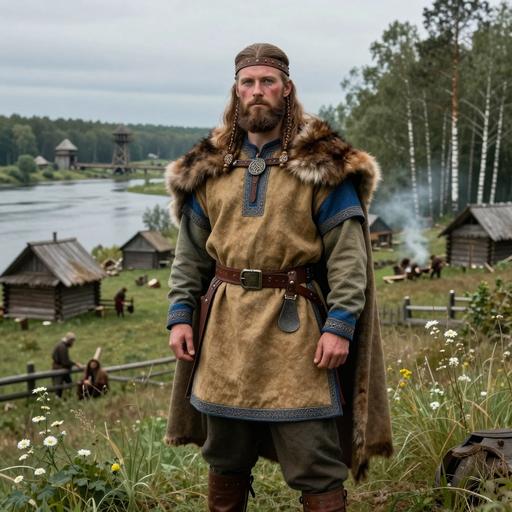
Portraits are AI-generated illustrations. Sample labels and accession IDs identify the reference records.

Portrait Sample Country Era Date Culture Y-DNA Match
AI-generated illustrative portrait of Norse individual, Kurevanikha, Russia (900-1,300 CE)
Sample ID: VK160
Russia Russia Viking 900 CE - 1300 CE Viking Culture R1a1a1b1a1a1c1c Direct
PATERNAL LINEAGE · ANCIENT DNA

Ancient lineage evidence map

Follow parent clades toward this branch and explore where ancient carriers were found.

Loading ancient observations…

Markers are archaeological find locations. A dashed connector is an uncertain, proposed geographic transition between consecutive branches supported by multiple dated observations; it is not an exact travel route, birthplace or proof of direct descent. Parent-clade samples may belong to other descendant branches. Gaps remain where evidence is insufficient. Sample dates differ from haplogroup formation dates.

Reference profile

Carrier Distribution Map

Geographic distribution of 1 ancient DNA sample (direct and subclade carriers of R1A1A1B1A1A1C1C)

Direct carrier
Time Period Filter
All Time Periods
Showing all samples
Reference profile

Temporal Distribution

Distribution of carriers across archaeological periods

Reference profile

Geographic Distribution

Counts by recorded sample country. These reflect the available reference selection, not population frequencies.

Reference profile

Country × Era Distribution

Compare recorded sample counts across countries and archaeological periods. Select a populated cell to inspect a sample.

Data

Data & Provenance

Source information and data quality

Last Updated 2026-06-17
Confidence Score 50/100
Coverage Low

Data Source

Classification, estimated dates and geographic context reflect the recorded reference data and may change as evidence is revised. Sample coverage is uneven; recorded locations and archaeological associations do not establish personal origin or cultural identity.