The Story
The journey of Y-DNA haplogroup R1A1A1
Origins and Evolution
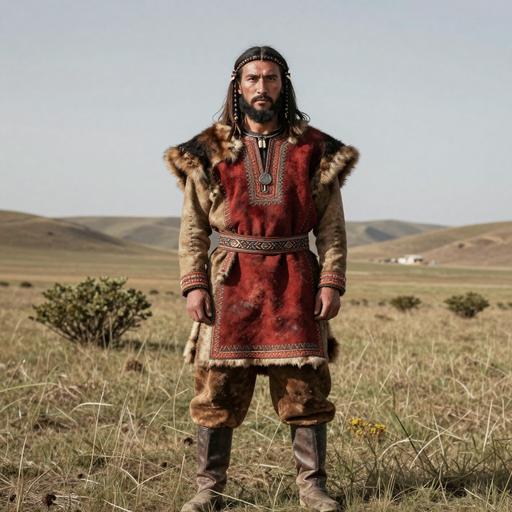
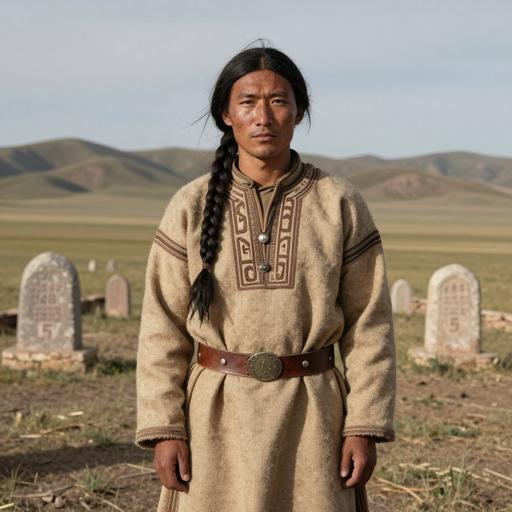
Y-DNA haplogroup R1a1a1 is a downstream branch within the broader R1a paternal clade, which is strongly associated with the population history of the Pontic-Caspian and broader Eurasian steppe. In population genetics studies, R1a lineages are often linked to the spread of steppe pastoralist ancestry during the Late Neolithic and Bronze Age, with major expansions likely connected to mobile herding societies and subsequent demographic growth.
As a subclade of R1a1a, this lineage represents a more recent branch that inherited the wider steppe-associated distribution of its parent clade but likely diversified through founder effects and regional expansions. The estimated time depth for R1a1a1 is on the order of a few thousand years, with much of its present-day structure reflecting historical rather than ancient Upper Paleolithic events.
Subclades
R1a1a1 is an intermediate phylogenetic unit within a larger and rapidly branching haplogroup network. In many classification systems, it sits above more regionally specific downstream branches that are especially important in:
- Eastern Europe, where several lineages expanded with Slavic ethnogenesis and medieval population growth
- South Asia, where R1a branches are frequent among many Indo-Aryan-speaking groups
- Central Asia, where steppe and post-steppe movements produced diverse regional subclades
Because Y-DNA nomenclature can vary across databases and publications, exact downstream labels may differ, but the overall interpretation remains the same: R1a1a1 is a relatively derived R1a branch shaped by Bronze Age and later dispersals.
Geographical Distribution
R1a1a1 has its highest frequencies in Eastern Europe, especially among populations in the Polish, Ukrainian, Belarusian, and Russian regions, as well as in the Baltic area. It is also present in Scandinavia, particularly in Sweden and Norway, and occurs at appreciable levels in parts of Central Asia and South Asia.
In South Asia, its presence is often interpreted in the context of Indo-Iranian and Indo-Aryan-associated migrations and expansions, though the exact frequencies vary widely by population, caste, tribe, and region. Lower but still notable frequencies occur in some Iranian-speaking, Siberian, and Uralic-speaking groups, consistent with wide steppe-related gene flow.
Historical and Cultural Significance
This haplogroup is important because it provides paternal-line evidence for some of the most consequential population movements in Eurasian prehistory and history. It is frequently discussed in relation to:
- The spread of steppe ancestry during the Bronze Age
- The demographic history of Balto-Slavic and Indo-Iranian populations
- Medieval and early historic expansions in Eastern Europe and the Baltic region
- The persistence of male-line founder effects in socially structured populations
R1a-related lineages are also often studied alongside linguistic evidence, especially in debates about the spread of Indo-European languages. While haplogroups do not define languages or ethnicities, the correlation between R1a branches and certain language families reflects real historical population processes.
Population Genetics Context
Research on ancient DNA has shown that R1a lineages were present in steppe-associated populations and later expanded into Europe and Asia through multiple routes. The broad paternal distribution of R1a1a1 today is best explained by a combination of migration, elite dominance, social amplification, and repeated founder effects rather than a single dispersal event.
Its distribution pattern also illustrates an important principle in genetic genealogy: a haplogroup can be geographically widespread even when its origin is relatively recent, if it was carried by mobile populations with substantial demographic expansion.
Conclusion
R1a1a1 is a significant Eurasian paternal lineage within the R1a branch, notable for its strong associations with Bronze Age steppe ancestry and later expansions into Eastern Europe, Central Asia, and South Asia. Its present-day distribution reflects deep historical mobility, population growth, and long-term regional differentiation across a vast part of Eurasia.
Key Points
- Origins and Evolution
- Subclades
- Geographical Distribution
- Historical and Cultural Significance
- Population Genetics Context