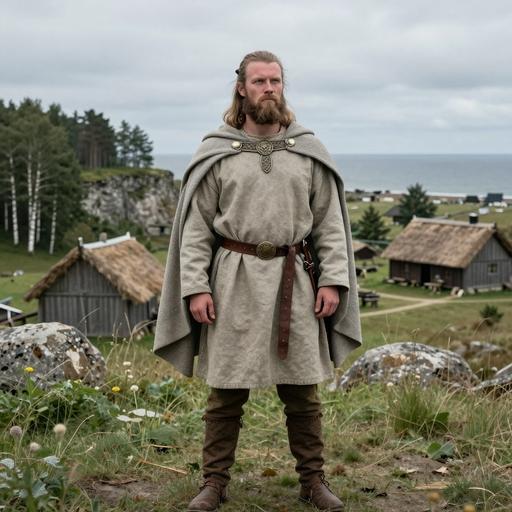
The Story
The journey of Y-DNA haplogroup R1A1A1B1A2
Origins and Evolution
Y-DNA haplogroup R1A1A1B1A2 is a downstream subclade of R1a, a paternal lineage strongly associated with the Bronze Age steppe expansions that reshaped large parts of Eurasia. Because it sits below the parent clade R1A1A1B1A, this branch is expected to represent a more recent founder effect and local diversification, rather than the primary origin of R1a itself.
The most likely geographic context for its emergence is Eastern Europe or the Eurasian Steppe, with an estimated formation time around 3 kya. This timing fits the period after the major Bronze Age dispersals of R1a, when regional populations in Eastern Europe, the forest-steppe, and adjacent Eurasian zones began forming more localized paternal lineages.
Subclades
As an intermediate or downstream lineage, R1A1A1B1A2 may have further descendant branches not fully characterized in all public phylogenies. In general, subclades within this part of the R1a tree often show strong geographic clustering, reflecting the effects of migration, endogamy, and population bottlenecks.
The broader phylogenetic context places this haplogroup among lineages commonly seen in Slavic, Baltic, Central Asian, and some Indo-Iranian-speaking populations, where R1a subclades have been shaped by both ancient steppe ancestry and later historical expansions.
Geographical Distribution
R1A1A1B1A2 is expected to be found at varying frequencies across Eastern Europe, the Baltic region, Scandinavia, Central Asia, parts of South Asia, and selected West Eurasian and Siberian/Uralic populations. Its distribution is best understood as patchy and lineage-specific, with local founder events producing strong regional signals.
In Eastern Europe, R1a-derived paternal lineages are especially common among Poles, Ukrainians, Belarusians, and Russians. Additional presence in Lithuanians, Latvians, Swedes, Norwegians, Kazakhs, Kyrgyz, and some Indo-Aryan-speaking populations reflects wider steppe-connected demographic processes. Some Iranian-speaking groups and Uralic-speaking populations also carry related R1a branches.
Historical and Cultural Significance
The historical relevance of this haplogroup lies in its connection to the broader post-steppe expansion network that influenced language spread, population structure, and elite formation across Eurasia. While no single archaeological culture can be assigned exclusively to this specific subclade, its ancestry is compatible with populations descending from or interacting with Corded Ware, Sintashta, and related steppe-derived complexes that were important in the spread of R1a lineages.
In later periods, many R1a subclades became associated with Slavic ethnogenesis, Baltic continuity, and Indo-Iranian dispersals into Central and South Asia. This does not mean haplogroup identity maps directly onto ethnicity or language, but it does indicate that paternal ancestry from these historical processes is often concentrated in R1a branches such as this one.
Conclusion
R1A1A1B1A2 is a relatively recent paternal subclade within the broader R1a phylogeny, likely formed through regional diversification after the major Bronze Age expansions of steppe-derived male lineages. Its distribution across Eastern Europe and parts of Eurasia reflects the long-term impact of migration, founder effects, and historical population structure.
Key Points
- Origins and Evolution
- Subclades
- Geographical Distribution
- Historical and Cultural Significance
- Conclusion