Menu
Store
Blog
Channel Islands (Alderney), United Kingdom

Longis Common: Channel Islands, Early Iron Age

Two ancient maternal lineages from Alderney hint at island life between 756–403 BCE

756 CE - 403 BCE
Scroll to begin
Chapter I

The Story

Understanding the Longis Common: Channel Islands, Early Iron Age culture

Archaeological remains from Longis Common, Alderney (756–403 BCE) reveal coastal Early Iron Age occupation. Two mitochondrial H61 genomes offer a preliminary glimpse of maternal ancestry; small sample size limits firm conclusions but suggests links with wider British and Atlantic populations.

Time Period

756–403 BCE (Early Iron Age)

Region

Channel Islands (Alderney), United Kingdom

Common Y-DNA

Unknown / not reported (sample count: 2)

Common mtDNA

H61 (2 samples)

Chapter II

Timeline

Key moments in the history of this culture

756 BCE

Earliest dated individuals at Longis Common

Two individuals from Longis Common, Alderney, date within 756–403 BCE and yield mtDNA H61, offering preliminary maternal-line insight into the island's Early Iron Age inhabitants.

Chapter III

Origins & Emergence

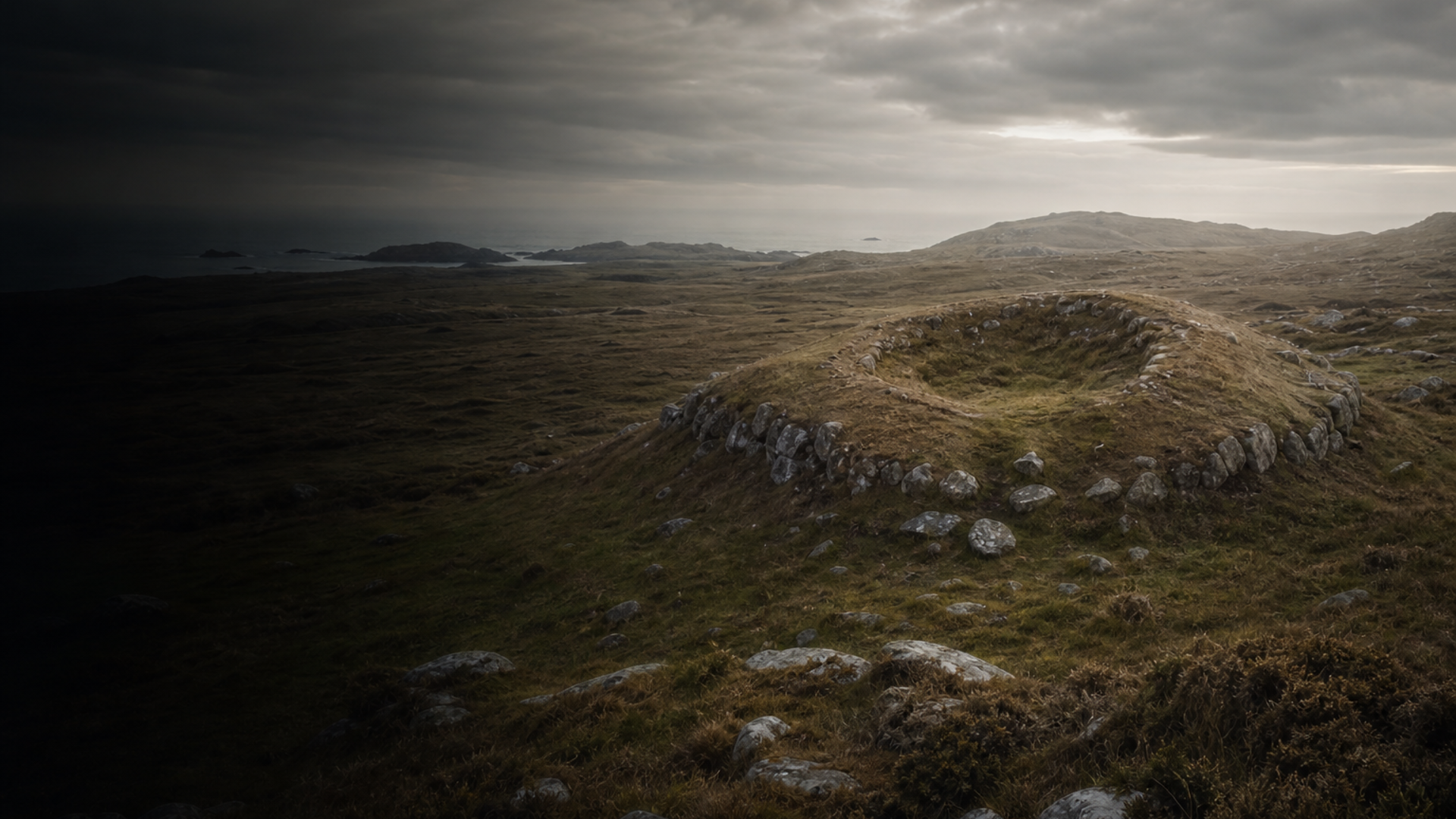
The Early Iron Age presence at Longis Common, Alderney (dated here between 756 and 403 BCE) unfolds at the edge of the sea where rock and sky frame human mobility. Archaeological data indicates episodic occupation of the tidal coastline and small-scale settlement activity during a time when communities across the northern European seaboard were adapting to new technologies and shifting trade networks. Limited evidence suggests continuity with late Bronze Age lifeways—emphasis on coastal resources, small-field agriculture, and exchange with the nearby mainland—yet distinctive island dynamics likely shaped daily choices.

Material culture in the region shows affinities with contemporaneous Britain and the wider Atlantic corridor, hinting at seaborne contacts that carried ideas and goods. At Longis Common itself, excavations have produced the osteological and organic remains that yielded the two ancient DNA samples now assigned to mtDNA H61. Because only two genomes are available, any reconstruction of population origins must be cautious: these individuals illuminate maternal ancestry but cannot, on their own, define the full human landscape of Alderney in the Early Iron Age.

Taken together, the archaeological record and genetic glimpses portray an island at the crossroads—rooted in local ecologies yet entangled in broader patterns of exchange. Further fieldwork and sampling are needed to move from evocative hints toward robust narratives.

  • Samples dated to 756–403 BCE from Longis Common, Alderney
  • Site indicates coastal occupation with mainland connections
  • Conclusions are preliminary due to small sample size
Chapter IV

Daily Life & Society

Life on Alderney in the Early Iron Age can be imagined as a rhythm of tides, herds, and craft. Archaeological data indicates exploitation of marine resources alongside small-scale farming and herding on sheltered terraces and common ground. Shell middens, worked bone and flaked stone (where preserved) suggest dietary breadth and local toolkits adapted to island resources. Seasonal movement between sheltered bays and inland plots would have structured labor and social gatherings.

Communal activities—maintenance of boats, exchange of pottery styles, shared rituals at prominent landscape features—would have reinforced bonds with neighbouring islands and the adjacent continental coasts. Trade and communication along the Channel likely brought exotic raw materials and new forms, while everyday objects remained pragmatically local. Burial evidence in the region is sparse; where funerary contexts exist they often leave ambiguous signals about social hierarchy, age, or gender roles. Archaeological interpretations therefore emphasize everyday resilience and connectivity rather than elaborate elite displays.

This is a landscape of small communities negotiating isolation and exchange. The fragile material record preserves glimpses of work, food, and kinship, but many aspects of social organization remain conjectural until expanded excavation and targeted sampling provide a fuller picture.

  • Mixed subsistence: marine resources and small-scale agriculture
  • Material culture shows local craft with regional contacts
Chapter V

Genetic Profile

Ancient DNA from Longis Common consists of two mitochondrial genomes, both assigned to haplogroup H61. Haplogroup H and its subclades are common across Europe in later prehistory and historic times; the presence of H61 in both samples points to a shared maternal lineage among these two individuals. However, because only two samples are available, this pattern should be treated as a tantalizing hint rather than evidence of population-wide dominance.

No Y-chromosome haplogroups are reported from these samples, so paternal lineages on Alderney during the Early Iron Age remain undocumented in this dataset. Archaeological genetics from nearby regions indicates that Iron Age Britain and the Atlantic seaboard carried a mixture of local Neolithic-derived maternal lineages and steppe-associated ancestry introduced earlier in prehistory; the Longis Common H61 genomes are consistent with maternal continuity within that broader mosaic but do not, by themselves, resolve migration or admixture events.

Key genetic interpretations must therefore be cautious: with N=2, we can say only that at least two individuals on Alderney carried mitochondrial H61 around the 8th–5th centuries BCE. To test hypotheses about continuity, mobility, or sex-biased migration, larger sample sets and genome-wide data (including Y-DNA and autosomal analyses) are required. Future sampling could reveal whether H61 reflects a wider insular maternal lineage or a localized occurrence among few burials.

  • Both sampled individuals carry mtDNA haplogroup H61
  • Y-DNA not reported; autosomal inference limited by sample count (<10)
Chapter VI

Legacy & Modern Connections

The tiny genetic window from Longis Common invites reflection on long-term island stories. If later populations around the British Isles and Atlantic maintained lineages related to H61, these Alderney genomes could represent threads in a broader tapestry of maternal continuity. Archaeological continuity in settlement locations and artifact traditions further supports the idea of enduring local lifeways punctuated by intermittent contact with mainland networks.

Yet modern connections must be drawn carefully: centuries of movement, conquest, and demographic change have reshaped genetic landscapes since the Early Iron Age. The Longis Common samples contribute a valuable baseline for comparisons, but robust claims about continuity or ancestry in living Channel Islanders will require larger comparative datasets. Preserving and expanding the archaeological record—paired with respectful, ethical genetic sampling—will allow this evocative island past to speak more clearly to present-day communities.

  • H61 genomes provide baseline data for regional maternal ancestry
  • Modern genetic links remain speculative until broader sampling occurs
AI Powered

AI Assistant

Ask questions about the Longis Common: Channel Islands, Early Iron Age culture

AI Assistant by DNAGENICS

Unlock this feature
Ask questions about the Longis Common: Channel Islands, Early Iron Age culture. Our AI assistant can explain genetic findings, historical context, archaeological evidence, and modern connections.

Sample AI Analysis

The Longis Common: Channel Islands, Early Iron Age culture represents a fascinating chapter in human history...

Genetic analysis reveals connections to earlier populations while showing evidence of unique adaptations and cultural innovations. The ancient DNA samples provide insights into migration patterns, social structures, and the biological relationships between ancient populations.

This is a preview of the AI analysis. Unlock the full AI Assistant to explore detailed insights about:

  • Genetic composition and ancestry
  • Migration patterns and origins
  • Daily life and cultural practices
  • Modern genetic legacy
Use code for 30% off Expires Apr 05