


| Sample ID | Culture/Period | Date | Location | Action |
|---|---|---|---|---|
| I1680 | Iron Age Cambodia | 78 CE | Vat Komnou (Angkor Borei), Cambodia | View |
| Sample ID | Culture/Period | Date | Location | Action |
|---|---|---|---|---|
| I1680 | Iron Age Cambodia | 78 CE | Vat Komnou (Angkor Borei), Cambodia | View |


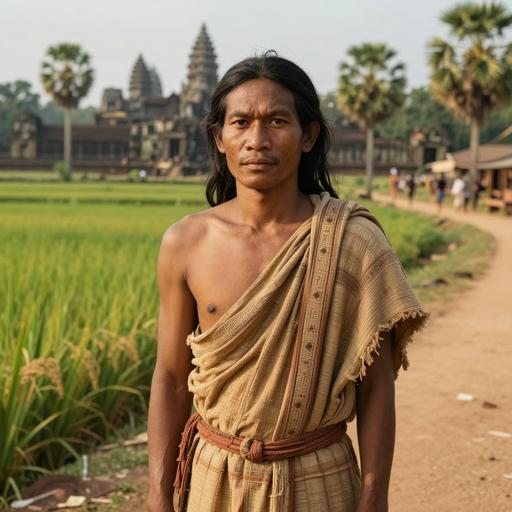
The biological and cultural markers that define this ancient individual
I1680
78 CE - 234 CE
Male
R30
O-Y9032
Iron Age Cambodia
Where this individual was discovered
When this individual lived in the broader context of human history
The narrative of this ancient life
The Iron Age in Cambodia, often referred to as the Pre-Angkorian period, is a fascinating and dynamic era that spans from around 500 BCE to the early centuries of the Common Era, leading up to the well-documented Angkorian period beginning in the early 9th century CE. This era is distinguished by its significant technological, cultural, and socio-political developments that set the foundations for the later grandeur of the Khmer Empire.
During this period, the region that constitutes modern-day Cambodia was characterized by a complex network of riverine, coastal, and forested environments. The Mekong River and the Tonle Sap Lake were central features, providing fertile plains conducive to agriculture and sustaining growing populations. These waterways also served as vital channels for communication, trade, and cultural exchange.
The defining technological characteristic of this era was the ability to produce and utilize iron, which marked a major advancement from the previous Bronze Age. Iron tools and weapons made agriculture more efficient and warfare more effective. The proliferation of iron usage facilitated the clearing of dense forests, enabling the expansion of agricultural lands. Iron implements such as plows increased agricultural productivity, supporting larger communities.
The Iron Age in Cambodia is marked by increasing socio-political complexity. There was a move towards more stratified societies, evidenced by the emergence of local chiefdoms, which later evolved into more centralized states. Funan and Chenla, some of the earliest known polities, began to form during this period. Although historical records from the exact time are sparse, archaeological evidence, including burial sites and artifacts, suggests the presence of hierarchical societies with distinct social classes.
The Pre-Angkorian period saw the continuation of animist traditions alongside the early influences of Brahmanism and Buddhism, introduced through Indian trade connections. Local deities and ancestor worship played a central role in community rituals, while foreign religious concepts began to permeate the elite circles, laying the groundwork for the syncretic religious practices of later periods.
Trade was a critical driver of cultural and economic development. Cambodia's strategic location allowed it to become a crucial node in trade networks that connected the Indian subcontinent with China and other parts of Southeast Asia. Goods such as spices, silk, gold, and ivory were traded, while foreign technologies and ideas, including writing systems, architectural styles, and religious concepts, flowed into the region.
While the monumental architecture of the Angkor period was yet to come, the Iron Age saw the creation of smaller-scale yet sophisticated structures, including wooden and laterite temples. Pottery, metalwork, and bead production flourished, showcasing a blend of indigenous styles with foreign influences. These artistic expressions provided insights into the aesthetic sensibilities and cultural priorities of the time.
The richest sources of information about this era come from excavations at sites such as Angkor Borei and Phnom Da in southern Cambodia. These sites have uncovered remains of ancient settlements, religious structures, ceramics, and numerous artifacts that paint a picture of a vibrant and interconnected society. Radiocarbon dating and stratigraphic analysis have been crucial in piecing together the chronology of the period.
In summary, the Iron Age in pre-Angkorian Cambodia was a time of profound transformation. It laid the economic, cultural, and technological foundations necessary for the subsequent rise of the Angkorian Empire, one of the most iconic civilizations of Southeast Asia. While less is known about this era compared to the periods that followed, ongoing archaeological research continues to unravel the complexities of this formative time.
Other ancient individuals connected to this sample