Menu
Store
Blog
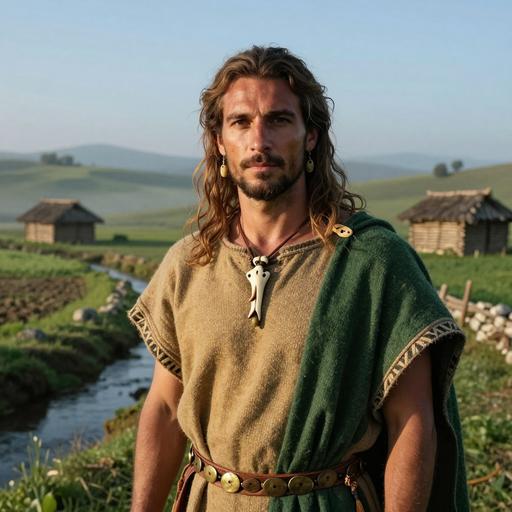
Portrait reconstruction of R19
Ancient Individual

A man buried in Italy in the Regional era

R19
5356 BCE - 5035 BCE
Male
Northern Central Italian
Italy
Scroll to begin
Chapter I

Identity

The biological and cultural markers that define this ancient individual

Sample ID

R19

Date Range

5356 BCE - 5035 BCE

Biological Sex

Male

mtDNA Haplogroup

U5b3a1

Y-DNA Haplogroup

J-FGC21348

Cultural Period

Northern Central Italian

Chapter II

Place

Where this individual was discovered

Country Italy
Locality Ripabianca di Monterado (Centro, Marche, Ancona)
Coordinates 43.6978, 13.0914
Chapter III

Time

When this individual lived in the broader context of human history

R19 5356 BCE - 5035 BCE
Chapter IV

Story

The narrative of this ancient life

The Northern Central Italian region during the Etruscan-Roman period is a fascinating subject, characterized by a dynamic blend of Etruscan and Roman cultures. This era marks a significant transitional phase influenced by indigenous traditions and the expanding power of Rome. Here's an extensive and detailed description of this cultural milieu:

Geography and Environment

The Northern Central Italian region primarily encompasses areas that are now part of modern-day Tuscany, Lazio, and Umbria. This landscape is diverse, featuring fertile plains, rolling hills, and strategic coastal regions. The Arno and Tiber rivers, along with their tributaries, were crucial for agriculture and trade, providing natural routes for the exchange of goods and cultural interactions.

Etruscan Influence

Society and Culture

The Etruscans, an enigmatic civilization, were the dominant force in the region before the rise of Rome. They are known for their sophisticated society, marked by urbanization, monumental architecture, and a rich cultural life. Etruscan society was organized into city-states such as Fiesole, Volterra, and Tarquinia, each governed by a lucumo, or chief magistrate.

Religion and Art

Religion played a central role in Etruscan life, deeply influencing rituals, art, and architecture. They practiced polytheism with a pantheon of gods similar to those of the Greeks and Romans. Etruscan art is distinguished by its vibrant pottery, intricate metalwork, and expressive funerary sculptures, with tombs that provide vivid insights into their beliefs about the afterlife.

Language and Writing

The Etruscan language, though only partially understood today, was distinct from Latin but employed a similar alphabet derived from Greek. Inscriptions on tombs, pottery, and artifacts offer valuable, albeit limited, information about their society and interactions with neighboring cultures.

Roman Integration and Influence

Political Transformation

The Roman conquest of Etruria began around the late 4th century BCE, culminating in complete assimilation by the early 1st century BCE. This integration significantly impacted political structures, with many Etruscan cities becoming Roman municipia, granting certain civic rights and responsibilities. Etruscan elites were often incorporated into the Roman aristocracy, facilitating a smoother cultural transition.

Urban and Architectural Development

Under Roman influence, urban planning and architecture in the region saw considerable advancement. Roman engineering prowess led to the development of roads, aqueducts, and public buildings, many of which followed Etruscan precedents but with added Roman grandeur and functionality. Cities expanded with forums, baths, temples, and theaters, reflecting Roman civic ideals.

Cultural Synthesis

The integration fostered a rich cultural synthesis. Etruscan religious practices and deities were absorbed into Roman state religion, and Etruscan contributions to Roman art, particularly in portraiture and temple architecture, were notable. This merger is epitomized in the Roman adoption of the fasces, an Etruscan symbol of power, and the influence of the Etruscan haruspex in Roman religious traditions.

Economy and Society

The economy of the region thrived on agriculture, metallurgy, and trade. The fertile lands supported the cultivation of wheat, olives, and grapes, staples of the Mediterranean diet that supported local consumption and export. Etruscan expertise in metallurgy produced high-quality bronze and iron goods, which were highly valued in the Roman market.

Society in the region comprised a complex hierarchy, including patricians, plebeians, and slaves. The assimilation into Roman culture provided social mobility for some Etruscans, while Roman citizenship later broadened economic and social prospects for many inhabitants of the region.

Legacy

The era of Etruscan-Roman culture in Northern Central Italy left a lasting legacy. The fusion of Etruscan and Roman elements contributed significantly to the foundations of Roman civilization, influencing legal codes, religious rituals, and artistic traditions. Modern archaeological discoveries continue to unveil the depth of Etruscan contributions to Roman society, offering new insights into this vibrant cultural milieu.

Conclusion

The Northern Central Italian region during the Etruscan-Roman period represents a compelling study of cultural adaptation and synthesis. It highlights the transformative power of cultural exchanges and the lasting impact of these interactions on the broader narrative of Western civilization. This era was not just a story of conquest but of integration, where two cultures merged to create a legacy that would endure for centuries.

Chapter V

Context

Other ancient individuals connected to this sample

Sources

References

Scientific publications and genetic data

Scientific Publication

Ancient Rome: A genetic crossroads of Europe and the Mediterranean

Authors Antonio ML, Gao Z, Moots HM
Abstract

Ancient Rome was the capital of an empire of ~70 million inhabitants, but little is known about the genetics of ancient Romans. Here we present 127 genomes from 29 archaeological sites in and around Rome, spanning the past 12,000 years. We observe two major prehistoric ancestry transitions: one with the introduction of farming and another prior to the Iron Age. By the founding of Rome, the genetic composition of the region approximated that of modern Mediterranean populations. During the Imperial period, Rome's population received net immigration from the Near East, followed by an increase in genetic contributions from Europe. These ancestry shifts mirrored the geopolitical affiliations of Rome and were accompanied by marked interindividual diversity, reflecting gene flow from across the Mediterranean, Europe, and North Africa.

Use code for 40% off Expires Feb 27