Menu
Store
Blog
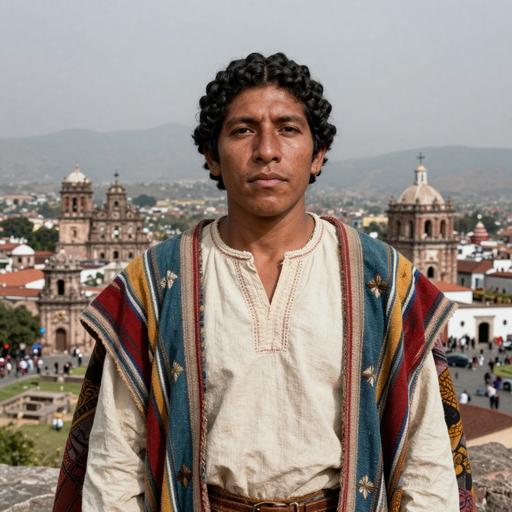
Portrait reconstruction of SJN002
Ancient Individual

A man buried in Mexico in the Colonial era

SJN002
1450 CE - 1620 CE
Male
Afro-Mexican Community of Colonial Mexico City
Mexico
Scroll to begin
Chapter I

Identity

The biological and cultural markers that define this ancient individual

Sample ID

SJN002

Date Range

1450 CE - 1620 CE

Biological Sex

Male

mtDNA Haplogroup

L3d1a1a

Y-DNA Haplogroup

E-P278.1/E-M4254

Cultural Period

Afro-Mexican Community of Colonial Mexico City

Chapter II

Place

Where this individual was discovered

Country Mexico
Locality San José de los Naturales Royal Hospital mass burial (Mexico City)
Chapter III

Time

When this individual lived in the broader context of human history

SJN002 1450 CE - 1620 CE
Chapter IV

Story

The narrative of this ancient life

The Afro-Mexican community in colonial Mexico City represented a unique and multifaceted culture shaped by various forces during the era of Spanish colonial rule. This community emerged as a distinct cultural and social entity due to the transatlantic slave trade, colonial policies, and the interactions between diverse ethnic groups. Here is an extensive and detailed description of the Afro-Mexican community of colonial Mexico City:

Historical Context

Colonial Mexico City, known as Mexico-Tenochtitlan before the Spanish conquest, was a vibrant hub in the Viceroyalty of New Spain. After Hernán Cortés's conquest in 1521, the city rapidly grew as the political, religious, and economic center of colonial Mexico. With this growth came the influx of various ethnic groups, including Spaniards, Indigenous peoples, and Africans. Africans were brought to Mexico as slaves via the transatlantic slave trade, with the peak importation occurring during the 16th and 17th centuries.

Demographics and Social Structure

  • Population: By the late 16th and early 17th centuries, the Afro-Mexican population was substantial in Mexico City. They were part of a larger grouping known as \castas," a racial and social classification system. Within the city, the Afro-Mexican community included enslaved Africans and their descendants, as well as free blacks and mulattos (people of mixed African and European descent).

  • Slavery and Labor: Many Afro-Mexicans in colonial Mexico City were subjected to slavery and forced labor. They worked in various sectors including agriculture, mining, domestic service, and as skilled artisans. Enslaved Africans were often employed in haciendas, workshops, and urban households.

  • Social Mobility: Although restricted, social mobility was possible. Some Afro-Mexicans gained freedom through self-purchase, manumission, or as a reward for service. Free Afro-Mexicans could own property, engage in trade, and occasionally secure positions in colonial institutions.

Cultural Life

  • Language and Religion: The Afro-Mexican community exhibited a rich cultural tapestry, blending African, Indigenous, and Spanish influences. While Spanish was the lingua franca, African languages persisted among newly arrived slaves. The adoption of Christianity was widespread, but African spiritual practices and syncretic religions also flourished.

  • Music and Dance: Afro-Mexicans contributed significantly to the cultural milieu through music and dance, which served as expressions of identity and resistance. Instruments like the marimba and drums, along with dance forms infused with African rhythms, became integral to the cultural landscape.

  • Cuisine: The culinary culture of Afro-Mexicans melded African, Indigenous, and Spanish ingredients and techniques. Dishes characterized by the use of plantains, yams, and various beans, often spiced with ingredients reflective of African kitchens, became part of the broader Mexican cuisine.

Challenges and Resistance

  • Discrimination and Marginalization: Despite their cultural contributions, Afro-Mexicans faced systemic discrimination and were often marginalized within colonial society. Legal restrictions limited their rights and reinforced their social and economic disenfranchisement.

  • Resistance and Resilience: Acts of resistance, both subtle and overt, were common. These ranged from cultural retention and adaptation to physical revolt. The Afro-Mexican community established networks of solidarity and kinship, maintaining a strong communal identity despite oppressive conditions.

Integration and Influence

  • Intermixing with Other Groups: Intermarriage and social blending with Indigenous and mestizo (mixed European and Indigenous heritage) communities facilitated cultural exchanges and the creation of new identities and traditions within Mexico City.

  • Cultural Legacy: Over time, elements of Afro-Mexican culture permeated Mexican society more broadly. This included contributions to language, music, and culinary traditions that continue to influence modern Mexican culture.

Conclusion

The Afro-Mexican community of colonial Mexico City played a pivotal role in shaping the cultural and social landscape of the era. Despite the adversities imposed by colonial rule, Afro-Mexicans demonstrated resilience, adaptability, and creativity. Their legacy is a testament to their enduring influence and the diversity of Mexican cultural history. Through a complex blend of African, Indigenous, and European elements, the Afro-Mexican community created a unique culture that remains an integral part of Mexico's national identity today."

Chapter V

Context

Other ancient individuals connected to this sample

Sources

References

Scientific publications and genetic data

Scientific Publication

Origin and Health Status of First-Generation Africans from Early Colonial Mexico

Authors Barquera R, Lamnidis TC, Lankapalli AK
Abstract

The forced relocation of several thousand Africans during Mexico's historic period has so far been documented mostly through archival sources, which provide only sparse detail on their origins and lived experience. Here, we employ a bioarchaeological approach to explore the life history of three 16th century Africans from a mass burial at the San José de los Naturales Royal Hospital in Mexico City. Our approach draws together ancient genomic data, osteological analysis, strontium isotope data from tooth enamel, δ13C and δ15N isotope data from dentine, and ethnohistorical information to reveal unprecedented detail on their origins and health. Analyses of skeletal features, radiogenic isotopes, and genetic data from uniparental, genome-wide, and human leukocyte antigen (HLA) markers are consistent with a Sub-Saharan African origin for all three individuals. Complete genomes of Treponema pallidum sub. pertenue (causative agent of yaws) and hepatitis B virus (HBV) recovered from these individuals provide insight into their health as related to infectious disease. Phylogenetic analysis of both pathogens reveals their close relationship to strains circulating in current West African populations, lending support to their origins in this region. The further relationship between the treponemal genome retrieved and a treponemal genome previously typed in an individual from Colonial Mexico highlights the role of the transatlantic slave trade in the introduction and dissemination of pathogens into the New World. Putting together all lines of evidence, we were able to create a biological portrait of three individuals whose life stories have long been silenced by disreputable historical events.

Use code for 35% off Expires Apr 16