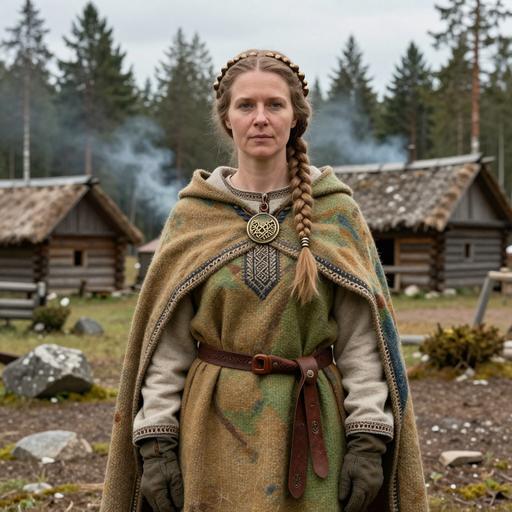
The Medieval period, often referred to as the Middle Ages, spans roughly from the 5th to the late 15th century in European history. This era, following the fall of the Western Roman Empire and preceding the Renaissance and the Age of Discovery, saw significant transformations across Western Christendom, shaping the sociopolitical, cultural, and economic landscapes of Europe.
Sociopolitical Structure
Feudalism
Feudalism was the predominant political and social system during the medieval period. It was a decentralized hierarchy of power based on the holding of land. Kings and monarchs granted land to nobles, such as dukes and counts, in exchange for loyalty and military service. These nobles, in turn, provided protection and plots of land to vassals or knights, who were obligated to serve their lords, primarily in military matters. At the bottom of this hierarchy were the serfs or peasants, who worked the land and provided food and services to the upper classes in exchange for protection and small land plots to cultivate.
Manorial System
The manorial system complemented feudalism and was the organization of agricultural and economic production. Lords owned large estates or manors, which were self-sufficient communities consisting of villages, farmlands, and pastures. The serfs worked the manorial lands and produced necessary goods for the settlement, including foodstuffs, clothing, and tools.
Religion
Dominance of the Church
The Roman Catholic Church was a central institution during the Middle Ages, wielding immense spiritual and political power. The Pope, as the head of the Church, influenced both religious and secular matters, at times clashing with kings and emperors over authority and governance.
Monasteries
Monasteries were thriving centers for religious devotion, education, and preservation of knowledge. Monks and nuns dedicated their lives to prayer, manual labor, and the copying of texts, effectively safeguarding religious, philosophical, and classical knowledge through challenging times. Moreover, monastic communities often provided refuge, medical care, and assistance to the needy.
Crusades
The Crusades, a series of religious wars sanctioned by the Church, were launched with the primary aim of recapturing Jerusalem and the Holy Land from Muslim control. These military campaigns, spanning the 11th to the 13th centuries, had profound religious, economic, and cultural impacts on European society, accelerating trade, cultural exchanges, and tensions between Christendom and the Islamic world.
Culture and Intellectual Life
Universities and Education
The rise of universities, such as those in Bologna, Paris, and Oxford, were pivotal in advancing education and intellectual life. These institutions became centers for learning where scholasticism—an intellectual method that used logic and reasoning to explore religious doctrine—flourished. Notable figures like Thomas Aquinas emerged, attempting to synthesize Christian theology with classical philosophy.
Art and Architecture
Gothic architecture, characterized by pointed arches, ribbed vaults, and flying buttresses, marked a departure from the Romanesque style. Great cathedrals, such as Notre-Dame de Paris and Chartres, exemplified this style, adorned with intricate sculptures and stained-glass windows depicting biblical stories.
Medieval art was primarily religious, serving to educate and inspire. Illuminated manuscripts, frescoes, and altar pieces conveyed Christian narratives and saints’ lives, playing a crucial role in visual teaching and devotion.
Economy and Society
Trade and Cities
The latter part of the Middle Ages saw a resurgence in trade and urban life. The growth of trade fairs, merchant guilds, and the Hanseatic League facilitated the exchange of goods across Europe and with the East. Cities like Venice, Florence, and Bruges became bustling centers of commerce and finance.
Black Death
The Black Death, a devastating pandemic that swept through Europe in the mid-14th century, dramatically affected medieval society. With a death toll ranging between 25% and 50% of Europe's population, the plague led to labor shortages, a decline in trade, and social upheaval, but also paved the way for economic and social reforms in its aftermath.
Legacy
Medieval Europe of Western Christendom laid the foundations for modern Europe through its complex social structures, the central role of Christianity, and significant cultural achievements. Despite being characterized by periods of instability and strife, the Middle Ages was a dynamic era that fostered lasting institutions, traditions, and ideas, pivotal to the evolution of Western civilization.