Menu
Store
Blog
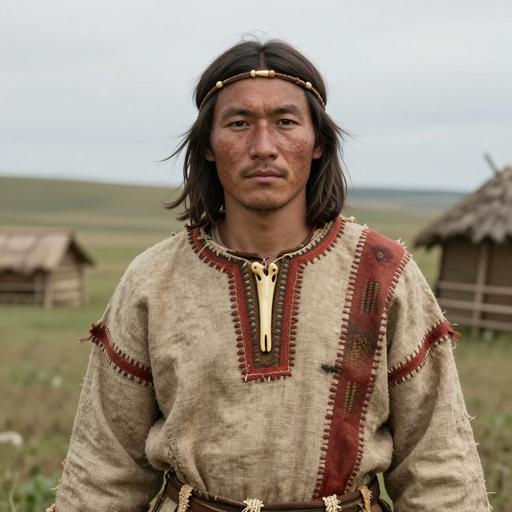
Portrait reconstruction of LM16
Ancient Individual

A man buried in Russia in the Iron Age era

LM16
4935 BCE - 4729 BCE
Male
Russian Primorsky Krai
Russia
Scroll to begin
Chapter I

Identity

The biological and cultural markers that define this ancient individual

Sample ID

LM16

Date Range

4935 BCE - 4729 BCE

Biological Sex

Male

mtDNA Haplogroup

D4b1a2a

Y-DNA Haplogroup

CF

Cultural Period

Russian Primorsky Krai

Chapter II

Place

Where this individual was discovered

Country Russia
Locality .. (Primorsky Krai, Partizansky District)
Chapter III

Time

When this individual lived in the broader context of human history

LM16 4935 BCE - 4729 BCE
Chapter IV

Story

The narrative of this ancient life

Primorsky Krai, located in the Far East of Russia, is a region with a rich cultural tapestry and a significant historical backdrop that dates back to its early exploration and colonization. To understand the cultural and historical nuances of the Early Russian influence in Primorsky Krai, it is crucial to delve into the various aspects that shaped this unique area.

Historical Context

Primorsky Krai’s significance rose as a strategic and economically promising territory. It became more integrated into Russian influence in the 19th century, following several territorial treaties between the Qing Dynasty of China and the Russian Empire, such as the Treaty of Aigun (1858) and the Convention of Peking (1860). These agreements facilitated Russian expansion into the Far East, establishing control over areas that are now part of Primorsky Krai.

Geographic and Strategic Importance

Stretching along the coast of the Sea of Japan, Primorsky Krai is characterized by its rugged terrain, extensive forests, and a multitude of rivers. The region’s geographic location offered significant advantages in terms of maritime navigation and access to Pacific trading routes. Vladivostok, established in 1860, became a critical naval base and trading port, marking its importance as Russia sought to bolster its presence in the Pacific.

Indigenous People and Early Russian Influence

Before Russian expansion, the region was inhabited by indigenous peoples, including the Udege, Nanai, and other Tungusic-speaking populations. These communities lived in harmony with the land, practicing a lifestyle that involved fishing, hunting, and gathering. Shamanism and animistic beliefs were deeply rooted in their culture.

With the arrival of Russian settlers, there was a significant cultural exchange. Russian settlers brought Eastern Orthodox Christianity, Russian traditions, and agricultural practices to the region. This led to a gradual shift in the cultural dynamics as indigenous peoples encountered new societal structures, technologies, and belief systems.

Economic Development

The early Russian settlers recognized the region’s economic potential, fueled by rich natural resources, including timber, fish, and minerals. Logging, fishing, and mining accelerated as the main economic activities, leading to the establishment of small settlements and trading posts that evolved into more significant economic centers. The construction of the Trans-Siberian Railway further boosted economic integration, providing a direct connection to European Russia and facilitating the movement of goods and people.

Cultural Evolution

The cultural fabric of Primorsky Krai during the early Russian period is a fusion of indigenous traditions and the customs brought by Russian settlers. Architecture in the region, especially in cities like Vladivostok, showcases Russian and European influences, evident in the Orthodox churches, administrative buildings, and residential structures that blend traditional Russian designs with local materials and techniques.

Art, music, and literature from this era often reflect the natural beauty of the region, coupled with the complex interrelations between settlers and indigenous groups. Russian folklore and traditions entwined with local narratives, creating a unique cultural heritage that still echoes in contemporary Primorsky Krai.

Social and Political Landscape

In the early stages, Russian expansion in Primorsky Krai was primarily driven by military and politically appointed administrators who were responsible for maintaining order and establishing Russian law and governance in the region. This integration often led to challenges in balancing the interests of the settlers with those of indigenous communities. Social hierarchies began to form, characterizing a society that was still finding its footing amidst cultural convergence.

Conclusion

In summary, the early Russian era in Primorsky Krai was marked by strategic expansion and cultural amalgamation, predicated on economic exploitation and geopolitical interests. The lasting influence of this period is evident in the region’s demographic composition, cultural traditions, and economic structures, all of which reflect a complex history of adaptation and resilience. Understanding the early Russian influence in Primorsky Krai provides valuable insights into the broader historical processes that shaped Russia's Far East and its diverse cultural landscape.

Chapter V

Context

Other ancient individuals connected to this sample

Sources

References

Scientific publications and genetic data

Scientific Publication

Middle Holocene Siberian genomes reveal highly connected gene pools throughout North Asia

Authors Wang K, Yu H, Radzevičiūtė R
Abstract

The peopling history of North Asia remains largely unexplored due to the limited number of ancient genomes analyzed from this region. Here, we report genome-wide data of ten individuals dated to as early as 7,500 years before present from three regions in North Asia, namely Altai-Sayan, Russian Far East, and the Kamchatka Peninsula. Our analysis reveals a previously undescribed Middle Holocene Siberian gene pool in Neolithic Altai-Sayan hunter-gatherers as a genetic mixture between paleo-Siberian and ancient North Eurasian (ANE) ancestries. This distinctive gene pool represents an optimal source for the inferred ANE-related population that contributed to Bronze Age groups from North and Inner Asia, such as Lake Baikal hunter-gatherers, Okunevo-associated pastoralists, and possibly Tarim Basin populations. We find the presence of ancient Northeast Asian (ANA) ancestry-initially described in Neolithic groups from the Russian Far East-in another Neolithic Altai-Sayan individual associated with different cultural features, revealing the spread of ANA ancestry ∼1,500 km further to the west than previously observed. In the Russian Far East, we identify 7,000-year-old individuals that carry Jomon-associated ancestry indicating genetic links with hunter-gatherers in the Japanese archipelago. We also report multiple phases of Native American-related gene flow into northeastern Asia over the past 5,000 years, reaching the Kamchatka Peninsula and central Siberia. Our findings highlight largely interconnected population dynamics throughout North Asia from the Early Holocene onward.

Use code for 35% off Expires Apr 20