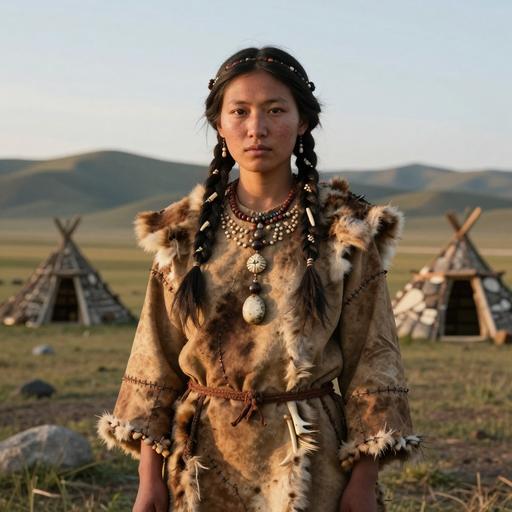
The Upper Paleolithic era in Mongolia, often represented by sites such as the Salkhit site, marks a significant period in the history of human evolution and cultural development. This era, which spans from around 50,000 to 10,000 years ago, witnessed the emergence of anatomically modern humans and the development of complex cultural practices among nomadic hunter-gatherer groups.
Geographic and Environmental Context
Mongolia during the Upper Paleolithic era was characterized by a harsh and variable climate, influenced by the glacial and interglacial cycles. The region's environment was a mix of steppes, mountains, and forests, which provided a diverse range of resources for human populations. The climate influenced the types of flora and fauna available, shaping the subsistence strategies of these nomadic communities.
Physical Anthropology
The human populations of Upper Paleolithic Mongolia were anatomically modern Homo sapiens. The Salkhit site, for instance, has yielded important fossil evidence, including a skull fragment that has provided insights into the morphological characteristics and potential migratory patterns of these ancient peoples. Genetic studies suggest a mixture of local evolution and migration, indicating a dynamic interchange between different human groups across Eurasia.
Subsistence and Economy
As hunter-gatherers, the Upper Paleolithic inhabitants of Mongolia relied heavily on the hunting of large game such as mammoths, woolly rhinoceroses, and Pleistocene megafauna, as well as smaller animals like deer and antelope. The diverse landscape offered ample opportunities for gathering plant resources, though evidence suggests hunting was a primary subsistence activity. Seasonal movements were likely necessary to follow animal migrations and to exploit different ecological zones efficiently.
Tools and Technology
The Upper Paleolithic toolkit in Mongolia consisted of advanced stone tool technologies, reflecting a greater degree of specialization and sophistication compared to earlier periods. Tools such as blades, scrapers, and points were crafted using techniques like pressure flaking and were often made from high-quality raw materials such as flint or chert, sourced from specific locations. These technological advances facilitated more efficient hunting and processing of animal hides and meat.
Art and Symbolic Behavior
Evidence of symbolic behavior during this period is limited but represents an essential aspect of Upper Paleolithic culture. Artifacts such as carved objects, personal ornaments, and potentially ritualistic sites indicate cognitive and cultural complexity. The presence of ochre, which may have been used for body or tool decoration, suggests symbolic expression and social communication.
Social Organization and Mobility
The nomadic lifestyle of these hunter-gatherer groups necessitated a high degree of social flexibility and cooperation. Social organization was likely based on small bands or extended family groups, characterized by egalitarian structures and shared responsibilities. Mobility patterns suggest cyclical movements dictated by climatic conditions and resource availability, with temporary camps established in strategic locations.
Cultural Continuity and Influence
The Upper Paleolithic era in Mongolia points to significant cultural continuity and interaction with neighboring regions such as Siberia and North China. This is evidenced by similarities in tool technology and potential cultural exchanges, which may have facilitated human adaptation to the challenging environments of Central and East Asia.
In conclusion, the Upper Paleolithic period in Mongolia represents a dynamic era of human adaptation, technological innovation, and cultural development, shaped by the challenges and opportunities of a changing landscape. The archaeological evidence from this period, exemplified by sites like Salkhit, offers a glimpse into the life and evolution of nomadic hunter-gatherer societies in prehistoric Mongolia.