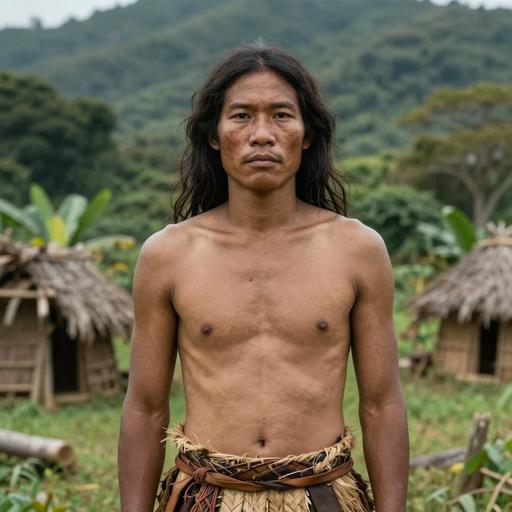
The Late Paleolithic era in Taiwan is a fascinating period that marks the early human presence and cultural development in the region. This era is part of the broader Paleolithic period, also known as the Old Stone Age, which is characterized by the use of rudimentary chipped stone tools. The Late Paleolithic in Taiwan is associated with the initial settlement of peoples who are believed to be ancestors of the Austronesians, a diverse group of peoples widely spread across the islands of Southeast Asia, the Pacific, and, to some extent, Madagascar.
Geographic Context
Taiwan, an island off the southeastern coast of China, features diverse landscapes ranging from rugged mountains and dense forests to fertile plains and extensive coastlines. During the Late Paleolithic, Taiwan's geography was somewhat different from today due to lower sea levels during the glacial periods. The island was more accessible via land bridges from mainland Asia, facilitating the migration of human populations into the region. This geographical context played a significant role in shaping early human activity and settlement patterns.
Archaeological Evidence
The evidence for Late Paleolithic human activity in Taiwan primarily comes from archaeological excavations that have uncovered stone tools, remnants of campsites, and occasionally human remains. Sites such as the Changbin Culture along the eastern coast of Taiwan provide crucial insights. The stone tools from this period are typically simple, including scrapers, blades, and points crafted from locally available materials like flint and quartzite. These tools suggest a hunter-gatherer lifestyle, with a diet likely comprising small to medium-sized game, fish, and gathered plant resources.
Cultural and Technological Developments
The Late Paleolithic marks a period before the advent of agriculture, where human societies were primarily nomadic or semi-nomadic. The technology was limited to lithic (stone) tools, with little evidence of advanced crafting techniques seen in later periods. However, the gradual refinement of tool-making skills is evident, indicating evolving techniques and adaptation to local resources.
Migration and Ethnogenesis
Scholars believe that the human populations during this time were part of the larger wave of Austronesian migrations, which, over millennia, resulted in the widespread dispersal of these peoples across vast oceanic expanses. The Austronesians are known for their remarkable seafaring capabilities, and it is plausible that even during the Late Paleolithic, precursors to these advanced navigational skills were already developing.
Social Organization
While direct evidence of social structures from this period in Taiwan is sparse, insights can be drawn by examining similar hunter-gatherer groups. Societies during the Late Paleolithic were likely organized into small, familial bands with flexible social hierarchies. Cooperation for hunting, gathering, and tool-making would have been essential for survival, fostering community bonds and shared cultural practices.
Environmental Interaction
The environment during the Late Paleolithic was dynamic, with climatic variations influencing resource availability. Human groups had to be adaptable, using their knowledge of local ecologies to exploit seasonal resources efficiently. These interactions with the environment laid foundational ecological knowledge that would inform subsequent cultural developments, including agriculture.
Legacy
The legacy of the Late Paleolithic in Taiwan extends into the Neolithic and beyond, influencing later Austronesian cultures. The early settlement patterns, tool-making techniques, and subsistence strategies serve as a prelude to the complexities of Neolithic Taiwan, where agriculture began to flourish and more permanent villages were established. Moreover, the genetic and cultural imprints of these early inhabitants significantly contributed to the Austronesian legacy that spread across the Pacific.
In summary, the Late Paleolithic era of Taiwan represents a critical juncture in the prehistory of the Austronesian peoples. It is a period marked by early human adaptation to island life, the inception of skills that would set the stage for future maritime advancements, and the foundational social and cultural practices that would persist and evolve over the millennia.