Menu
mtDNA Haplogroup • Maternal Lineage

X2B4

mtDNA Haplogroup X2B4

~8,000 years ago
Near East (Levant / Anatolia)
1 subclades
Scroll to explore
Chapter I

The Story

The journey of mtDNA haplogroup X2B4

Origins and Evolution

mtDNA haplogroup X2B4 is a downstream branch of X2B, itself a subclade of mitochondrial haplogroup X2. Given the established Near Eastern/Anatolian origin of X2B in the Late Pleistocene to early Holocene, X2B4 most plausibly arose in the early Holocene (roughly 6–9 kya) in the Levant/Anatolia region as a locally derived maternal lineage. From a phylogenetic perspective, X2B4 carries mutations that define it as a distinct branch within X2B and its time depth is consistent with post‑glacial population reorganization and early Neolithic demographic expansions.

Subclades

As a relatively derived subclade, X2B4 may contain minor downstream lineages identifiable in high‑resolution mitogenomes; however, X2B4 is usually treated as a terminal or near‑terminal branch in many published trees because its frequency in modern populations is low and the number of fully sequenced descendants is limited. Ongoing ancient DNA and mitogenome surveys occasionally reveal new substructure; researchers should consult updated phylogenies (Phylotree / GenBank submissions) for the latest subclade definitions.

Geographical Distribution

X2B4 shows its highest relative concentrations in regions that served as conduits for Neolithic and post‑Neolithic movement: the Levant and Anatolia, the southern Balkans and Italy, and pockets of the Caucasus. It occurs at lower frequencies farther into central and eastern Europe and sporadically in North Africa. The lineage is also represented in some Mediterranean Jewish communities with eastern Mediterranean ancestry (consistent with founder effects and historical demographic processes). Importantly, X2B4 has been observed in multiple ancient Neolithic remains from Anatolia and Europe, supporting its association with early farmer dispersals.

Historical and Cultural Significance

Because X2B4 is nested within a maternal clade that expanded with Near Eastern populations during the Neolithic, its distribution mirrors archaeological and genetic signatures of early farming communities spreading into the Mediterranean and southeastern Europe. In population genetics studies, X2B4 (together with other X2 subclades and Neolithic‑associated mtDNA lineages such as H, J, T, and K) is used to trace maternal ancestry related to the Anatolian Neolithic expansion and later regional demographic processes (e.g., Bronze Age movements, local founder events in island and coastal populations). Its presence in ancient DNA contexts strengthens interpretations that elements of the maternal gene pool in southern Europe derive from Near Eastern farmer inputs rather than only Paleolithic continuity.

Conclusion

X2B4 is a low‑to‑moderate frequency Neolithic‑era maternal lineage that provides useful resolution for studying Holocene population movements between the Near East, the Caucasus, and the Mediterranean. While not as common as some other Neolithic mtDNA haplogroups, its detection in both modern populations and archaeological remains makes it informative for fine‑scale reconstructions of maternal ancestry in the eastern Mediterranean and adjacent regions. Continued mitogenome sequencing and ancient DNA sampling will clarify its finer substructure and demographic history.

Key Points

  • Origins and Evolution
  • Subclades
  • Geographical Distribution
  • Historical and Cultural Significance
  • Conclusion
Chapter II

Tree & Relationships

Phylogenetic context and subclades

Evolution Path

This haplogroup's evolutionary journey from its earliest ancestor to the present.

Steps Haplogroup Age Estimate Archaeology Era Time Passed Immediate Descendants Tested Modern Descendants Ancient Connections
1 X2B4 Current ~8,000 years ago 🌾 Neolithic 8,000 years 1 9 0
2 X2B ~12,000 years ago 🌾 Neolithic 12,000 years 5 69 73
3 X2 ~20,000 years ago 🏹 Mesolithic 20,000 years 11 108 48
4 X ~10,000 years ago 🌾 Neolithic 10,000 years 4 125 28
5 N ~60,000 years ago 🦴 Paleolithic 60,000 years 15 15,452 13
6 L3 ~70,000 years ago 🦴 Paleolithic 70,000 years 11 17,621 6
7 L ~160,000 years ago 🦴 Paleolithic 160,000 years 7 18,987 5

Siblings (4)

Other branches from the same parent haplogroup

Chapter III

Where in the World

Geographic distribution and modern presence

Place of Origin

Near East (Levant / Anatolia)

Modern Distribution

The populations where mtDNA haplogroup X2B4 is found include:

  1. Southern European populations (e.g., Italy, Greece, the Balkans)
  2. Near Eastern populations (Levantine and Anatolian groups)
  3. Caucasus populations (e.g., Armenia, Georgia)
  4. Central and Eastern European populations (at lower frequency)
  5. North African populations (sporadic, low frequency)
  6. Jewish communities of eastern Mediterranean origin (Sephardic/Levantine-associated lineages)
  7. Ancient Neolithic farmer remains from Anatolia and Europe (archaeological contexts)
CHAPTER IV

When in Time

Your haplogroup in the context of human history

~10k years ago

Neolithic Revolution

Agriculture begins, settled communities form

~8k years ago

Haplogroup X2B4

Your mtDNA haplogroup emerged in Near East (Levant / Anatolia)

Near East (Levant / Anatolia)
~5k years ago

Bronze Age

Metalworking, writing, and early civilizations

~3k years ago

Iron Age

Iron tools, expanded trade networks

~2k years ago

Classical Antiquity

Greek and Roman civilizations flourish

Present

Present Day

Modern era

Your Haplogroup
Historical Era
Chapter IV-B

Linked Cultures

Ancient cultures associated with mtDNA haplogroup X2B4

Cultural Heritage

These ancient cultures have been linked to haplogroup X2B4 based on matching ancient DNA samples from archaeological excavations. The presence of this haplogroup in these cultures provides insights into the migrations and population movements of populations carrying this haplogroup.

Alemannic Anglo-Saxon Bell Beaker Corded Ware Early Bronze Age Swiss Frälsegården Gloucestershire Culture Hallstatt Culture Irish Neolithic Iron Age British Lengyel Culture Viking Culture
Culture assignments are based on archaeological context of ancient DNA samples and may represent regional associations during specific time periods.
Chapter V

Sample Catalog

14 direct carriers and 7 subclade carriers of haplogroup X2B4

21 / 21 samples
Portrait Sample Country Era Date Culture mtDNA Match
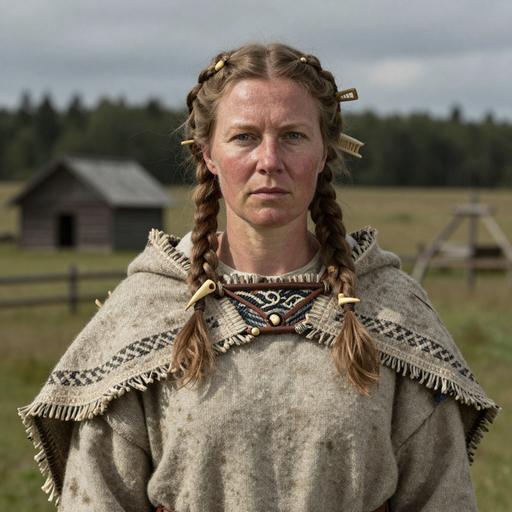
Portrait of ancient individual I20679 from United Kingdom, dated 400 CE - 600 CE
I20679
United Kingdom Early Medieval Saxon England 400 CE - 600 CE Anglo-Saxon X2b4 Direct
Portrait of ancient individual NIEcap12b from Germany, dated 580 CE - 630 CE
NIEcap12b
Germany Early Medieval Alemannic Germany 580 CE - 630 CE Alemannic X2b4 Direct
Portrait of ancient individual CE003 from United Kingdom, dated 758 BCE - 416 BCE
CE003
United Kingdom Iron Age Derbyshire, England 758 BCE - 416 BCE Iron Age British X2b4 Direct
Portrait of ancient individual I17312 from Czech Republic, dated 800 BCE - 550 BCE
I17312
Czech Republic Iron Age Hallstatt Culture, Czech Republic 800 BCE - 550 BCE Hallstatt Culture X2b4 Direct
Portrait of ancient individual VK16 from Russia, dated 900 CE - 1200 CE
VK16
Russia Viking Age Russia 900 CE - 1200 CE Viking Culture X2b4 Direct
Portrait of ancient individual VK16 from Russia, dated 900 CE - 1200 CE
VK16
Russia The Viking Age 900 CE - 1200 CE X2b4 Direct
Portrait of ancient individual TU911(SX23) from Switzerland, dated 1882 BCE - 1746 BCE
TU911(SX23)
Switzerland Early Bronze Age 2 Switzerland 1882 BCE - 1746 BCE Early Bronze Age Swiss X2b4 Direct
Portrait of ancient individual I0049 from Germany, dated 2463 BCE - 2206 BCE
I0049
Germany Corded Ware Culture, Germany 2463 BCE - 2206 BCE Corded Ware X2b4 Direct
Portrait of ancient individual MX298 from Switzerland, dated 2622 BCE - 2349 BCE
MX298
Switzerland Early Bronze Age 2 Switzerland 2622 BCE - 2349 BCE Early Bronze Age Swiss X2b4 Direct
Portrait of ancient individual KO1002 from Czech Republic, dated 2838 BCE - 2474 BCE
KO1002
Czech Republic Corded Ware Culture, Bohemia, Czech Republic 2838 BCE - 2474 BCE Corded Ware X2b4 Direct
Chapter VI

Carrier Distribution Map

Geographic distribution of 21 ancient DNA samples (direct and subclade carriers of X2B4)

Direct carrier Subclade carrier
Time Period Filter
All Time Periods
Showing all samples
Chapter VII

Temporal Distribution

Distribution of carriers across archaeological periods

Chapter VIII

Geographic Distribution

Distribution by country of origin (direct and subclade carriers shown by default)

Chapter IX

Country × Era Distribution

Cross-tabulation of carrier countries and archaeological periods (direct and subclade carriers shown by default)

Data

Data & Provenance

Source information and data quality

Last Updated 2026-02-16
Confidence Score 50/100
Coverage Low
Data Source

We use the latest phylotree for MTDNA haplogroup classification and data.