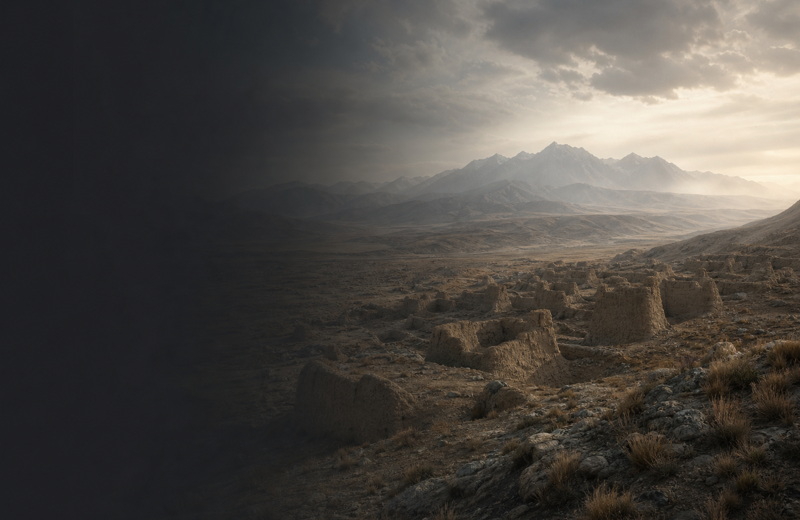
Hetian Historical Horizon
Human stories from Luopu County (1–400 CE) where east and west meet

DNA Spotlights · Ancient and Historical Cultures
Download PDF creates a visual, rasterized copy. Use Print for selectable text and better assistive-technology support.
Explore the places, time periods, and published research behind ancient DNA samples and the cultures associated with them.
Browse the collection373–384 of 1,627 spotlights
Human stories from Luopu County (1–400 CE) where east and west meet
Chemurcheck-era communities at the edge of the Aletai — bones and genes telling a combined story
A small, varied maternal genetic snapshot from Yili's Jirentaigoukou (401–106 BCE)
Burials on the Pamir fringe that reveal a tapestry of eastern and western ancestries
Iron Age burials from the Yili Basin where archaeology meets maternal lineages
Four historical-period genomes from Tekesi County reveal a cautious glimpse of east–west interactions in Xinjiang.
Maternal lineages at Kuokesuxi (538–24 BCE) reveal east–west echoes in Xinjiang's Iron Age
Late-Han era oasis community in Xinjiang, revealed by archaeology and early DNA
Echoes from a crossroads oasis in Xinjiang, 1042–489 BCE
Three Bronze Age individuals from Songshugou, Xinjiang hint at West–East genetic threads
A portrait of mixed maternal ancestries from Songshugou, Xinjiang (772–476 BCE)
A small Xinjiang community (2250 BCE) where material culture and genes hint at east–west encounters