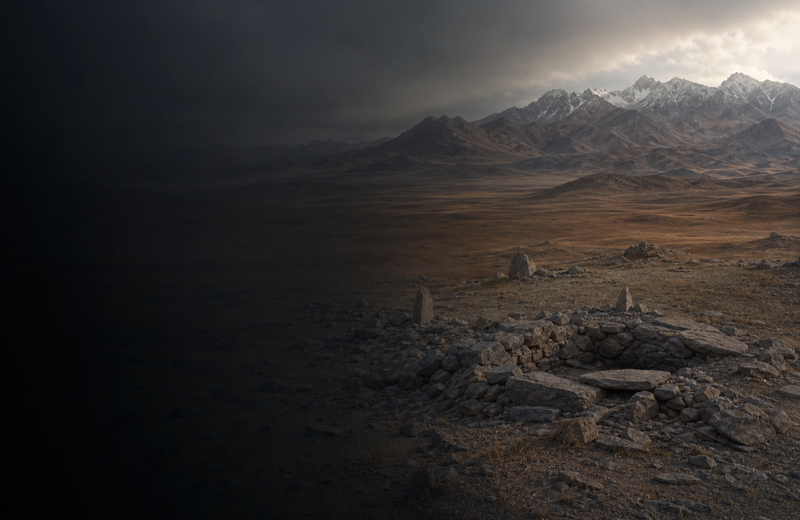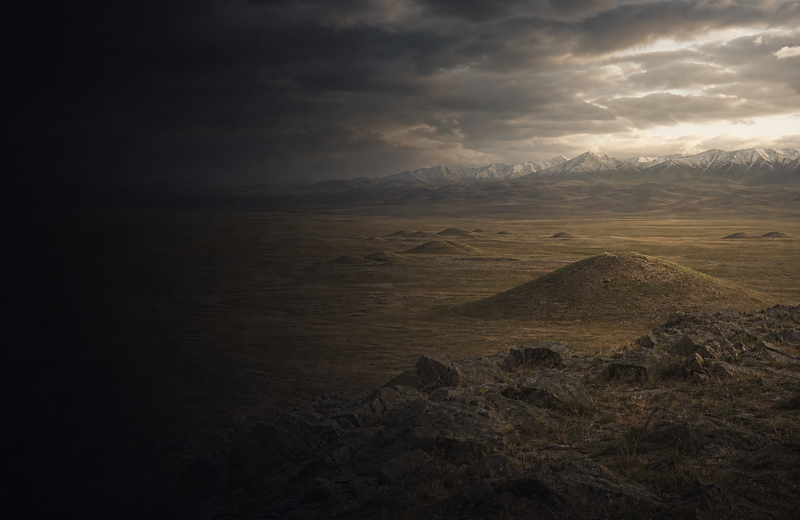
Echoes of the Center-West Steppe
Late Bronze Age communities of central-western Mongolia revealed through stones, tombs, and genomes

DNA Spotlights · Ancient and Historical Cultures
Download PDF creates a visual, rasterized copy. Use Print for selectable text and better assistive-technology support.
Explore the places, time periods, and published research behind ancient DNA samples and the cultures associated with them.
Browse the collection913–924 of 1,627 spotlights
Late Bronze Age communities of central-western Mongolia revealed through stones, tombs, and genomes
Three kurgan burials in Khovd and Bayan-Ölgii illuminate landscape, lifeways, and early East Asian ancestry.
Late Bronze Age burials in the Altai foothills hint at blended steppe ancestries
11 genomes from Salkhityn Am reveal a Steppe frontier of blended east–west ancestries.
Four tombs in eastern Mongolia reveal a compact genetic snapshot of a mobile Bronze Age community.
Early Neolithic burials on the Egiin-Gol — voices from 5600 BCE revealed in bone and gene
Arbulag sorum burials (1539–700 BCE) reveal Siberian maternal lines and steppe paternal contacts
A portrait of maternal ancestries at a northern Mongolian frontier (1250–1450 CE)
Genetic glimpses from Burgaldain Khundii and Karnikovyn Am (1000–1500 CE), northern Mongolia
Fragments of lives from Uguumur Uul connect steppe archaeology with ancient DNA
Burials from Sukhbaatar (1000–1500 CE) show steppe lives tied to northern and East Asian ancestries
Genetic and archaeological glimpses of late Xiongnu-era people in Sukhbaatar, Mongolia