Overview
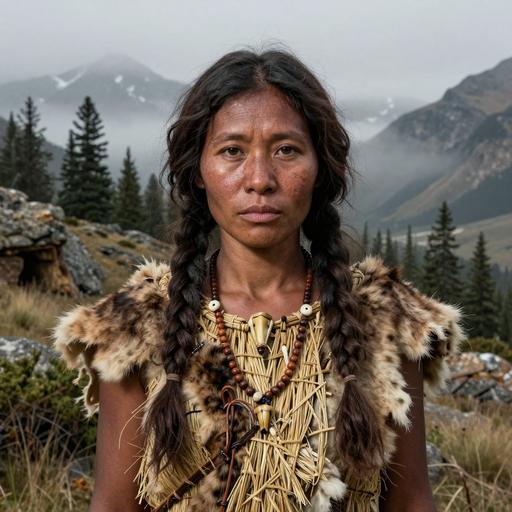
“Denisovan–Neanderthal Admixture” refers to genetic evidence indicating that Denisovan and Neanderthal populations exchanged ancestry. The label is regionally framed as Eurasia and is dated here to 50,000–40,000 BCE, though admixture estimates vary by study and target remains.
Region & Environment
Eurasia encompasses diverse cold-temperate and steppe-like environments during the late Pleistocene. The specific habitats in which populations overlapped are not fixed by this label; instead, the region-level framing reflects where the lineages are documented through fossil and genetic research.
Historical Context
During the late Pleistocene, multiple human groups occupied different parts of Eurasia. Genetic studies have shown that these groups were not fully isolated and that limited interbreeding occurred. This era label summarizes that interaction as a historical process rather than as a single archaeological horizon.
Populations & Lifeways
Both Denisovans and Neanderthals are associated with Paleolithic lifeways typical of late Pleistocene hunter-gatherers. Their mobility and use of landscapes for hunting and shelter would have created opportunities for overlap in some regions. This entry, however, focuses on population interaction and does not specify particular behaviors.
Archaeology & Material Culture
Admixture is inferred primarily through genetic evidence rather than through distinctive artifact types. While material-culture traditions can be associated with Neanderthal and other Paleolithic contexts, the admixture label itself does not tie to a particular assemblage with a defined tool tradition.
Culture & Society
Cultural practices are not directly observable from admixture events. Social implications—such as who interacted with whom—cannot be established from genetics alone. At most, the evidence indicates biological contact between groups that otherwise differed in ancestry.
Legacy & Transition
The legacy of this finding is a more connected model of late Pleistocene human history across Eurasia. Admixture events help explain why genetic lineages in later populations can carry traces of multiple archaic groups. This interaction is part of the broader transition toward anatomically modern human dominance later in the Upper Paleolithic.