A man buried in Luxembourg in the Mesolithic era

Download PDF creates a visual, rasterized copy. Use Print for selectable text and better assistive-technology support.

Loading Report

Preparing your ancestry journey

Preparing the available report content...

Your report will open automatically.

Skip to main content
Reference library / Sample profile

A man buried in Luxembourg in the Mesolithic era

Explore the recorded context, genetic comparisons and research behind this reference sample.

LuxembourgLoschbour Site, Luxembourg

A reference profile describes this sample. It does not establish a personal or family relationship.

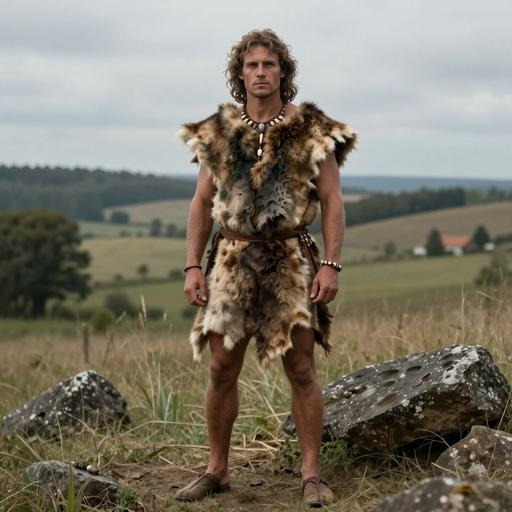
AI portrait reconstruction for A man buried in Luxembourg in the Mesolithic era
AI-generated artistic reconstruction, not a photograph of the individual.
Record

Sample details

Recorded details and available lineage markers.

Individual

Western European Hunter-Gatherers individual, Luxembourg

Sample ID: I0001

Date Range

6221 BCE - 5986 BCE

Cultural Period

Loschbour Site, Luxembourg

Biological Sex

Male

mtDNA Haplogroup

U5b1a

Y-DNA Haplogroup

I-V4921

Social Role

Hunter (AI estimate, era-typical)

Geography

Location

Where this individual was discovered

Country Luxembourg
Locality Echternach
Coordinates 49.8100, 6.4000
Chronology

Date range

When this individual lived in the broader context of human history

Western European Hunter-Gatherers individual, Luxembourg 6221 BCE - 5986 BCE
Context

Historical context

Background information associated with the reference record.

Region & Environment

Luxembourg in the Mesolithic period offered a mixed environment of river corridors, woodlands, and open patches shaped by climate and vegetation. Such settings created varied habitats for hunting and fishing and helped determine where groups established temporary camps.

Historical Context

The Loschbour timeframe (6200–5900 BCE) falls in the post-glacial Mesolithic, when western European hunter-gatherers adapted to relatively stable Holocene conditions. Rather than agriculture, the archaeological focus remains on foraging economies and mobility patterns before later Neolithic farming transformed lifeways.

Populations & Lifeways

The inhabitants of Mesolithic western Europe were typically mobile, moving between resource zones across seasons. Daily life likely centered on hunting, fishing, and gathering, with frequent reuse of favorable locales and the maintenance of toolkits for processing food and materials.

Archaeology & Material Culture

The material record at Mesolithic sites such as Loschbour is usually dominated by stone tools and associated debitage, reflecting core-and-flake technologies. Such assemblages help identify repeated activities—cutting, scraping, and other tasks connected to preparing hunted resources and plant foods. Preservation can also yield faunal remains that inform subsistence patterns.

Culture & Society

Shared technological approaches suggest social knowledge networks within the broader western Mesolithic world. At the local level, preferences in raw material and tool form can indicate group traditions and the organization of labor within small communities.

Legacy & Transition

The Mesolithic horizon precedes the Neolithic transition in the region, when farming and pottery-based lifeways became increasingly important. Sites like Loschbour provide the baseline record of forager life and the environmental adaptations that later farming communities inherited and reinterpreted.

Analysis

Genetic comparisons

These comparisons show genetic similarity, not identity or origin. The populations listed are those whose genomes show statistical alignment to this ancient individual.

Similarity reflects shared history, not shared identity. These are analytical comparisons, not claims about who this person was.

Modern Genetic Admixture

This analysis compares the DNA profile with present-day reference populations, showing statistical similarity to modern reference populations from different regions. The excavation site records where this individual was found, not a fixed modern genetic identity.

Europe 99.3%
Northwestern European 97.9%
Finnish 39.1%
Scandinavian 36.8%
English 22.0%
Southern European 1.5%
Iberian 1.5%
Oceania 0.7%
Melanesian 0.7%
Papuan 0.7%

Closest Modern Populations

These are the modern populations showing the closest statistical alignment to A man buried in Luxembourg in the Mesolithic era, ranked by genetic distance. Lower distance values indicate closer statistical similarity. Cross-region similarity can reflect shared ancestry, population movement, continuity, or later admixture.

1
Swedish
2.3581
2
German Hamburg
2.6789
3
Czech
2.7076
4
Polish Kashubian
2.8377
5
German East
2.9305
6
Polish
2.9827
7
Polish Silesian
3.3173
8
Danish
3.3471
9
Slovakian
3.4291
10
Norwegian
3.4727
Context

Related Samples

This individual exists within a broader network of ancient samples. No ancient genome stands alone.

Individual Culture/Period Date Location Action
Western European Hunter-Gatherers individual, Luxembourg Loschbour Site, Luxembourg 6221 BCE Echternach, Luxembourg View
European Neolithic individual, Germany Early Neolithic Linear Pottery Culture, Germany 5307 BCE Baden-Württemberg. Stuttgart-Mühlhausen. Viesenhaeuser Hof, Germany View
Viesenhaeuser Hof EN individual, Germany Early Neolithic Linear Pottery Culture, Germany 5307 BCE Viesenhaeuser Hof (Baden-Württemberg, Stuttgart-Mühlhausen), Germany View
Loschbour Mesolithic individual, Luxembourg Mesolithic Luxembourg 6221 BCE Loschbour (Echternach), Luxembourg View
West European Hunter Gatherer individual, Luxembourg 6221 BCE Echternach, Luxembourg View
Lbk individual, Germany 5307 BCE Baden-Württemberg. Stuttgart-Mühlhausen. Viesenhaeuser Hof, Germany View
Nordic Hg individual, Sweden 5722 BCE Motala. Kanaljorden, Sweden View
Page 1
Individual Culture/Period Date Location Action
Western European Hunter-Gatherers individual, Luxembourg Loschbour Site, Luxembourg 6221 BCE Echternach, Luxembourg View
Page 1
Sources

References

Scientific publications and genetic data that inform this profile.

G25 Coordinates

These coordinates represent a position in genetic space, a tool for comparison, not a conclusion. You can use these to perform custom admixture analysis in G25 Studio.

I0001,0.13762072,0.12712762,0.0669466,0.06266066,0.04124096,0.02849866,0.00614036,0.00965858,0.0029551,-0.01403702,-0.0085042,0.00194918,0.00800648,0.00439088,0.00597972,0.00303366,-0.00636244,0.00043144,0.00073668,0.00094898,0.00445202,0.00153588,0.00417618,0.00564222,-0.00174389
Continue in G25 Studio
Use code for 30% off • Expires Nov 16