A man buried in Kazakhstan in the era

Download PDF creates a visual, rasterized copy. Use Print for selectable text and better assistive-technology support.

Loading Report

Preparing your ancestry journey

Preparing the available report content...

Your report will open automatically.

Skip to main content
Reference library / Sample profile

A man buried in Kazakhstan in the era

Explore the recorded context, genetic comparisons and research behind this reference sample.

KazakhstanKazakhstan Wusun

A reference profile describes this sample. It does not establish a personal or family relationship.

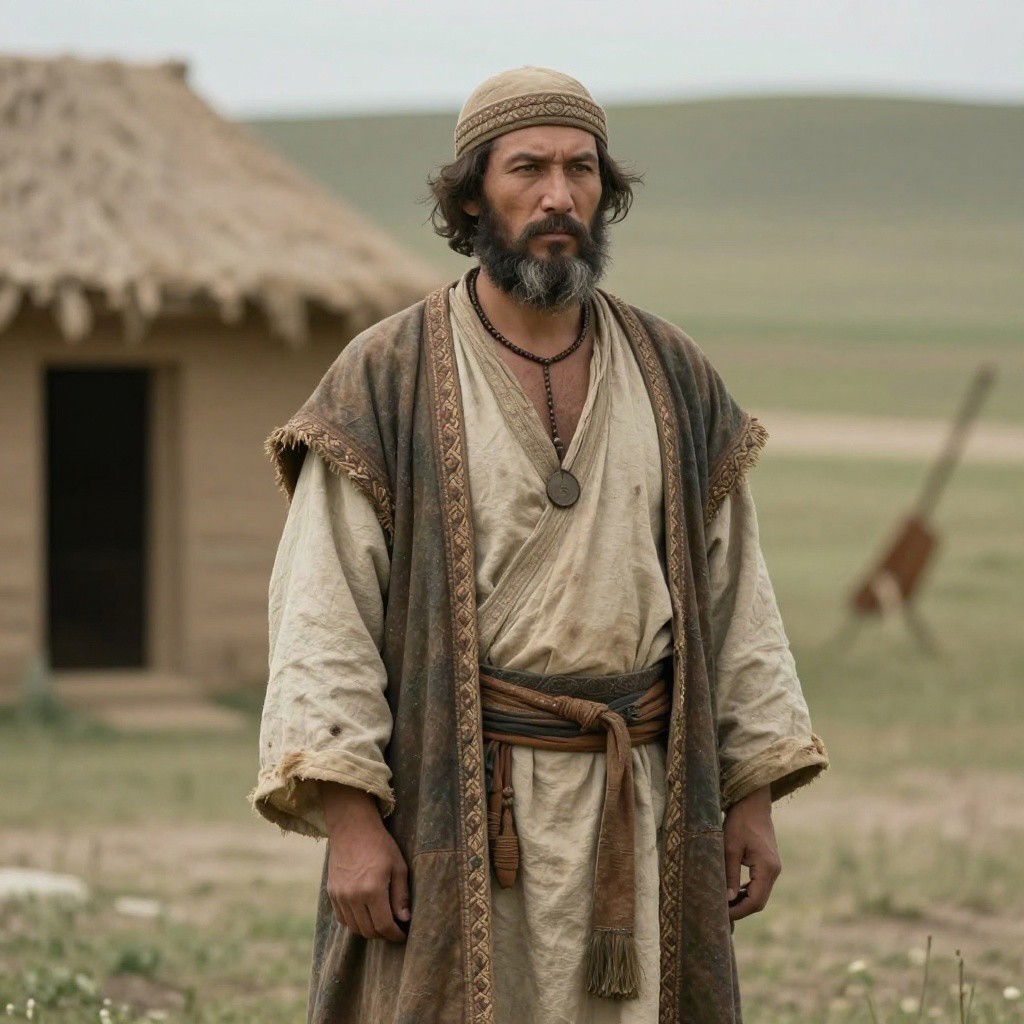
AI portrait reconstruction for A man buried in Kazakhstan in the  era
AI-generated artistic reconstruction, not a photograph of the individual.
Record

Sample details

Recorded details and available lineage markers.

Individual

Wusun individual, Kazakhstan

Sample ID: I26001

Date Range

475 BCE - 247 BCE

Cultural Period

Kazakhstan Wusun

Biological Sex

Male

mtDNA Haplogroup

J1c5a

Y-DNA Haplogroup

R-Y234915

Geography

Location

Where this individual was discovered

Country Kazakhstan
Locality Turgen-2 (Almaty Region, Enbekshikazakh District)
Coordinates 43.2201, 77.8476
Chronology

Date range

When this individual lived in the broader context of human history

Wusun individual, Kazakhstan 475 BCE - 247 BCE
Context

Historical context

Background information associated with the reference record.

Region & Environment

The Kazakhstan steppe and adjoining semi-arid zones form a broad grassland environment where seasonal movement could support mobile herding. River valleys and pasture mosaics offered winter and summer resources, while open horizons facilitated travel across wide distances.

Historical Context

In the period roughly spanning the late Hellenistic and early Roman centuries, Central Asian steppe societies were interconnected through shifting alliances, tribute relations, and long-distance exchange. Groups often described in historical sources as steppe polities (including Wusun) are best understood as part of this dynamic landscape of competition and cooperation among nomadic and frontier communities.

Populations & Lifeways

Populations associated with steppe nomadism relied heavily on domesticated animals and seasonal mobility. Lifeways likely included coordinated herding, camp-based domestic activities, and social organization expressed through leadership, kinship ties, and the management of grazing territories.

Archaeology & Material Culture

Archaeological signatures for Central Asian nomadic groups commonly include elaborate mortuary practices, metalworking, and portable craft traditions. In Kazakhstan, these patterns are typically discussed through steppe burial evidence and associated artifact sets (such as weaponry, personal ornaments, and horse gear), though exact attribution to “Wusun” specifically is often cautious and depends on regionally defined typologies.

Culture & Society

Steppe societies in this era tended to be mobile and socially hierarchical, with status communicated through display in burials and prestige items. Horse culture—reflected in the archaeological record of equipment and attire-related items—was central to mobility and symbolic life, while exchange networks helped circulate materials and styles across large distances.

Legacy & Transition

The Wusun-era steppe traditions contributed to longer-lasting patterns of nomadic adaptation in the region: mobility strategies, horse-centered livelihoods, and mortuary visibility. As political landscapes changed after this period, steppe communities continued to develop and reorganize, leading into later phases of Inner Asian interactions and new historical formations.

Analysis

Genetic comparisons

These comparisons show genetic similarity, not identity or origin. The populations listed are those whose genomes show statistical alignment to this ancient individual.

Similarity reflects shared history, not shared identity. These are analytical comparisons, not claims about who this person was.

Modern Genetic Admixture

This analysis compares the DNA profile with present-day reference populations, showing statistical similarity to modern reference populations from different regions. The excavation site records where this individual was found, not a fixed modern genetic identity.

Asia 59.8%
Northern West Asian 31.7%
Caucasian 31.7%
Central Asian, Northern Indian & Pakistani 24.0%
Pakistan 20.5%
Central Asian 3.5%
Northern Asian 4.1%
Siberian 4.1%
Europe 35.4%
Eastern European 20.8%
Northwestern European 14.6%
English 7.0%
Finnish 3.9%
Scandinavian 3.7%
America 4.7%
America 4.7%
Native American 4.7%

Closest Modern Populations

These are the modern populations showing the closest statistical alignment to A man buried in Kazakhstan in the era, ranked by genetic distance. Lower distance values indicate closer statistical similarity. Cross-region similarity can reflect shared ancestry, population movement, continuity, or later admixture.

1
Pamiri Rushan
4.8766
2
Pamiri Shugnan
4.9916
3
Pamiri Badakhshan
5.5783
4
Tajik Tajikistan Kulob
5.9039
5
Tajik Tajikistan Hisor
5.9640
6
Pamiri Ishkashim
6.0135
7
Tajik Tajikistan Ayni
6.1399
8
Tajik Yaghnobi
6.3695
9
Pamiri Sarikoli
6.4431
10
Pamiri Wakhi
6.5000
Context

Related Samples

This individual exists within a broader network of ancient samples. No ancient genome stands alone.
Individual Culture/Period Date Location Action
Wusun individual, Kazakhstan 475 BCE Turgen-2 (Almaty Region, Enbekshikazakh District), Kazakhstan View
Page 1
Individual Culture/Period Date Location Action
Nomadic Steppe Cultures individual, Kazakhstan Wusun Culture in Kazakhstan 414 BCE Tian Shan. Central Steppe, Kazakhstan View
Nomadic Steppe Cultures individual, Kazakhstan Wusun Culture in Kazakhstan 500 BCE Tian Shan. Central Steppe. Turgen-2, Kazakhstan View
Wusun individual, Kazakhstan Wusun Culture in Kazakhstan 500 BCE Turgen-2 (Almaty Region, Enbekshikazakh District), Kazakhstan View
Wusun individual, Kazakhstan 475 BCE Turgen-2 (Almaty Region, Enbekshikazakh District), Kazakhstan View
Page 1
Sources

References

Scientific publications and genetic data that inform this profile.

G25 Coordinates

These coordinates represent a position in genetic space, a tool for comparison, not a conclusion. You can use these to perform custom admixture analysis in G25 Studio.

I26001,0.09955532,0.03193584,0.0049331,0.05594356,-0.03207194,0.02145826,-0.0027349,-0.00895878,-0.01716278,-0.02361264,-0.00244034,-0.00068224,0.0041645,-0.00597828,0.00589948,0.00210798,-0.0071251,-0.00035266,-0.00241868,-0.00671718,-0.00019658,-0.0007195,-0.00266372,0.00281082,0.00011715
Continue in G25 Studio
Use code for 30% off • Expires Nov 16