
A man buried in Mexico in the era

Download PDF creates a visual, rasterized copy. Use Print for selectable text and better assistive-technology support.

Loading Report

Preparing your ancestry journey

Preparing the available report content...

Your report will open automatically.

Skip to main content
Reference library / Sample profile

A man buried in Mexico in the era

Explore the recorded context, genetic comparisons and research behind this reference sample.

MexicoMexico Tayopa 1000BP

A reference profile describes this sample. It does not establish a personal or family relationship.

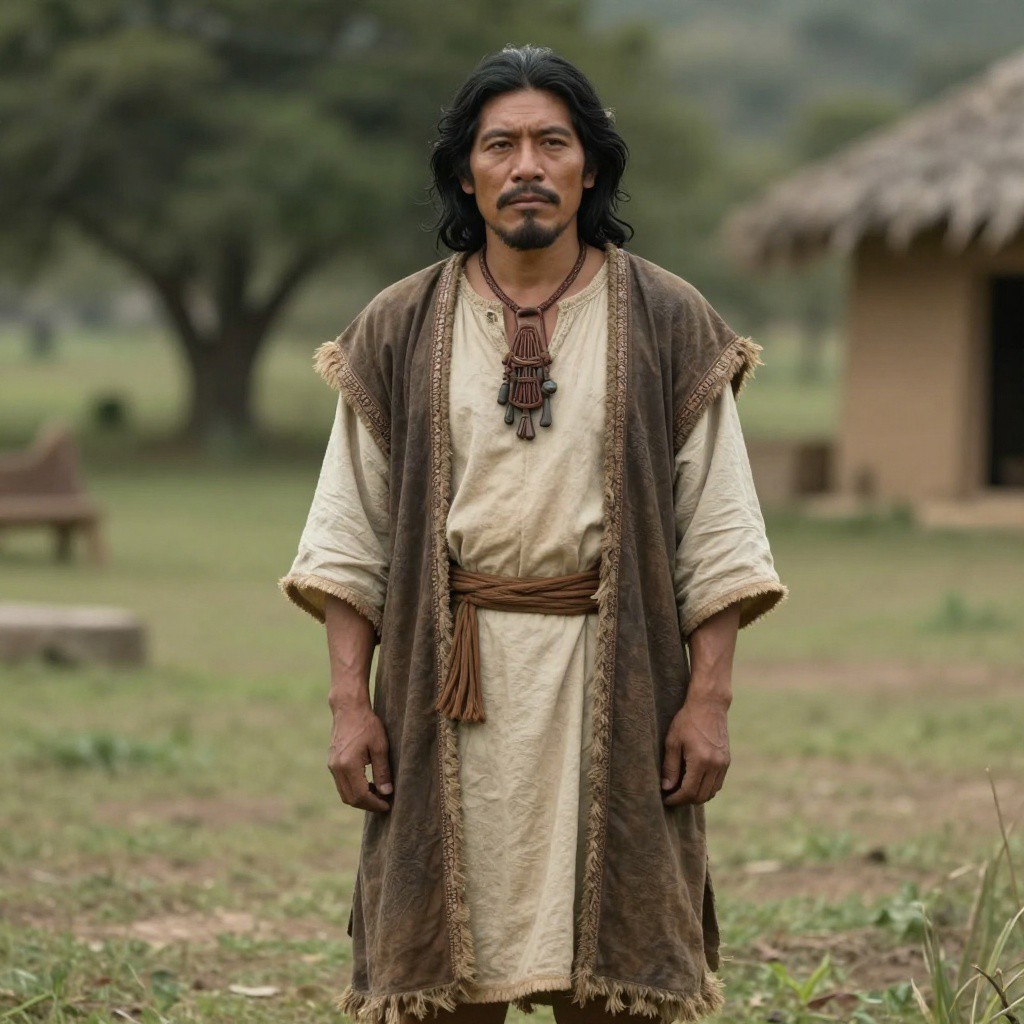
AI portrait reconstruction for A man buried in Mexico in the  era
AI-generated artistic reconstruction, not a photograph of the individual.
Record

Sample details

Recorded details and available lineage markers.

Individual

Tayopa individual, Mexico

Sample ID: I17112

Date Range

430 CE - 1470 CE

Cultural Period

Mexico Tayopa 1000BP

Biological Sex

Male

mtDNA Haplogroup

Not available

Y-DNA Haplogroup

n/a..(sex.unknown)

Geography

Location

Where this individual was discovered

Country Mexico
Locality Tayopa (Sonora, Sahuaripa)
Chronology

Date range

When this individual lived in the broader context of human history

Tayopa individual, Mexico 430 CE - 1470 CE
Context

Historical context

Background information associated with the reference record.

Region & Environment

The Tayopa horizon is associated with northern Mexico, where landscapes range from semi-arid grasslands and scrub to river valleys and piedmont zones. Living spaces were often tied to dependable water sources and arable patches suitable for farming, while nearby uplands and desert margins supported hunting and gathering.

Historical Context

From about 900 to 1500 CE, northern Mexico and the adjacent American Southwest experienced changing patterns of settlement, alliance, and long-distance interaction. The Tayopa tradition is commonly placed in relation to the broader Casas Grandes (Paquimé) cultural sphere, though the details of political organization and how communities connected remain uneven in the archaeological record.

Populations & Lifeways

Communities associated with Tayopa were predominantly agricultural, supplementing field crops with local foraging and hunting where possible. Household life likely included food preparation, tool maintenance, storage activities, and seasonal movement within a restricted territory. Craft production and participation in exchange networks are suggested by recurring artifact types and materials that are not purely local.

Archaeology & Material Culture

Archaeological signatures for Tayopa contexts generally emphasize ceramics and architectural residues typical of the region’s late pre-Hispanic developments. Pottery styles, temper and firing practices, and patterned vessel forms can help distinguish local traditions while also indicating wider stylistic connections. Other materials—such as stone tools, ground-stone implements, and evidence for onsite production and consumption—further inform daily activities and trade relationships.

Culture & Society

Tayopa communities likely balanced village-based routines with participation in exchange and shared cultural practices. Social differentiation may be inferred cautiously from differences in construction quality, access to imported or nonlocal goods, and variability in household assemblages. Community interaction—through marriage ties, craft specialization, and the movement of prestige items—would have been important for maintaining networks in an environment where resources were unevenly distributed.

Legacy & Transition

By the later part of the period (approaching the mid-second millennium CE), settlement systems across northern Mexico and the Southwest show signs of reorganization. The Tayopa tradition’s archaeological footprint contributes to understanding how later Indigenous groups inherited, adapted, or transformed earlier regional practices, even when direct historical linkages are not always demonstrable from archaeology alone.

Analysis

Genetic comparisons

These comparisons show genetic similarity, not identity or origin. The populations listed are those whose genomes show statistical alignment to this ancient individual.

Similarity reflects shared history, not shared identity. These are analytical comparisons, not claims about who this person was.

Modern Genetic Admixture

This analysis compares the DNA profile with present-day reference populations, showing statistical similarity to modern reference populations from different regions. The excavation site records where this individual was found, not a fixed modern genetic identity.

America 88.5%
America 88.5%
Native American 88.5%
Asia 7.7%
Central Asian, Northern Indian & Pakistani 7.7%
Pakistan 7.7%
Oceania 3.9%
Melanesian 3.9%
Papuan 3.9%

Closest Modern Populations

These are the modern populations showing the closest statistical alignment to A man buried in Mexico in the era, ranked by genetic distance. Lower distance values indicate closer statistical similarity. Cross-region similarity can reflect shared ancestry, population movement, continuity, or later admixture.

1
Mixtec
2.5373
2
Zapotec
2.6367
3
Nahua
2.8122
4
Mayan
2.8883
5
Pima
3.1065
6
Quechua
3.6084
7
Huichol
3.6176
8
Bolivian Cochabamba
3.6271
9
Bolivian Pando
3.8546
10
Cachi
4.0816
Context

Related Samples

This individual exists within a broader network of ancient samples. No ancient genome stands alone.

Individual Culture/Period Date Location Action
California individual, USA 3112 BCE Clark Estate (California, Santa Barbara), USA View
Tayopa individual, Mexico 430 CE Tayopa (Sonora, Sahuaripa), Mexico View
Page 1
Individual Culture/Period Date Location Action
Tayopa individual, Mexico Tayopa Culture 500 CE Tayopa (Sonora, Sahuaripa), Mexico View
Opata individual, Mexico Tayopa Culture 500 CE Tayopa (Sonora, Sahuaripa), Mexico View
Tayopa individual, Mexico Tayopa Culture 500 CE Tayopa Site #62 (Sonora, Sahuaripa), Mexico View
Tayopa individual, Mexico Tayopa Culture 500 CE Tayopa Site #60 (Sonora, Sahuaripa), Mexico View
Tayopa individual, Mexico Tayopa Culture 500 CE Tayopa Site #63 (Sonora, Sahuaripa), Mexico View
Tayopa individual, Mexico 430 CE Tayopa (Sonora, Sahuaripa), Mexico View
Page 1
Sources

References

Scientific publications and genetic data that inform this profile.

G25 Coordinates

These coordinates represent a position in genetic space, a tool for comparison, not a conclusion. You can use these to perform custom admixture analysis in G25 Studio.

I17112,0.04313142,-0.29009992,0.10149584,0.09029718,-0.10609472,-0.01297936,-0.2616594,-0.31533594,-0.01076522,-0.01876268,-0.00108584,0.000822,-0.0012755,0.02168644,-0.00686092,0.00684952,0.00590474,0.00508518,0.00399082,-0.00330916,-0.0025766,0.00565648,-0.00510036,0.00061614,0.00062948
Continue in G25 Studio
Use code for 35% off • Expires Nov 30