A woman buried in Croatia in the Pleistocene era

Download PDF creates a visual, rasterized copy. Use Print for selectable text and better assistive-technology support.

Loading Report

Preparing your ancestry journey

Preparing the available report content...

Your report will open automatically.

Skip to main content
Reference library / Sample profile

A woman buried in Croatia in the Pleistocene era

Explore the recorded context, genetic comparisons and research behind this reference sample.

CroatiaVindija Neanderthal, Croatia

A reference profile describes this sample. It does not establish a personal or family relationship.

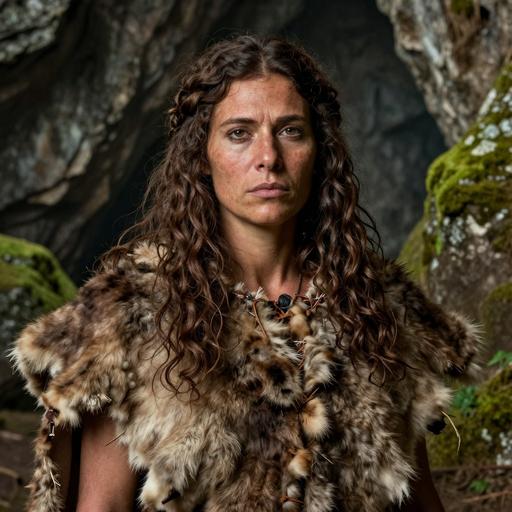
AI portrait reconstruction for A woman buried in Croatia in the Pleistocene era
AI-generated artistic reconstruction, not a photograph of the individual.
Record

Sample details

Recorded details and available lineage markers.

Individual

Neanderthal individual, Croatia

Sample ID: Vindija

Date Range

43500 BCE - 45300 BCE

Cultural Period

Vindija Neanderthal, Croatia

Biological Sex

Female

mtDNA Haplogroup

ND1b1a1b1

Y-DNA Haplogroup

Not available

Social Role

Gatherer (AI estimate, era-typical)

Geography

Location

Where this individual was discovered

Country Croatia
Locality Vindija Cave
Coordinates 46.2992, 16.0706
Chronology

Date range

When this individual lived in the broader context of human history

Neanderthal individual, Croatia 43500 BCE - 45300 BCE
Context

Historical context

Background information associated with the reference record.

Region & Environment

Vindija Cave is located in the Balkans/central-southern Europe region of modern Croatia, where Pleistocene climates were highly variable. During 45,000–38,000 BCE, the broader landscape would have alternated between colder and milder conditions, influencing the distribution of game and plant resources.

Historical Context

This time frame places Neanderthals within the late Middle Paleolithic, often associated across Europe with Mousterian stone tool technologies. Vindija is important because it preserves archaeological deposits that can be studied in relation to changing environmental conditions near the end of the Neanderthals’ long European presence.

Populations & Lifeways

Neanderthal groups used caves as shelters and activity places, likely moving across the landscape to exploit prey. Lifeways would have centered on hunting, butchery, and processing activities, supported by durable stone tools. Social organization is not directly recoverable in detail, but repeated use of the site implies continued patterns of occupation and activity.

Archaeology & Material Culture

Vindija’s material culture is characterized primarily by stone tools typical of the Mousterian tradition. These implements include flake-based technologies designed for cutting and scraping tasks linked to animal processing and hide working. Cave contexts and artifact distributions help archaeologists infer where different activities took place.

Culture & Society

Mousterian technology reflects learned methods for producing and maintaining tools, likely transmitted within Neanderthal groups. Variability in tool types can indicate differences in tasks performed at particular times within the sequence. The repeated use of the cave suggests that Neanderthals adapted their tool production and site use to seasonal and environmental pressures.

Legacy & Transition

Vindija is part of the wider European record relevant to late Neanderthal survival and the transitions occurring around the time modern humans spread across parts of Europe. Archaeological study at Vindija preserves a detailed window into Neanderthal lifeways in the Pleistocene, even as broader population changes were underway elsewhere on the continent.

Analysis

Genetic comparisons

These comparisons show genetic similarity, not identity or origin. The populations listed are those whose genomes show statistical alignment to this ancient individual.
Similarity reflects shared history, not shared identity. These are analytical comparisons, not claims about who this person was.

Modern Genetic Admixture

This analysis compares the DNA profile with present-day reference populations, showing statistical similarity to modern reference populations from different regions. The excavation site records where this individual was found, not a fixed modern genetic identity.

Africa 91.6%
African Hunter-Gatherer 91.6%
Europe 4.7%
Northwestern European 3.6%
English 3.6%
Southern European 1.1%
Sardinian 0.7%
America 1.4%
America 1.4%
Native American 1.4%
Oceania 1.2%
Melanesian 1.2%
Papuan 1.2%
Asia 1.1%
Japanese & Korean 0.7%
Japanese 0.7%

Closest Modern Populations

These are the modern populations showing the closest statistical alignment to A woman buried in Croatia in the Pleistocene era, ranked by genetic distance. Lower distance values indicate closer statistical similarity. Cross-region similarity can reflect shared ancestry, population movement, continuity, or later admixture.

1
Bedzan
4.1937
2
Baka
4.4063
3
Bakola
5.5262
Context

Related Samples

This individual exists within a broader network of ancient samples. No ancient genome stands alone.

Individual Culture/Period Date Location Action
Neanderthal individual, Croatia Vindija Neanderthal, Croatia 43500 BCE Vindija Cave, Croatia View
Neanderthal individual, Russia 128050 BCE Denisova Cave. Altai, Russia View
West European Hunter Gatherer individual, Luxembourg 6221 BCE Echternach, Luxembourg View
Palaeolithic individual, Russia 43980 BCE Ust'-Ishim. Siberia, Russia View
Page 1
Individual Culture/Period Date Location Action
Neanderthal individual, Croatia Vindija Neanderthal, Croatia 43500 BCE Vindija Cave, Croatia View
Page 1
Sources

References

Scientific publications and genetic data that inform this profile.

G25 Coordinates

These coordinates represent a position in genetic space, a tool for comparison, not a conclusion. You can use these to perform custom admixture analysis in G25 Studio.

Vindija,-0.62667144,0.0607766,0.02111124,0.0368381,0.00393702,-0.00104048,0.12275444,-0.09614966,-0.01795884,0.02723212,0.01223108,-0.10988934,-0.03741488,-0.00395242,-0.0001173,-0.0016574,0.00233978,-0.01165466,0.00360312,-8.404E-05,0.0025024,-0.00136044,-0.00140562,-9.78E-06,-0.00257436
Continue in G25 Studio
Use code for 30% off • Expires Nov 16