A man buried in Spain in the era

Download PDF creates a visual, rasterized copy. Use Print for selectable text and better assistive-technology support.

Loading Report

Preparing your ancestry journey

Preparing the available report content...

Your report will open automatically.

Skip to main content
Reference library / Sample profile

A man buried in Spain in the era

Explore the recorded context, genetic comparisons and research behind this reference sample.

SpainSpain Mesolithic

A reference profile describes this sample. It does not establish a personal or family relationship.

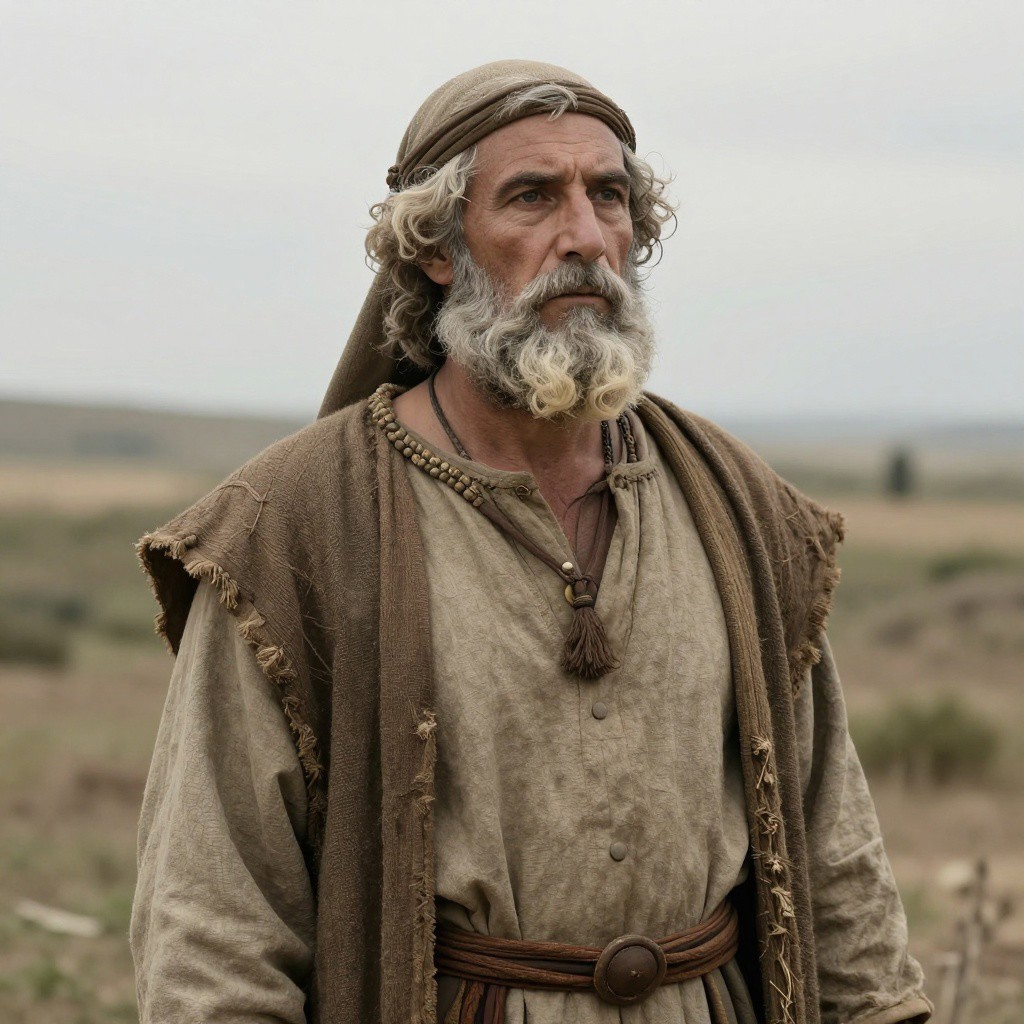
AI portrait reconstruction for A man buried in Spain in the  era
AI-generated artistic reconstruction, not a photograph of the individual.
Record

Sample details

Recorded details and available lineage markers.

Individual

Mesolithic individual, Spain

Sample ID: LaBrana1

Date Range

5991 BCE - 5731 BCE

Cultural Period

Spain Mesolithic

Biological Sex

Male

mtDNA Haplogroup

Not available

Y-DNA Haplogroup

C-V20

Geography

Location

Where this individual was discovered

Country Spain
Locality La Braña-Arintero (Castilla y León, León, La Braña)
Coordinates 42.9110, -5.3778
Chronology

Date range

When this individual lived in the broader context of human history

Mesolithic individual, Spain 5991 BCE - 5731 BCE
Context

Historical context

Background information associated with the reference record.

Region & Environment

Mesolithic communities in Iberia lived in a landscape recovering from the end of the last Ice Age. Over this span, climates and ecosystems shifted, affecting plant growth, animal distributions, and the productivity of coastlines, rivers, wetlands, and uplands. People exploited a mosaic of habitats rather than relying on a single ecological zone.

Historical Context

By 8000 BCE, large-scale conditions across western Europe were transitioning toward the later prehistoric trajectories that would eventually include farming. In Iberia during the Mesolithic, however, archaeologically visible patterns still emphasize foraging lifeways rather than fully developed agricultural regimes.

Populations & Lifeways

The population likely consisted of small, mobile or seasonally mobile groups. Lifeways revolved around hunting, fishing, and gathering, with movements influenced by seasonal availability of resources. Coastal settings would have supported fishing and shellfish collecting, while inland environments offered terrestrial game and plant foods. Social organization is not known in detail, but repeated use of places suggests familiarity with local landscapes and routines.

Archaeology & Material Culture

Mesolithic Iberia is typically recognized through stone tool industries dominated by small cutting and retouching elements, including microlithic forms suitable for hafted weapons. Archaeological deposits may include hearth-related features, tool manufacture debris, and occupation traces at open-air sites and caves/rockshelters where preservation allows. Material culture beyond stone tools is often less conspicuous, but organic items would have been important and may survive only rarely.

Culture & Society

What can be stated conservatively is that tool traditions and site-use patterns point to shared practices within a broader Mediterranean Mesolithic milieu. Differences between coastal and inland sequences can reflect varying strategies of subsistence, mobility, and local contacts. The degree of interaction between regions is uncertain, but recurring technological themes suggest some cultural continuity and communication.

Legacy & Transition

The Mesolithic in Iberia forms a key prelude to later Neolithic developments. Over time, changing environmental and demographic pressures set the stage for new lifeways, including greater reliance on domesticated plants and animals in subsequent periods. The archaeological record does not allow a single, uniform “transition moment,” but it preserves the foraging baseline from which later changes built.

Analysis

Genetic comparisons

These comparisons show genetic similarity, not identity or origin. The populations listed are those whose genomes show statistical alignment to this ancient individual.
Similarity reflects shared history, not shared identity. These are analytical comparisons, not claims about who this person was.

Modern Genetic Admixture

This analysis compares the DNA profile with present-day reference populations, showing statistical similarity to modern reference populations from different regions. The excavation site records where this individual was found, not a fixed modern genetic identity.

Europe 98.1%
Northwestern European 61.3%
Finnish 49.2%
English 8.4%
Scandinavian 2.1%
Northwestern European 1.6%
Southern European 26.8%
Iberian 26.8%
Eastern European 9.9%
Oceania 1.2%
Melanesian 1.2%
Papuan 1.2%
Africa 0.7%
African Hunter-Gatherer 0.7%

Closest Modern Populations

These are the modern populations showing the closest statistical alignment to A man buried in Spain in the era, ranked by genetic distance. Lower distance values indicate closer statistical similarity. Cross-region similarity can reflect shared ancestry, population movement, continuity, or later admixture.

1
Finnish Southwest
2.0911
2
Ingrian
2.1552
3
Finnish Central
2.3610
4
Russian Kostroma
2.5028
5
Russian Yaroslavl
2.8216
6
Finnish North
2.8872
7
Estonian
2.9438
8
Karelian
3.0103
9
Russian Krasnoborsky
3.0408
10
Russian Tver
3.1547
Context

Related Samples

This individual exists within a broader network of ancient samples. No ancient genome stands alone.

Individual Culture/Period Date Location Action
Mesolithic individual, Spain 5991 BCE La Braña-Arintero (Castilla y León, León, La Braña), Spain View
Page 1
Individual Culture/Period Date Location Action
Mesolithic individual, Spain Iberian Mesolithic Culture 5306 BCE Ḥou Amieva (Llanes, Spain), Spain View
Mesolithic individual, Spain Iberian Mesolithic Culture 6024 BCE Casa Corona (Valencian community, Alicante, Villena), Spain View
Mesolithic individual, Spain Iberian Mesolithic Culture 6064 BCE Casa Corona (Valencian community, Alicante, Villena), Spain View
Mesolithic individual, Spain Iberian Mesolithic Culture 6849 BCE Ḥou Amieva (Llanes, Spain), Spain View
Mesolithic individual, Spain 5991 BCE La Braña-Arintero (Castilla y León, León, La Braña), Spain View
Page 1
Sources

References

Scientific publications and genetic data that inform this profile.

G25 Coordinates

These coordinates represent a position in genetic space, a tool for comparison, not a conclusion. You can use these to perform custom admixture analysis in G25 Studio.

LaBrana1,0.12874892,0.0976112,0.084536,0.076713,0.03786246,0.02035632,0.01008044,0.01554164,0.00243178,-0.02660304,-0.00082838,-0.00846868,0.01442348,0.00985116,-0.00557918,-0.00858398,-0.00945238,0.00155648,0.00155722,0.00310168,0.00269472,-0.00224114,0.00350592,-0.00046712,0.00491465
Continue in G25 Studio
Use code for 30% off • Expires Nov 16