Menu
Store
Blog
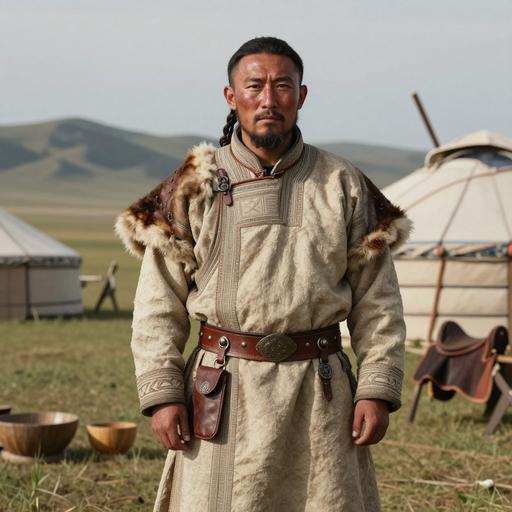
Portrait reconstruction of DAR001
Ancient Individual

A man buried in Mongolia in the Early Iron Age era

DAR001
750 BCE - 407 BCE
Male
Early Iron Age to Late Medieval Mongolia
Mongolia
Scroll to begin
Chapter I

Identity

The biological and cultural markers that define this ancient individual

Sample ID

DAR001

Date Range

750 BCE - 407 BCE

Biological Sex

Male

mtDNA Haplogroup

F1b1f

Y-DNA Haplogroup

Q-Z19128

Cultural Period

Early Iron Age to Late Medieval Mongolia

Chapter II

Place

Where this individual was discovered

Country Mongolia
Locality Ulaanbaatar. Dartsagt
Chapter III

Time

When this individual lived in the broader context of human history

DAR001 750 BCE - 407 BCE
Chapter IV

Story

The narrative of this ancient life

The region encompassing modern-day Mongolia has a rich history characterized by its early nomadic cultures, stretching from the Early Iron Age (beginning around the 1st millennium BCE) to the Late Medieval period (up to the 16th century CE). This era is marked by a dynamic evolution of societies, technologies, and political structures influenced by the harsh steppe environment and the region's interactions with neighboring cultures.

Early Iron Age (circa 1st Millennium BCE)

During the Early Iron Age, the Mongolian steppe saw the emergence of nomadic cultures such as the Slab Grave culture and the Deer Stone monuments. These communities were typically pastoralists, who relied heavily on the domestication of horses, sheep, goats, and cattle. The introduction and development of iron tools and weapons facilitated a transformation in both daily life and military tactics.

Key features of this period include:

  • Pastoral Nomadism: Mobility was central to these cultures, with communities moving their herds across vast expanses to optimize grazing throughout the seasons. This lifestyle fostered adaptability and resilience.

  • Social Structure: Society was organized into kin-based clans, with leadership often determined by a combination of martial prowess and lineage.

  • Art and Spirituality: The Deer Stones, with their intricate carvings of deer and other symbols, highlight the artistic and religious sentiments of the time. These artifacts suggest a reverence for animals and possibly a shamanistic belief system.

  • Technology and Warfare: The use of iron revolutionized warfare, making weaponry such as swords, spears, and arrowheads more effective. Mastery of horseback riding and archery became defining military skills.

The Xiongnu and Successive Empires (circa 3rd Century BCE - 3rd Century CE)

The Xiongnu Confederation marked a significant development in the Mongolian steppe during the late Early Iron Age. They represented one of the first organized nomadic empires, which posed a formidable threat to the Chinese Han Dynasty.

Key aspects of this era:

  • Political Organization: The Xiongnu created a centralized political entity with semi-permanent settlements and a sophisticated form of federative governance led by a chanyu (supreme ruler).

  • Military Prowess: The Xiongnu were adept horsemen and archers, employing tactics that emphasized mobility, speed, and surprise to execute raids and large-scale military operations.

  • Cultural Influence: The Xiongnu's interactions with China led to cultural exchanges and influenced subsequent nomadic empires, including the Rouran Khaganate and the Turks.

The Mongol Empire and Late Medieval Period (13th - 16th Century)

The rise of the Mongol Empire under Genghis Khan in the early 13th century marked one of the most significant epochs in Mongolian history, establishing a realm that would become the largest contiguous land empire in history.

Significant elements of this period:

  • Unified Empire: Genghis Khan unified the fractious Mongol tribes, instituting a code of law known as the Yassa and creating a meritocratic society where loyalty and skill were rewarded.

  • Expansion and Conquest: The Mongol Empire expanded rapidly across Asia, the Middle East, and into Europe through both military conquest and strategic alliances. Advanced military techniques, including the use of composite bows and psychological warfare, were key to their success.

  • Cultural Exchange: The Pax Mongolica, or Mongol Peace, facilitated trade and cultural exchange across the Silk Road, leading to a flow of ideas, technologies, and goods between the East and West.

  • Administrative Practices: The Mongol Empire implemented a sophisticated administration based on a system of communication (the Yam), taxation, and relay stations.

  • End of the Mongol Era: By the late medieval period, the empire had fragmented into various khanates. Despite the decline, the legacy of the Mongol era persisted, influencing the cultural and political landscape of Mongolia and beyond.

Throughout these periods, Mongolian steppe cultures maintained a distinct identity characterized by resilience, adaptability, and a deep connection to the land and its nomadic traditions. Their historical trajectory from the Early Iron Age to the Late Medieval period underscores a legacy of complexity and innovation that continues to be studied and appreciated today.

Chapter V

Genetics

The genetic ancestry of this ancient individual

Ancient Genetic Admixture

This analysis compares the DNA profile of DAR001 with ancient reference populations, showing the genetic composition in terms of prehistoric ancestral groups.

Ancient Asians 86.9%
Ancient Oceanians 5.4%
Neolithic Farmers 4.1%
Western Steppe Pastoralists 3.7%

Modern Genetic Admixture

This analysis compares the DNA profile with present-day reference populations, showing what percentage of genetic makeup resembles modern populations from different regions.

Asia 99.9%
Northern Asian 72.1%
Siberian 46.6%
Mongolian 25.5%
Japanese & Korean 20.4%
Japanese 20.4%
Chinese & Southeast Asian 6.5%
Tibetan 6.5%
Central Asian, Northern Indian & Pakistani 1.0%
Indian 1.0%

Closest Modern Populations

These are the modern populations showing the closest statistical alignment to A man buried in Mongolia in the Early Iron Age era, ranked by genetic distance. Lower distance values indicate closer statistical similarity.

1
Khamnegan
6.0583
2
Evenk O
6.5839
3
Nanai
7.7512
4
Negidal
7.8453
5
Ulchi
7.9294
6
Todzin
7.9800
7
Buryat
8.1305
8
Oroqen
8.1839
9
Tuvinian
8.6191
10
Yukagir Tundra
9.3435
Chapter VI

Context

Other ancient individuals connected to this sample

Sources

References

Scientific publications and genetic data

Scientific Publication

A Dynamic 6,000-Year Genetic History of Eurasia's Eastern Steppe

Authors Jeong C, Wang K, Wilkin S
Abstract

The Eastern Eurasian Steppe was home to historic empires of nomadic pastoralists, including the Xiongnu and the Mongols. However, little is known about the region's population history. Here, we reveal its dynamic genetic history by analyzing new genome-wide data for 214 ancient individuals spanning 6,000 years. We identify a pastoralist expansion into Mongolia ca. 3000 BCE, and by the Late Bronze Age, Mongolian populations were biogeographically structured into three distinct groups, all practicing dairy pastoralism regardless of ancestry. The Xiongnu emerged from the mixing of these populations and those from surrounding regions. By comparison, the Mongols exhibit much higher eastern Eurasian ancestry, resembling present-day Mongolic-speaking populations. Our results illuminate the complex interplay between genetic, sociopolitical, and cultural changes on the Eastern Steppe.

G25 Coordinates

The G25 coordinates for sample DAR001 can be used for detailed admixture analysis in our G25 Studio tool.

DAR001,0.03901742,-0.39722374,0.09047882,-0.01234496,-0.07727216,-0.06776972,0.02423604,0.03022044,0.0118538,0.01426528,0.01205018,0.00326366,-0.00289606,0.00359236,-0.00778446,-0.01502084,-0.00829752,0.01103228,0.01557154,0.0070434,0.01732044,-0.01780598,0.00253862,0.00078338,0.00813706
Analyze in G25 Studio
Use code for 40% off Expires Feb 27