Menu
Store
Blog
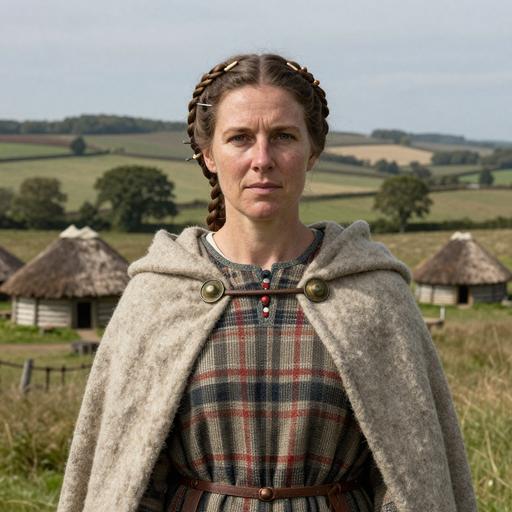
Portrait reconstruction of I11033
Ancient Individual

A woman buried in United Kingdom in the Early Iron Age era

I11033
717 BCE - 395 BCE
Female
Early Iron Age East Yorkshire, England
United Kingdom
Scroll to begin
Chapter I

Identity

The biological and cultural markers that define this ancient individual

Sample ID

I11033

Date Range

717 BCE - 395 BCE

Biological Sex

Female

mtDNA Haplogroup

H2a3b

Cultural Period

Early Iron Age East Yorkshire, England

Chapter II

Place

Where this individual was discovered

Country United Kingdom
Locality England. East Riding of Yorkshire. Pocklington (Burnby Lane)
Coordinates 53.9194, -0.7666
Chapter III

Time

When this individual lived in the broader context of human history

I11033 717 BCE - 395 BCE
Chapter IV

Story

The narrative of this ancient life

The Early Iron Age in East Yorkshire, England, which spans approximately from 800 BCE to 400 BCE, is a fascinating period marked by significant socio-cultural transformations and technological advancements. This era is most closely associated with the arrival and settlement of Celtic tribes in the region, which brought profound changes to the landscape and way of life.

Geographical Context

East Yorkshire, with its rolling hills, fertile plains, and access to the coast, provided an ideal environment for the Celtic settlers of the Early Iron Age. The region’s rich natural resources supported both agricultural and pastoral activities, which were the mainstay of the local economy. The landscape was dotted with small villages and farmsteads, typically positioned on raised grounds for strategic and defensive advantages.

Socio-Political Structure

The society in East Yorkshire during the Early Iron Age was tribal, with the development of complex chiefdoms. The Celtic tribes were organized into kinship groups led by chieftains or tribal leaders who wielded power based on warrior prowess, lineage, and control over land and resources. These leaders often played crucial roles in the local and regional decision-making processes.

Settlement Patterns and Architecture

The Celtic communities lived in roundhouses, which were circular wooden structures with thatched roofs. These houses provided durable and efficient shelter, designed to withstand the region's wet climate. The archaeological evidence, such as the remains found at the site of Arras in East Yorkshire, reveals distinctive rectangular cemeteries indicating well-organized settlements with deep spiritual or ritualistic importance.

Economy and Craftsmanship

The economy during this period was predominantly agrarian, with a strong emphasis on livestock farming, particularly sheep, cattle, and pigs. Agriculture was supplemented by ironworking, which represented a significant technological advancement. The use of iron tools and weapons profoundly revolutionized agricultural practices, warfare, and craftsmanship, contributing to increased productivity and efficiency.

The Celts of East Yorkshire were renowned for their skills in metalwork, pottery, and textile production. The La Tène artistic style, characterized by intricate geometric and naturalistic motifs, heavily influenced local artisans. This is evident in the intricate designs of metalwork found in weapons, jewelry, and other artifacts.

Religion and Rituals

Religion played an integral role in the everyday life of Early Iron Age communities. The Celtic spiritual belief system was animistic, venerating a pantheon of gods and goddesses connected to natural elements and forces. Rituals and ceremonies were conducted at notable natural landmarks, such as rivers, forests, and hilltops.

Burial practices were particularly elaborate, reflecting social status and beliefs in an afterlife. The Arras culture, a prominent society within East Yorkshire, was noted for its chariot burials, where high-status individuals were interred with chariots, weapons, and personal items, suggesting a belief in an elite afterlife journey.

Interactions and Expansion

The Early Iron Age was also marked by increased interactions with neighboring tribes and distant cultures. Trade networks facilitated the exchange of goods, ideas, and technologies across the British Isles and mainland Europe. Evidence points to an exchange of metals, pottery styles, and other cultural elements, further enriching the cultural tapestry of the region.

Decline and Transition

By around 400 BCE, the cultural landscape of East Yorkshire began to transition as new waves of migrations and invasions, including the arrival of the Romans, reshaped the societal structures. The integration and assimilation of Celtic tribes into new power dynamics and the eventual Roman conquest led to the gradual fading of distinct Celtic practices, ushering in a new era in the history of East Yorkshire.

In conclusion, the Early Iron Age of East Yorkshire represents a dynamic period characterized by the emergence of established communities, technological innovation, rich cultural expressions, and complex socio-political structures. The legacy of the Celtic presence during this era is evidenced through archaeological findings that continue to reveal insights into the lives and beliefs of these early inhabitants.

Chapter V

Genetics

The genetic ancestry of this ancient individual

Ancient Genetic Admixture

This analysis compares the DNA profile of I11033 with ancient reference populations, showing the genetic composition in terms of prehistoric ancestral groups.

European Hunter-Gatherers 38.8%
Western Steppe Pastoralists 33.3%
Neolithic Farmers 22.0%
Ancient Asians 3.3%
Ancient Native Americans 2.6%

Modern Genetic Admixture

This analysis compares the DNA profile with present-day reference populations, showing what percentage of genetic makeup resembles modern populations from different regions.

Europe 97.5%
Northwestern European 64.1%
English 43.6%
Northwestern European 13.0%
Scandinavian 7.5%
Eastern European 17.1%
Southern European 16.3%
Iberian 10.0%
Balkan 4.4%
Sardinian 2.0%
Asia 1.4%
Northern West Asian 1.4%
Cypriot 1.4%
America 0.7%
America 0.7%
Native American 0.7%

Closest Modern Populations

These are the modern populations showing the closest statistical alignment to A woman buried in United Kingdom in the Early Iron Age era, ranked by genetic distance. Lower distance values indicate closer statistical similarity.

1
Orcadian
1.9212
2
Scottish
2.1000
3
English
2.3611
4
Irish
2.3657
5
Dutch
2.4035
6
Welsh
2.4438
7
Norwegian
2.4792
8
French Brittany
2.5368
9
English Cornwall
2.5527
10
Afrikaner
2.6298
Chapter VI

Context

Other ancient individuals connected to this sample

Sources

References

Scientific publications and genetic data

Scientific Publication

Large-scale migration into Britain during the Middle to Late Bronze Age

Authors Patterson N, Isakov M, Booth T
Abstract

Present-day people from England and Wales have more ancestry derived from early European farmers (EEF) than did people of the Early Bronze Age1. To understand this, here we generated genome-wide data from 793 individuals, increasing data from the Middle to the Late Bronze Age and Iron Age in Britain by 12-fold, and western and central Europe by 3.5-fold. Between 1000 and 875 BC, EEF ancestry increased in southern Britain (England and Wales) but not northern Britain (Scotland) due to incorporation of migrants who arrived at this time and over previous centuries, and who were genetically most similar to ancient individuals from France. These migrants contributed about half the ancestry of people of England and Wales from the Iron Age, thereby creating a plausible vector for the spread of early Celtic languages into Britain. These patterns are part of a broader trend of EEF ancestry becoming more similar across central and western Europe in the Middle to the Late Bronze Age, coincident with archaeological evidence of intensified cultural exchange2-6. There was comparatively less gene flow from continental Europe during the Iron Age, and the independent genetic trajectory in Britain is also reflected in the rise of the allele conferring lactase persistence to approximately 50% by this time compared to approximately 7% in central Europe where it rose rapidly in frequency only a millennium later. This suggests that dairy products were used in qualitatively different ways in Britain and in central Europe over this period.

G25 Coordinates

The G25 coordinates for sample I11033 can be used for detailed admixture analysis in our G25 Studio tool.

I11033,0.12838916,0.12058194,0.06129184,0.04753416,0.03756722,0.01216146,-0.00364778,-0.0001707,0.00665982,0.0042249,-0.00285284,0.00477666,-0.0123639,-0.00896052,0.01817308,-9.094E-05,-0.01403028,0.00329272,-0.00168612,-0.00243712,0.0043433,0.004107,-0.002931,0.00938632,0.00209207
Analyze in G25 Studio
Use code for 40% off Expires Feb 27