Menu
Store
Blog
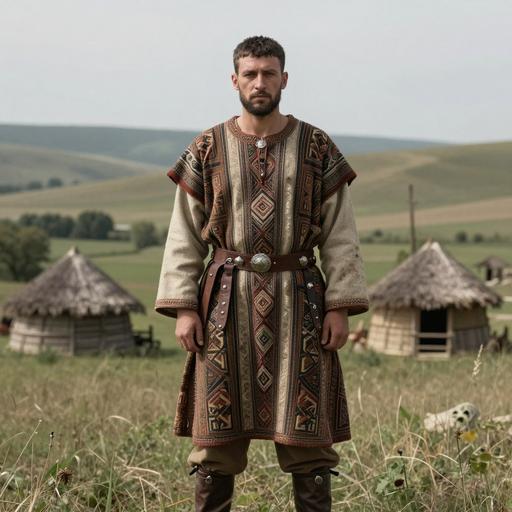
Portrait reconstruction of I16759
Ancient Individual

A man buried in Hungary in the Middle Ages era

I16759
700 CE - 750 CE
Male
Late Avar Period in South Transdanubia, Hungary
Hungary
Scroll to begin
Chapter I

Identity

The biological and cultural markers that define this ancient individual

Sample ID

I16759

Date Range

700 CE - 750 CE

Biological Sex

Male

mtDNA Haplogroup

U2e1h

Y-DNA Haplogroup

Not available

Cultural Period

Late Avar Period in South Transdanubia, Hungary

Chapter II

Place

Where this individual was discovered

Country Hungary
Locality Alsónyek-Elkerülö ut. site 2
Coordinates 46.2067, 18.7213
Chapter III

Time

When this individual lived in the broader context of human history

I16759 700 CE - 750 CE
Chapter IV

Story

The narrative of this ancient life

The Late Avar Period in South Transdanubia, Hungary, represents a fascinating chapter in the history of Eurasian nomadic cultures. The Avars were a confederation of various nomadic groups of Eurasian origin who settled in the Carpathian Basin, with their influence spanning from the 6th to the 9th centuries. The Late Avar Period, typically considered to be from around 700 AD to the early 9th century, marks a time of significant transformation and cultural synthesis in the region.

Historical Context

  1. Background: The Avars first appeared in Eastern Europe around the 6th century, believed to have originated from the steppes of Central Asia. They established a khaganate in the Carpathian Basin and became a dominant force in Central Europe, influencing the region politically, culturally, and militarily.

  2. Settlement Patterns: During the Late Avar Period, the Avars had transitioned from their purely nomadic lifestyle to a more settled existence. This transition is evident in their settlement patterns, which feature fortified centers and rural communities. In South Transdanubia, archaeological evidence indicates a mix of sedentary villages and smaller pastoral encampments, reflecting a semi-nomadic lifestyle.

Social Structure

  1. Hierarchy: The Avar society was hierarchical, with a khagan at the top, followed by a noble elite and various strata of commoners and slaves. The societal structure was largely militaristic, with the nobility deriving power and status from their roles as warriors and landholders.

  2. Cultural Syncretism: By the Late Avar Period, substantial intermingling had occurred with local Slavic, Gepidic, and other subject peoples. This resulted in a degree of cultural syncretism, visible in their material culture, language, and everyday life.

Economy

  1. Agriculture and Animal Husbandry: While the Avars initially relied heavily on animal husbandry, by the Late Avar Period, they had adopted more agricultural practices. Crops such as barley, wheat, and millet were cultivated, supplemented by livestock farming. This shift was partly due to the fertile lands of the Carpathian Basin, which supported agricultural development.

  2. Trade and Craftsmanship: The Avars were involved in long-distance trade, with connections stretching from the Byzantine Empire to the Frankish Kingdoms. Archaeological finds, including Byzantine coins and luxury items, underscore the Avars' role as intermediaries in trade between East and West. Local craftsmanship flourished, producing distinctive jewelry, weapons, and household items indicative of both Avar traditions and external influences.

Military and Political Influence

  1. Military Organization: The Avars were renowned for their cavalry and military prowess. The late period saw the continuation of these martial traditions, although their dominance was increasingly challenged by external pressures from the Franks and internal dissensions.

  2. Relations with Neighboring Powers: The Late Avar Period was marked by complex relations with neighboring powers, including alliances, conflicts, and gradual decline. The Avars faced military defeats at the hands of the Carolingians and internal strife, which eventually led to the fragmentation and absorption of Avar territories into emerging medieval states.

Cultural and Religious Aspects

  1. Material Culture: The material culture of the Late Avar Period in South Transdanubia is characterized by distinctive metalwork, pottery, and burial practices. Grave goods often include ornate belt fittings, equestrian equipment, and jewelry, reflecting the social status and wealth of the deceased.

  2. Religious Practices: Pagan practices persisted among the Avars, with evidence of shamanistic elements. However, over time, Christian influences began to penetrate the region, initially through contacts with Byzantium and later due to missionary efforts. This religious transition is observed in burial practices and the establishment of early Christian sites.

  3. Linguistic and Artistic Influences: The Avar language, presumed to be of Turkic origin, left little direct evidence, but it likely influenced local vernaculars. Artistic influences are seen in artifacts combining steppe motifs with local styles, suggesting a dynamic cultural interaction.

Archaeological Insights

Numerous archaeological sites in South Transdanubia have provided invaluable insights into the Late Avar Period. Fortified settlements, burial mounds, and everyday artifacts have helped reconstruct the socio-economic and cultural landscape of the era. Excavations continue to reveal the complexities of Avar society, including its adaptation to sedentary life and interactions with neighboring populations.

In summary, the Late Avar Period in South Transdanubia is a testament to the adaptability and resilience of nomadic cultures in the face of environmental, social, and political challenges. As they transitioned from warrior nomads to settled figures, the Avars left an indelible mark on the history and cultural development of Central Europe.

Chapter V

Genetics

The genetic ancestry of this ancient individual

Ancient Genetic Admixture

This analysis compares the DNA profile of I16759 with ancient reference populations, showing the genetic composition in terms of prehistoric ancestral groups.

Neolithic Farmers 46.3%
European Hunter-Gatherers 31.1%
Western Steppe Pastoralists 17.4%
Ancient Asians 5.2%

Modern Genetic Admixture

This analysis compares the DNA profile with present-day reference populations, showing what percentage of genetic makeup resembles modern populations from different regions.

Europe 84.4%
Southern European 65.7%
Italian 26.7%
Iberian 16.0%
Balkan 15.7%
Sardinian 7.3%
Eastern European 11.8%
Northwestern European 7.0%
English 7.0%
Asia 11.8%
Northern West Asian 7.0%
Mesopotamian 7.0%
Arab, Egyptian & Levantine 4.0%
Arabian 4.0%
Central Asian, Northern Indian & Pakistani 0.9%
Central Asian 0.9%
Africa 3.2%
North African 3.2%
Egyptian 3.2%
Oceania 0.7%
Melanesian 0.7%
Papuan 0.7%

Closest Modern Populations

These are the modern populations showing the closest statistical alignment to A man buried in Hungary in the Middle Ages era, ranked by genetic distance. Lower distance values indicate closer statistical similarity.

1
Swiss Italian
2.2066
2
Italian Emilia
2.5537
3
Italian Piedmont
2.8485
4
Italian Tuscany
2.8644
5
Greek Thessaly
2.9929
6
Greek Central Macedonia
3.0831
7
Greek West Taygetos
3.3068
8
Rumelia East
3.3078
9
Greek Macedonia
3.3202
10
Albanian
3.3390
Chapter VI

Context

Other ancient individuals connected to this sample

Sources

References

Scientific publications and genetic data

Scientific Publication

Ancient genomes reveal origin and rapid trans-Eurasian migration of 7th century Avar elites

Authors Gnecchi-Ruscone GA, Szécsényi-Nagy A, Koncz I
Abstract

The Avars settled the Carpathian Basin in 567/68 CE, establishing an empire lasting over 200 years. Who they were and where they came from is highly debated. Contemporaries have disagreed about whether they were, as they claimed, the direct successors of the Mongolian Steppe Rouran empire that was destroyed by the Turks in ∼550 CE. Here, we analyze new genome-wide data from 66 pre-Avar and Avar-period Carpathian Basin individuals, including the 8 richest Avar-period burials and further elite sites from Avar's empire core region. Our results provide support for a rapid long-distance trans-Eurasian migration of Avar-period elites. These individuals carried Northeast Asian ancestry matching the profile of preceding Mongolian Steppe populations, particularly a genome available from the Rouran period. Some of the later elite individuals carried an additional non-local ancestry component broadly matching the steppe, which could point to a later migration or reflect greater genetic diversity within the initial migrant population.

G25 Coordinates

The G25 coordinates for sample I16759 can be used for detailed admixture analysis in our G25 Studio tool.

I16759,0.1146482,0.12491912,0.02112238,-0.01180964,0.01928736,-0.00576008,-0.00015174,0.0017406,0.00886356,0.01988796,-0.00078704,0.00508798,-0.00626762,-0.0020716,-0.00359408,0.00166492,0.002658,0.0006332,0.00300584,-0.00136678,0.00014396,-0.00118392,-0.00262006,0.0014651,-0.00084135
Analyze in G25 Studio
Use code for 40% off Expires Feb 27