Menu
Store
Blog
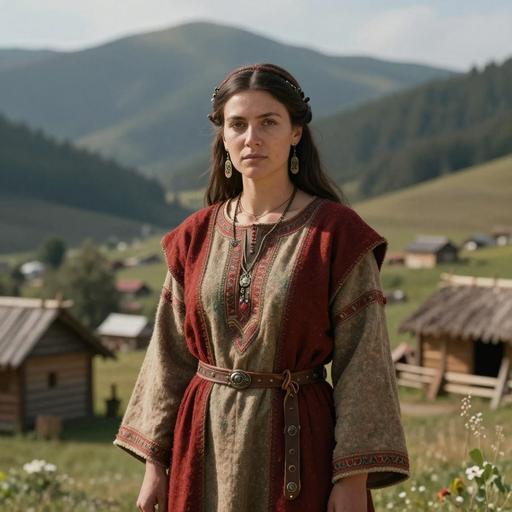
Portrait reconstruction of I16751
Ancient Individual

A woman buried in Hungary in the Middle Ages era

I16751
700 CE - 800 CE
Female
Late Avar Period in the Northern Hungary Mountains
Hungary
Scroll to begin
Chapter I

Identity

The biological and cultural markers that define this ancient individual

Sample ID

I16751

Date Range

700 CE - 800 CE

Biological Sex

Female

mtDNA Haplogroup

T2a1a1

Cultural Period

Late Avar Period in the Northern Hungary Mountains

Chapter II

Place

Where this individual was discovered

Country Hungary
Locality Visonta Nagycsapás
Coordinates 47.7672, 20.0216
Chapter III

Time

When this individual lived in the broader context of human history

I16751 700 CE - 800 CE
Chapter IV

Story

The narrative of this ancient life

The Late Avar Period, particularly within the Northern Hungary Mountains, represents a fascinating chapter in the history of Eurasian nomadic cultures. Stretching from approximately the late 7th century through to the early 9th century, this period was marked by dynamic transformations within the Avar society, influenced by socio-political, economic, and cultural interactions with neighboring regions and empires.

Historical Context

The Avars were a nomadic people of Central Asian origin who migrated into the Carpathian Basin in the mid-6th century. Over time, they established a powerful khaganate that exerted significant influence across Central and Eastern Europe. By the Late Avar Period, their society had experienced substantial changes due to interactions with surrounding populations, including Slavic tribes and the Frankish Empire.

Geographical Setting

The Northern Hungary Mountains provided a strategic location for the Avars. This mountainous terrain not only offered natural protection against invasions but also served as a crucial point for overseeing important trade routes connecting the Danube basin with northern and eastern Europe. The natural resources and topographical features influenced settlement patterns, economic activities, and military strategies.

Social Structure and Leadership

During the Late Avar Period, the society was hierarchically structured with a ruling elite that included the khagan, who wielded supreme authority. The elite were supported by a class of warrior-nobles (known as jugur) who managed territories and collected tributes. Beneath them was a diverse population, including settled agricultural communities, artisans, and other service providers.

The leadership structure emphasized martial prowess and lineage, which reinforced the elite's dominance in both governance and cultural life. The khagan and his court adopted both traditional nomadic customs and practices influenced by Byzantine and Slavic cultures, reflecting a syncretic adaptation that was typical of frontier societies.

Economic Activities

The economy of the Late Avar society in the Northern Hungary Mountains was diverse. It was primarily supported by a mix of pastoral nomadism, agriculture, and trade. The Avars engaged in animal husbandry, raising horses, cattle, and sheep, which were vital for food, transport, and trade.

Agriculture, albeit secondary to pastoralism, played a significant role, especially in areas suitable for crop cultivation. The region's fertile valleys were used to grow crops like barley, wheat, and millet. The integration of agriculture was likely due to the influence of Slavic settlements, which introduced more permanent farming techniques.

Trade was another essential economic activity for the Avars. They controlled and taxed major trade routes that passed through their territory, dealing in goods such as furs, salt, slaves, and luxury items like silk and wine. This trade facilitated cultural exchanges and wealth accumulation, which were instrumental in maintaining their political power.

Cultural Influence and Legacy

Culturally, the Avars during this period exhibited a rich tapestry of influences, standing at a crossroads of numerous civilizations. The material culture reflected a blend of steppe traditions and influences from Byzantine, Slavic, and even Frankish cultures.

Artifacts from burials and archaeological sites reveal sophisticated workmanship in metalwork, ceramics, and textiles. The Avars are particularly noted for their gold and silverwork, used in jewelry and horse fittings. These items often feature intricate designs with motifs inspired by both nomadic ornamentation and Christian iconography, indicating a level of artistic synthesis and religious diversity within the society.

Religion and Belief Systems

Avar religious beliefs during the Late Period were likely an amalgam of indigenous steppe spirituality and the new religious influences they encountered. While traditional animistic practices persisted, evidence suggests an increasing exposure to Christianity, primarily through contact with the Byzantine Empire and later with the Carolingian missionaries.

Burial practices in Avar cemeteries show a combination of pagan rites and Christian symbols, suggesting a society in the process of religious transition. The presence of Christian artifacts in graves points to a gradual, albeit incomplete, Christianization of the Avar elites.

Decline and Transition

The decline of the Avar Khaganate in the late 8th and early 9th centuries was precipitated by internal strife and external pressures. The Frankish campaigns under Charlemagne, combined with the emergence of destabilizing local powers and the rebellion of subjected Slavic groups, eroded their political dominance.

The collapse of Avar hegemony resulted in significant cultural and demographic changes, as populations intermingled and new political entities emerged. The legacy of the Late Avar Period continued to influence the subsequent historical developments in the Carpathian Basin, leaving an indelible mark on the region's cultural and historical landscape.

In conclusion, the Late Avar Period in the Northern Hungary Mountains represents a complex era characterized by a melding of nomadic traditions with external influences, resulting in a unique cultural and socio-economic tapestry. This period stands as a testament to the dynamic interactions and adaptability of nomadic societies within the broader Eurasian context.

Chapter V

Genetics

The genetic ancestry of this ancient individual

Ancient Genetic Admixture

This analysis compares the DNA profile of I16751 with ancient reference populations, showing the genetic composition in terms of prehistoric ancestral groups.

Neolithic Farmers 48.2%
European Hunter-Gatherers 29.3%
Western Steppe Pastoralists 19.3%
Ancient Asians 3.2%

Modern Genetic Admixture

This analysis compares the DNA profile with present-day reference populations, showing what percentage of genetic makeup resembles modern populations from different regions.

Europe 68.6%
Southern European 45.9%
Italian 23.3%
Balkan 15.0%
Iberian 4.3%
Sardinian 3.2%
Northwestern European 18.5%
English 9.4%
Northwestern European 5.4%
Scandinavian 3.7%
Eastern European 4.3%
Asia 30.8%
Northern West Asian 17.1%
Mesopotamian 12.4%
Anatolian 3.9%
Caucasian 0.9%
Arab, Egyptian & Levantine 13.7%
Levantine 13.7%
America 0.6%
America 0.6%
Native American 0.6%

Closest Modern Populations

These are the modern populations showing the closest statistical alignment to A woman buried in Hungary in the Middle Ages era, ranked by genetic distance. Lower distance values indicate closer statistical similarity.

1
Greek West Taygetos
2.3104
2
Greek Thessaly
2.3538
3
Greek East Taygetos
2.5237
4
Greek Messenia
2.5246
5
Greek Elis
2.5702
6
Greek Macedonia
2.6532
7
Greek North Tsakonia
2.6695
8
Greek Arcadia
2.6881
9
Rumelia East
2.7058
10
Greek Achaea
2.7156
Chapter VI

Context

Other ancient individuals connected to this sample

Sources

References

Scientific publications and genetic data

Scientific Publication

Ancient genomes reveal origin and rapid trans-Eurasian migration of 7th century Avar elites

Authors Gnecchi-Ruscone GA, Szécsényi-Nagy A, Koncz I
Abstract

The Avars settled the Carpathian Basin in 567/68 CE, establishing an empire lasting over 200 years. Who they were and where they came from is highly debated. Contemporaries have disagreed about whether they were, as they claimed, the direct successors of the Mongolian Steppe Rouran empire that was destroyed by the Turks in ∼550 CE. Here, we analyze new genome-wide data from 66 pre-Avar and Avar-period Carpathian Basin individuals, including the 8 richest Avar-period burials and further elite sites from Avar's empire core region. Our results provide support for a rapid long-distance trans-Eurasian migration of Avar-period elites. These individuals carried Northeast Asian ancestry matching the profile of preceding Mongolian Steppe populations, particularly a genome available from the Rouran period. Some of the later elite individuals carried an additional non-local ancestry component broadly matching the steppe, which could point to a later migration or reflect greater genetic diversity within the initial migrant population.

G25 Coordinates

The G25 coordinates for sample I16751 can be used for detailed admixture analysis in our G25 Studio tool.

I16751,0.11525524,0.1362254,0.00313754,-0.01703376,0.01064558,-0.00467294,0.00012574,-0.00112902,-0.00612466,0.01043388,-0.00236986,0.00570926,-0.00817994,0.00233774,-0.0026656,-0.00211866,-0.00082998,0.00010876,0.00276576,-0.00261742,-0.00154322,-0.0008568,0.00071582,0.00114904,0.00016513
Analyze in G25 Studio
Use code for 40% off Expires Feb 27