Menu
Store
Blog
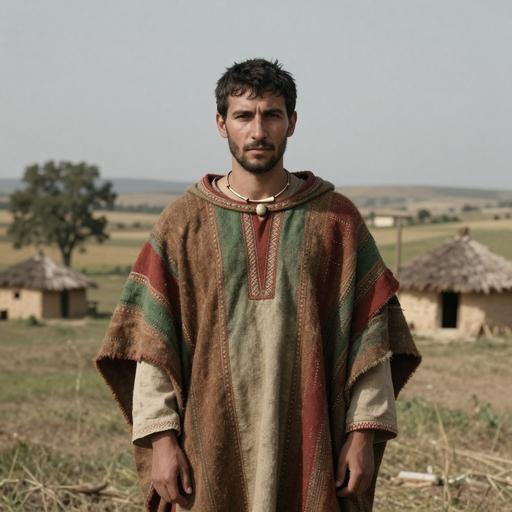
Portrait reconstruction of I17915
Ancient Individual

A man buried in Serbia in the Copper Age era

I17915
4350 BCE - 4000 BCE
Male
Chalcolithic to Bronze Age Tiszapolgár-Bodrogkeresztúr Culture, Serbia
Serbia
Scroll to begin
Chapter I

Identity

The biological and cultural markers that define this ancient individual

Sample ID

I17915

Date Range

4350 BCE - 4000 BCE

Biological Sex

Male

mtDNA Haplogroup

H4a1

Y-DNA Haplogroup

Not available

Cultural Period

Chalcolithic to Bronze Age Tiszapolgár-Bodrogkeresztúr Culture, Serbia

Chapter II

Place

Where this individual was discovered

Country Serbia
Locality Podlokanj
Coordinates 46.0180, 20.2714
Chapter III

Time

When this individual lived in the broader context of human history

I17915 4350 BCE - 4000 BCE
Chapter IV

Story

The narrative of this ancient life

The Tiszapolgár-Bodrogkeresztúr culture represents a significant transitional phase from the Chalcolithic (Copper Age) to the early Bronze Age in the Carpathian Basin and parts of the Balkans, notably including regions within modern-day Serbia. This culture is part of the broader cultural shifts occurring in Eastern and Central Europe during the late 5th to the late 4th millennium BCE. It is characterized by various technological, social, and economic changes that lay the groundwork for later Bronze Age developments.

Geographical Context

The Tiszapolgár-Bodrogkeresztúr culture occupied a region that spans current-day Hungary, Slovakia, Ukraine, and northern Serbia. The geographical setting of this culture is primarily within the Carpathian Basin, which offered a mix of plains and river valleys ideal for settlement and agriculture. Key rivers like the Tisza and Danube facilitated communication and trade with neighboring cultures.

Chronology

The Tiszapolgár-Bodrogkeresztúr culture succeeded the Tiszapolgár culture and can be generally placed between 3500 and 2700 BCE. It represents a period where copper metallurgy was becoming more prominent, setting the stage for the full onset of the Bronze Age.

Material Culture

Pottery and Ceramics: The ceramic traditions of the Tiszapolgár-Bodrogkeresztúr people are characterized by finely made vessels with smooth surfaces and simple geometric decorations. Typical forms include bowls, jars, and cups with incised or impressed designs. The pottery often features a grey or black color with some red and brown ware.

Metallurgy: This culture is notable for its early use of copper tools and ornaments. The increased production and distribution of copper items like axes, chisels, and jewelry indicate advancements in metalworking skills. These items reflect both functional utility and a growing sense of social status and wealth.

Housing and Settlements: The Tiszapolgár-Bodrogkeresztúr communities typically consisted of small, semi-permanent villages. The houses were usually rectangular and built with wattle and daub techniques, featuring thatched roofs. Settlements were often strategically located near water sources for sustenance and transportation.

Economy and Subsistence

Agriculture played a crucial role, with evidence of crop cultivation such as wheat, barley, and legumes. Animal husbandry was also important, with cattle, sheep, and pigs being common. The combination of agriculture and livestock allowed for a stable food supply, facilitating population growth and social complexity.

Social Structure and Burial Practices

Archaeological findings, such as grave goods, suggest a society with emerging social stratification. Burials often contained copper tools, pottery, and personal ornaments, indicating a differentiation in status among individuals. Cemetery sites provide critical insight into the social organization, with some individuals receiving more elaborate burial treatments.

Ritual and Religion: Interpreting spiritual beliefs is challenging due to the paucity of direct evidence. However, the presence of grave goods suggests a belief in an afterlife or the importance of social status beyond death. Ritual and ceremonial functions likely played roles in binding communities together.

Interactions and Influences

The Tiszapolgár-Bodrogkeresztúr culture was not isolated; it engaged in long-distance trade, as evidenced by the presence of exotic materials like obsidian and shells. These interactions facilitated cultural exchanges with neighboring Neolithic and other Chalcolithic groups in Central and Southeast Europe. The culture’s strategic location provided a conduit for the movement of ideas, technologies, and goods across the region.

Conclusion

The Tiszapolgár-Bodrogkeresztúr culture represents a critical juncture in European prehistory, laying essential foundations for the Bronze Age. Through its advances in metallurgy, development of complex social structures, and strategic geographic positioning, this culture contributed to the broader transformation of European societies during this epoch. The analysis and study of this culture offer crucial insights into the dynamic processes that shaped ancient Europe.

Chapter V

Genetics

The genetic ancestry of this ancient individual

Ancient Genetic Admixture

This analysis compares the DNA profile of I17915 with ancient reference populations, showing the genetic composition in terms of prehistoric ancestral groups.

Neolithic Farmers 66.7%
European Hunter-Gatherers 25.2%
Western Steppe Pastoralists 8.2%

Modern Genetic Admixture

This analysis compares the DNA profile with present-day reference populations, showing what percentage of genetic makeup resembles modern populations from different regions.

Europe 91.3%
Southern European 91.3%
Italian 41.4%
Sardinian 28.7%
Iberian 19.6%
Balkan 1.7%
Africa 5.4%
North African 5.4%
North African 3.7%
Egyptian 1.7%
Asia 3.3%
Northern West Asian 2.0%
Cypriot 2.0%
Arab, Egyptian & Levantine 1.3%
Arabian 1.3%

Closest Modern Populations

These are the modern populations showing the closest statistical alignment to A man buried in Serbia in the Copper Age era, ranked by genetic distance. Lower distance values indicate closer statistical similarity.

1
Sardinian
3.3139
2
French Corsica
6.5589
3
Belmonte Jew
6.8766
4
Italian Lazio
7.5215
5
Italian Umbria
7.7696
6
Sicilian West
7.9262
7
Italian Lombardy
8.0558
8
Italian Campania
8.1590
9
Italian Tuscany
8.1596
10
Italian Marche
8.2043
Chapter VI

Context

Other ancient individuals connected to this sample

Sources

References

Scientific publications and genetic data

Scientific Publication

The genetic history of the Southern Arc: A bridge between West Asia and Europe | Science

Authors Lazaridis I, Alpaslan-Roodenberg S, Acar A
Abstract

The period from the Copper Age to the Bronze Age marked major social and economic transformations in West Eurasia. To better understand these changes and their genetic impacts, we generated genome-wide data from 727 individuals who lived between 5000 and 1000 BCE in southeastern Europe and southwestern Asia.

G25 Coordinates

The G25 coordinates for sample I17915 can be used for detailed admixture analysis in our G25 Studio tool.

I17915,0.11208266,0.16025714,0.01042638,-0.05720226,0.04989958,-0.026943,-0.00309846,0.00373824,0.0395119,0.06699252,-0.00143312,0.01139434,-0.02010452,-0.01346214,-0.01307664,0.00598594,0.01405296,0.0003099,0.00043824,-0.00330242,-0.000686,0.00434404,-0.01164426,-0.01793928,0.00350892
Analyze in G25 Studio
Use code for 40% off Expires Feb 27