Menu
Store
Blog
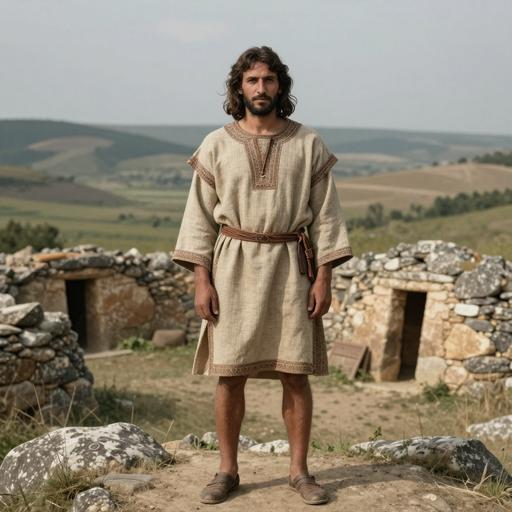
Portrait reconstruction of I2163
Ancient Individual

A man buried in Bulgaria in the Middle Late Bronze Age era

I2163
1866 BCE - 1615 BCE
Male
Middle to Late Bronze Age Bulgaria
Bulgaria
Scroll to begin
Chapter I

Identity

The biological and cultural markers that define this ancient individual

Sample ID

I2163

Date Range

1866 BCE - 1615 BCE

Biological Sex

Male

mtDNA Haplogroup

U5a2

Y-DNA Haplogroup

R-Z93

Cultural Period

Middle to Late Bronze Age Bulgaria

Chapter II

Place

Where this individual was discovered

Country Bulgaria
Locality Merichleri. Kairyaka necropolis
Coordinates 42.1329, 25.4963
Chapter III

Time

When this individual lived in the broader context of human history

I2163 1866 BCE - 1615 BCE
Chapter IV

Story

The narrative of this ancient life

The Middle to Late Bronze Age period in Bulgaria, roughly spanning from 2000 to 1200 BCE, is a pivotal era that marks the evolution of complex societies and distinct cultural characteristics in Thrace, an area inhabited by the Thracians. This period is notable for its advancements in metallurgy, agriculture, trade, and social organization, laying the groundwork for the rise of Thracian civilization.

Geographical and Environmental Context

During the Middle to Late Bronze Age, Bulgaria was characterized by diverse geographical features, including the Balkan Mountains to the north, the Rhodope Mountains to the south, and fertile plains along the Maritsa and Danube Rivers. The varied topography and climate supported a rich biodiversity that played a crucial role in the subsistence strategies of the Thracians, fostering agriculture, animal husbandry, and gathering activities.

Sociopolitical Structure

The Middle to Late Bronze Age saw the emergence of more complex sociopolitical structures in Thrace. Evidence suggests the development of tribal and proto-state entities, signaled by the construction of fortifications and establishment of settlement hierarchies. Power may have been concentrated in the hands of local chieftains or warrior elites, as indicated by grave goods and the construction of large, well-organized burial mounds (tumuli) that reflect status and wealth.

Economy and Trade

The economy during this era was predominantly agrarian, supplemented by pastoralism, hunting, and gathering. However, the period is also marked by significant advancements in metallurgy, with Thrace becoming an important center for bronze production. Thracians utilized local copper and tin resources and engaged in trade networks that extended across the Balkans and into Mycenaean Greece, facilitating the exchange of raw materials, finished goods, and cultural influences.

Material Culture

Thracian material culture from the Middle to Late Bronze Age is distinguished by its metalwork, ceramics, and construction techniques. The production of bronze tools, weapons (such as swords and spears), and ornate jewelry (including diadems and bracelets) illustrates technological prowess and aesthetic sensibilities. Pottery from this period shows a variety of forms and decorations, often featuring intricate geometric patterns.

Religion and Rituals

Religious beliefs during this period likely revolved around nature worship and ancestor veneration, with an emphasis on rituals that ensured fertility, prosperity, and protection. Sacred sites may have included natural features like springs, caves, and mountain peaks. Funerary practices, as evidenced by the tumuli, suggest a belief in an afterlife, with the inclusion of grave goods reflecting the deceased's status and possibly their role in society.

Linguistic and Cultural Contact

Although the specific language of the Bronze Age Thracians remains unknown, they were part of the broader Indo-European linguistic family. Cultural contact with neighboring regions, particularly the Mycenaean Greeks, introduced new ideas and technologies, enriching Thracian cultural expressions and facilitating a dynamic exchange of ideologies and practices.

Archaeological Evidence and Legacy

Archaeological research has significantly contributed to understanding this era, with findings from settlements, burial sites, and hoards providing insights into the daily life, social structure, and artistic achievements of the Middle to Late Bronze Age Thracians. This period sets the stage for the subsequent development of the classical Thracian civilization, known for its intricate goldwork, warrior culture, and interactions with the Greek and Roman worlds.

In summary, the Middle to Late Bronze Age in Bulgaria was a time of transformation and development that shaped the cultural and historical trajectory of the Thracian people. Through metallurgy, trade, and social organization, they laid the foundations for a rich and enduring legacy that would influence the history of Southeast Europe.

Chapter V

Genetics

The genetic ancestry of this ancient individual

Ancient Genetic Admixture

This analysis compares the DNA profile of I2163 with ancient reference populations, showing the genetic composition in terms of prehistoric ancestral groups.

Western Steppe Pastoralists 46.9%
European Hunter-Gatherers 34.0%
Neolithic Farmers 15.7%
Ancient Asians 3.5%

Modern Genetic Admixture

This analysis compares the DNA profile with present-day reference populations, showing what percentage of genetic makeup resembles modern populations from different regions.

Europe 80.3%
Northwestern European 67.2%
Scandinavian 30.7%
English 28.4%
Finnish 8.1%
Eastern European 13.0%
Asia 19.8%
Northern West Asian 18.7%
Caucasian 18.7%
Central Asian, Northern Indian & Pakistani 1.0%
Pakistan 1.0%

Closest Modern Populations

These are the modern populations showing the closest statistical alignment to A man buried in Bulgaria in the Middle Late Bronze Age era, ranked by genetic distance. Lower distance values indicate closer statistical similarity.

1
Afrikaner
4.9241
2
German Hamburg
5.0159
3
Swedish
5.1199
4
Hungarian
5.1318
5
Shetlandic
5.2450
6
Czech
5.2520
7
Norwegian
5.2738
8
German Erlangen
5.2791
9
Dutch
5.2884
10
Moldovan O
5.3123
Chapter VI

Context

Other ancient individuals connected to this sample

Sources

References

Scientific publications and genetic data

Scientific Publication

The genomic history of southeastern Europe

Authors Mathieson I, Alpaslan-Roodenberg S, Posth C
Abstract

Farming was first introduced to Europe in the mid-seventh millennium bc, and was associated with migrants from Anatolia who settled in the southeast before spreading throughout Europe. Here, to understand the dynamics of this process, we analysed genome-wide ancient DNA data from 225 individuals who lived in southeastern Europe and surrounding regions between 12000 and 500 bc. We document a west-east cline of ancestry in indigenous hunter-gatherers and, in eastern Europe, the early stages in the formation of Bronze Age steppe ancestry. We show that the first farmers of northern and western Europe dispersed through southeastern Europe with limited hunter-gatherer admixture, but that some early groups in the southeast mixed extensively with hunter-gatherers without the sex-biased admixture that prevailed later in the north and west. We also show that southeastern Europe continued to be a nexus between east and west after the arrival of farmers, with intermittent genetic contact with steppe populations occurring up to 2,000 years earlier than the migrations from the steppe that ultimately replaced much of the population of northern Europe.

G25 Coordinates

The G25 coordinates for sample I2163 can be used for detailed admixture analysis in our G25 Studio tool.

I2163,0.12656446,0.10205002,0.04183376,0.0508815,0.01704944,0.02292886,0.00472096,0.00506042,-0.00615212,-0.01513428,-0.0046382,0.00399622,0.00171336,-0.00788522,0.00973006,-0.00043032,-0.00962138,0.00037168,-0.0031255,-0.00315664,0.00347082,0.00370302,-0.00097014,0.0086941,-0.00190406
Analyze in G25 Studio
Use code for 40% off Expires Feb 27