Menu
Store
Blog
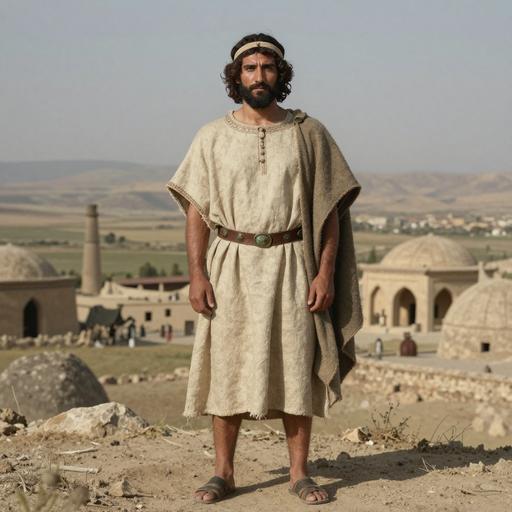
Portrait reconstruction of MA2212
Ancient Individual

A man buried in Turkey in the Early Bronze Age era

MA2212
2750 BCE - 2500 BCE
Male
Early Bronze Age II Turkey
Turkey
Scroll to begin
Chapter I

Identity

The biological and cultural markers that define this ancient individual

Sample ID

MA2212

Date Range

2750 BCE - 2500 BCE

Biological Sex

Male

mtDNA Haplogroup

W5

Y-DNA Haplogroup

Not available

Cultural Period

Early Bronze Age II Turkey

Chapter II

Place

Where this individual was discovered

Country Turkey
Locality Ovaören
Coordinates 38.6293, 34.2977
Chapter III

Time

When this individual lived in the broader context of human history

MA2212 2750 BCE - 2500 BCE
Chapter IV

Story

The narrative of this ancient life

The Early Bronze Age II in Turkey, a significant phase in the Anatolian civilizations, is a period marked by dynamic developments in sociopolitical structures, technological advancements, and cultural evolution. This era, generally dated from around 2700 to 2400 BCE, plays a crucial role in the broader tapestry of ancient Near Eastern history.

Sociopolitical Structure

During the Early Bronze Age II, Anatolia experienced increased complexity in its societal organization. Communities began transitioning from simple, egalitarian structures to more hierarchical societies. This change is reflected in the emergence of regional centers and proto-urban settlements, such as Troy and Alacahöyük. These centers often acted as hubs of political power and economic activity, wielding influence over surrounding areas and smaller villages.

Leadership roles likely became more formalized, with chieftains or local monarchs governing these societies. The presence of elite burial sites, often richly adorned with grave goods, suggests a differentiation in social status and the development of a ruling class. The use of seals and possibly early administrative records indicates the beginnings of bureaucratic systems that managed resources, trade, and labor.

Technological Advancements

The Early Bronze Age II witnessed considerable technological innovation, particularly in metallurgy. The period is notable for the widespread use of bronze, an alloy of copper and tin, which was superior to previous materials in terms of durability and workability. The production of bronze artifacts, including weapons, tools, and ornaments, reflects both the technological prowess and the trade networks necessary to procure tin, which was not locally abundant.

Ceramic production also saw advancements with the introduction of new pottery forms and styles. Pottery from this period, often wheel-made, exhibits a range of decorative techniques including painted, incised, and relief motifs. Such ceramics are not only utilitarian but also serve as indicators of cultural exchange and aesthetic preferences.

Economy and Trade

The economic landscape of Early Bronze Age II Anatolia was characterized by increasing specialization and long-distance trade. The control of resources and trade routes was crucial for local leaders, as evidenced by the distribution of exotic goods and raw materials. Anatolia was rich in minerals such as copper and obsidian, fostering both internal trade and connections with Mesopotamia, the Aegean, and beyond.

Trade networks facilitated the exchange of materials like tin, textiles, and possibly even luxury items such as lapis lazuli and gold. The diffusion of goods and ideas helped to stimulate local economies and might have contributed to the blossoming of regional cultures.

Cultural Developments

Culturally, the Early Bronze Age II was a period of significant artistic and architectural development. The construction of monumental architecture, including fortification walls and palatial structures, reflects both the organizational abilities of these societies and their defensive priorities. Sites like Troy have revealed complex settlement layouts with advanced features such as paved streets, drainage systems, and large, multi-roomed buildings.

Artistic expression can be seen in the form of metallurgy, jewelry, and the aforementioned pottery. There was also an apparent continuity and evolution of religious and funerary practices, as seen in elaborate burial customs and the construction of tumuli, which housed significant individuals along with rich treasures.

Environmental and Agricultural Aspects

The Early Bronze Age II Anatolians practiced agriculture as the backbone of their economy. The ecological diversity of Anatolia allowed for the cultivation of various crops, including wheat, barley, and legumes, as well as the domestication of sheep, goats, and cattle. This agricultural surplus supported population growth and the development of complex societies.

In summary, the Early Bronze Age II in Turkey was a transformative era that laid down many foundations for subsequent Anatolian civilizations. Its advances in technology, wealth of cultural achievements, and evolving social structures underscore the dynamic and interconnected world of Early Bronze Age Anatolia. These developments not only influenced the region itself but also contributed to the broader trajectory of Near Eastern history.

Chapter V

Context

Other ancient individuals connected to this sample

Sources

References

Scientific publications and genetic data

Scientific Publication

The first horse herders and the impact of early Bronze Age steppe expansions into Asia

Authors de Barros Damgaard P, Martiniano R, Kamm J
Abstract

The Yamnaya expansions from the western steppe into Europe and Asia during the Early Bronze Age (~3000 BCE) are believed to have brought with them Indo-European languages and possibly horse husbandry. We analyzed 74 ancient whole-genome sequences from across Inner Asia and Anatolia and show that the Botai people associated with the earliest horse husbandry derived from a hunter-gatherer population deeply diverged from the Yamnaya. Our results also suggest distinct migrations bringing West Eurasian ancestry into South Asia before and after, but not at the time of, Yamnaya culture. We find no evidence of steppe ancestry in Bronze Age Anatolia from when Indo-European languages are attested there. Thus, in contrast to Europe, Early Bronze Age Yamnaya-related migrations had limited direct genetic impact in Asia.

Use code for 40% off Expires Feb 27