Menu
Store
Blog
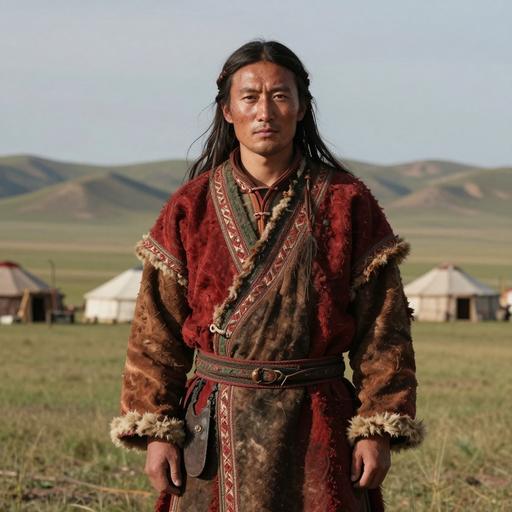
Portrait reconstruction of NAI002
Ancient Individual

A man buried in Mongolia in the Iron Age era

NAI002
200 BCE - 100 CE
Male
The Xiongnu People
Mongolia
Scroll to begin
Chapter I

Identity

The biological and cultural markers that define this ancient individual

Sample ID

NAI002

Date Range

200 BCE - 100 CE

Biological Sex

Male

mtDNA Haplogroup

C4a2c1

Y-DNA Haplogroup

R-Y190991

Cultural Period

The Xiongnu People

Chapter II

Place

Where this individual was discovered

Country Mongolia
Locality Arkhangai. Naimaa Tolgoi
Chapter III

Time

When this individual lived in the broader context of human history

NAI002 200 BCE - 100 CE
Chapter IV

Story

The narrative of this ancient life

The Xiongnu were a formidable confederation of nomadic tribes that dominated the vast steppes of Central Asia for centuries, specifically from around the 3rd century BCE to the late 1st century CE. Mentioned frequently in Chinese historical texts, their presence and activities significantly impacted the political, military, and cultural landscapes of Ancient Mongolia and its neighboring regions. The Xiongnu are often identified as one of the earliest of the great nomadic empires, exerting influence across a vast territory that stretched from Eastern Europe to the northern borders of China.

Social and Political Structure

Leadership and Organization: The Xiongnu society was highly stratified, with a deeply entrenched hierarchy centered around a supreme leader, known as the \Chanyu." The Chanyu wielded substantial power and was akin to an emperor, supported by a council of nobles and chieftains from various tribes within the confederation. These subordinate leaders managed their respective clans but owed military and political allegiance to the Chanyu.

Tribal Confederation: The Xiongnu's tribal nature was one of their defining features. Composed of various tribes and ethnic groups, their confederacy required a flexible yet strong governance system to maintain unity among diverse peoples. The confederation's strength was its ability to incorporate new tribes, which often occurred through conquest, marriage, or alliance.

Economy and Daily Life

Nomadic Lifestyle: As a quintessential nomadic culture, the Xiongnu relied heavily on horse husbandry and pastoralism. The horse was central to their way of life, symbolizing wealth, status, and mobility. Herds of cattle, sheep, and goats provided sustenance and materials for clothing, making animal husbandry the economic backbone.

Trade and Interaction: Despite their martial reputation, the Xiongnu engaged in trade with neighboring settled civilizations, most notably the Han Dynasty of China. They exchanged goods suited to nomadic life, such as furs and horses, for Chinese silk, grain, and metalwork. This interaction fostered cultural exchanges, although it was not always peaceful.

Military Prowess

Warfare and Tactics: The Xiongnu were renowned for their military capabilities, particularly their skilled cavalry. Their warriors were adept at mounted archery, using composite bows that were both powerful and effective over long distances. Xiongnu forces utilized mobility and speed to conduct swift raids and employ guerrilla tactics against larger, less mobile armies.

Conflicts with China: One of the most significant aspects of Xiongnu history was their relationship with the Chinese states to the south. They were a persistent threat to China's northern borders, leading to numerous military campaigns and the construction of extensive fortifications, including sections of what would become the Great Wall. The ebb and flow of conflict, treaties, and diplomatic marriages characterized Sino-Xiongnu relations.

Culture and Beliefs

Belief Systems: While much about the Xiongnu's spiritual beliefs remains unclear, it is evident that they practiced a form of shamanism. Nature worship and reverence for the sky and mother earth were likely important aspects of their spirituality. Burial practices suggest that they believed in an afterlife, as evidenced by the inclusion of weapons, personal items, and horses in graves.

Cultural Artifacts: Artistic expressions among the Xiongnu included intricate gold and metalwork, typified by animal motifs that conveyed their cosmological beliefs and nomadic lifestyle. Artifacts recovered from burial sites and other archaeological locations illustrate a rich tradition of craftsmanship influenced by interactions with neighboring cultures.

Decline and Legacy

The decline of the Xiongnu in the late 1st century CE can be attributed to a combination of internal strife, overexpansion, and sustained pressure from other emerging nomadic groups and Chinese campaigns. Eventually, the once-formidable confederation fragmented into smaller groups, some of which migrated westward, potentially influencing the development of other nomadic cultures in Europe and Asia.

The legacy of the Xiongnu is observed in their enduring influence on the cultures and histories of the Central Asian steppes. As one of the earliest expansive nomadic empires, they set precedents for later groups such as the Huns and the Mongols, shaping the dynamics between nomadic and sedentary civilizations for centuries to come."

Chapter V

Genetics

The genetic ancestry of this ancient individual

Ancient Genetic Admixture

This analysis compares the DNA profile of NAI002 with ancient reference populations, showing the genetic composition in terms of prehistoric ancestral groups.

Ancient Asians 32.0%
European Hunter-Gatherers 22.3%
Western Steppe Pastoralists 21.4%
Neolithic Farmers 20.2%
Ancient Native Americans 4.0%

Modern Genetic Admixture

This analysis compares the DNA profile with present-day reference populations, showing what percentage of genetic makeup resembles modern populations from different regions.

Asia 71.0%
Central Asian, Northern Indian & Pakistani 30.6%
Central Asian 15.1%
Pakistan 14.2%
Indian 1.3%
Northern West Asian 25.0%
Caucasian 25.0%
Northern Asian 15.4%
Siberian 15.4%
Europe 26.2%
Eastern European 16.3%
Northwestern European 9.9%
English 6.7%
Northwestern European 2.9%
America 2.8%
America 2.8%
Native American 2.8%

Closest Modern Populations

These are the modern populations showing the closest statistical alignment to A man buried in Mongolia in the Iron Age era, ranked by genetic distance. Lower distance values indicate closer statistical similarity.

1
Tajik Tajikistan Hisor
5.8805
2
Tajik Tajikistan Ayni
6.4028
3
Pamiri Sarikoli
6.7299
4
Tatar Lipka
6.7942
5
Turkmen
7.1912
6
Besermyan
7.2043
7
Tatar Kazan
7.3036
8
Turkmen Iran
7.4209
9
Tajik Tajikistan Kulob
7.4248
10
Turkmen Uzbekistan
7.5698
Chapter VI

Context

Other ancient individuals connected to this sample

Sources

References

Scientific publications and genetic data

Scientific Publication

A Dynamic 6,000-Year Genetic History of Eurasia's Eastern Steppe

Authors Jeong C, Wang K, Wilkin S
Abstract

The Eastern Eurasian Steppe was home to historic empires of nomadic pastoralists, including the Xiongnu and the Mongols. However, little is known about the region's population history. Here, we reveal its dynamic genetic history by analyzing new genome-wide data for 214 ancient individuals spanning 6,000 years. We identify a pastoralist expansion into Mongolia ca. 3000 BCE, and by the Late Bronze Age, Mongolian populations were biogeographically structured into three distinct groups, all practicing dairy pastoralism regardless of ancestry. The Xiongnu emerged from the mixing of these populations and those from surrounding regions. By comparison, the Mongols exhibit much higher eastern Eurasian ancestry, resembling present-day Mongolic-speaking populations. Our results illuminate the complex interplay between genetic, sociopolitical, and cultural changes on the Eastern Steppe.

G25 Coordinates

The G25 coordinates for sample NAI002 can be used for detailed admixture analysis in our G25 Studio tool.

NAI002,0.0912645,-0.01196838,0.0197466,0.0400623,-0.04156528,0.0080154,0.0021908,0.0010786,-0.0184906,-0.0218604,0.00480184,-0.00098828,0.0002162,-0.01945398,0.00768502,0.0012985,-0.00908594,0.00051454,0.0018905,-0.0022041,-0.01012034,0.00627464,0.00706654,0.00365928,-0.00392726
Analyze in G25 Studio
Use code for 40% off Expires Feb 27