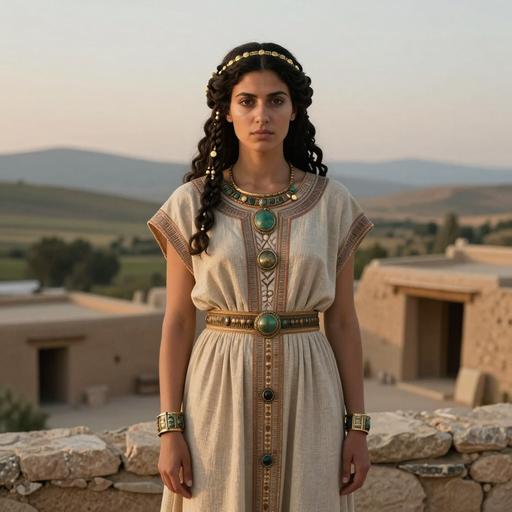
The Bronze Age Aegean culture of Aydın is a fascinating and complex civilization that thrived in what is now modern-day western Turkey. This era, spanning approximately from 3000 to 1100 BCE, marks a crucial period of development in terms of socio-political structures, trade networks, art, and technology in the region. The culture of this area is often studied in conjunction with other Aegean civilizations, such as the Minoans on Crete and the Mycenaeans in mainland Greece, due to their interconnected nature.
Geography and Settlement
Aydın is located in a region characterized by its fertile plains, proximity to the Aegean Sea, and strategic position along trade routes. The geography includes rivers, such as the Büyük Menderes (Maeander River), which provided vital resources for agriculture and facilitated trade and communication with other Aegean cultures. Settlements in the area were typically located on elevated grounds or near water sources for both defense and sustainability.
Sociopolitical Structure
The Bronze Age Aegean culture in Aydın likely developed complex sociopolitical structures similar to other contemporary cultures. These structures may have included hierarchical leadership systems, perhaps ruled by kings or chieftains, supported by a class of nobles and a complex bureaucracy. These leaders were responsible for organizing large-scale construction projects, managing resources, and conducting trade with neighboring regions.
Economy and Trade
The economy of the Aydın region during the Bronze Age was primarily based on agriculture, supported by the rich alluvial soils of the river plains, and supplemented by cattle and sheep herding. The Aegean culture was also heavily involved in trade, engaging in exchanges with other civilizations around the Aegean Sea, such as the Cycladic islands, Crete, and mainland Greece. Key exports likely included olive oil, wine, textiles, and pottery, while imports might have included metals (copper and tin for bronze production), luxury goods, and raw materials.
Art and Technology
Art in the Aydın region was influenced by both local traditions and external contacts. Pottery from this era often exhibits intricate designs and motifs, sometimes featuring elements inspired by nature, such as marine life or floral patterns. Metalwork, including weapons, tools, and jewelry, showcased the advanced metallurgical technology of the time, given the sophisticated techniques required to produce bronze artifacts.
Architectural advancements would have included the construction of fortified settlements, palatial structures with storerooms and administrative centers, and possibly religious edifices. These structures were often decorated with frescoes and adorned with items of both practical and ceremonial use.
Religion and Culture
The religious beliefs of Bronze Age Aegean peoples in Aydın likely revolved around a pantheon of gods and goddesses associated with natural elements and phenomena, which were integral to their agricultural lifestyle. Evidence suggests that they practiced complex rituals and ceremonies, potentially involving offerings or sacrifices, to appease deities and ensure successful harvests and protection.
Cultural life in Aydın would also have included music, dance, and possibly early forms of writing. These expressions of culture played important roles in reinforcing social bonds and cultural identity among the inhabitants of the region.
Interaction with Other Cultures
The Aegean culture of Aydın was not isolated; rather, it was a part of the broader cultural and trade networks of the Bronze Age Mediterranean. Interaction with Minoans, Mycenaeans, Hittites, and other neighboring civilizations facilitated the exchange of ideas, goods, and technologies. Such interactions could have led to cultural syncretism, evident in shared architectural styles, artistic motifs, and technological innovations.
Conclusion
The Bronze Age Aegean culture of Aydın is a testament to the rich and dynamic history of Western Anatolia. While detailed archaeological discoveries in Aydın itself are less extensive compared to major sites like Knossos or Mycenae, the region's contribution to the cultural and economic tapestry of the broader Aegean world is undeniable. This period laid foundational aspects of social organization, trade, and culture that would influence subsequent civilizations in the region for millennia.