Menu
Store
Blog
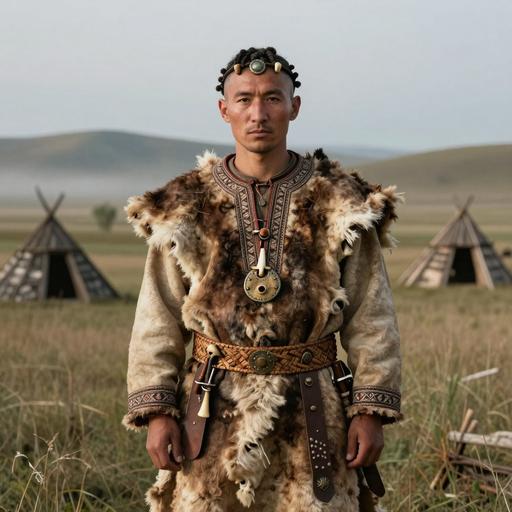
Portrait reconstruction of I0577
Ancient Individual

A man buried in Russia in the Iron Age era

I0577
900 BCE - 700 BCE
Male
Iron Age Aldy-Bel Culture, Tuva, Russia
Russia
Scroll to begin
Chapter I

Identity

The biological and cultural markers that define this ancient individual

Sample ID

I0577

Date Range

900 BCE - 700 BCE

Biological Sex

Male

mtDNA Haplogroup

A

Y-DNA Haplogroup

R1a1a1b

Cultural Period

Iron Age Aldy-Bel Culture, Tuva, Russia

Chapter II

Place

Where this individual was discovered

Country Russia
Locality Arzan
Coordinates 52.0961, 93.7111
Chapter III

Time

When this individual lived in the broader context of human history

I0577 900 BCE - 700 BCE
Chapter IV

Story

The narrative of this ancient life

The Aldy-Bel culture, which emerged in the region of Tuva in Siberia, is a fascinating Iron Age culture. It is named after the Aldy-Bel site where numerous artifacts and burial mounds have been studied, providing invaluable insights into the life and practices of this ancient society. Dating back to the late first millennium BCE and continuing into the early first millennium CE, the Aldy-Bel culture is characterized by its connection to the broader Scythian and Saka cultures known for their nomadic lifestyles and remarkable artistry.

Geographic and Environmental Context

Tuva is located in the southern part of Siberia, bordered by the Altai Mountains to the west, the Sayan Mountains to the north, and Mongolia to the east and south. This region is marked by its diverse landscapes, which include mountainous areas, steppe grasslands, and river valleys. The environment played a crucial role in shaping the lifestyle of the Aldy-Bel people, as the steppe provided ideal conditions for pastoralism, which was central to their economy.

Social Structure and Economy

The Aldy-Bel culture was predominantly nomadic, relying heavily on animal husbandry as the basis of their economy. The people herded animals such as horses, sheep, goats, and cattle. The horse, in particular, was central to their way of life, facilitating both transport and warfare. The nomadic lifestyle fostered a social structure that was likely organized around tribal units, with leaders or chiefs wielding influence over group decisions and interactions with neighboring tribes.

Art and Craftsmanship

Artisans of the Aldy-Bel culture were skilled metalworkers, a trait that is often associated with Scythian groups. They produced intricate jewelry, weaponry, and horse tack using bronze and iron. These items often featured elaborate designs, including animal motifs such as deer, griffins, and other mythical creatures, which are typical of the Scythian art style. Such motifs likely held symbolic significance, possibly reflecting shamanistic or spiritual beliefs.

Burial Practices

The Aldy-Bel people are known for their distinctive burial mounds or kurgans, which provide valuable archaeological insights. These kurgans often contain bodies positioned in fetal poses, surrounded by artifacts that indicate the individual's status or role in society. Grave goods typically include weapons, jewelry, pottery, and horse gear, suggesting a belief in an afterlife where such items would be needed.

One of the intriguing aspects of Aldy-Bel burials is the presence of richly adorned horses, often interred alongside their owners, highlighting the deep connection between the people and their steeds. These burial practices resemble those of other steppe cultures and suggest the importance of the horse not only in life but in spiritual beliefs as well.

Interaction and Influence

The Aldy-Bel culture was part of a network of steppe cultures that shared certain practices and interacted through trade and conflict. Evidence suggests that they had connections with the broader Scythian world and other contemporary cultures across the Eurasian steppe. These interactions facilitated the exchange of ideas, goods, and technologies, evidenced by similarities in artistic styles and burial rites.

Decline and Legacy

The decline of the Aldy-Bel culture is not clearly defined, as changes in archaeology often blend with the emergence of new cultural influences. Over time, as the Turkic and Mongolic tribes gained prominence in the region, the distinct features of the Aldy-Bel culture became intertwined with those of succeeding peoples. Nevertheless, the legacy of the Aldy-Bel lies in its contributions to the Scytho-Siberian cultural complex, representing an era of artistic and technological achievement in the context of the nomadic pastoralist lifestyle of Inner Asia.

In conclusion, the Iron Age Aldy-Bel culture of Tuva, Russia exemplifies the dynamic social, economic, and artistic life of nomadic societies in the Eurasian steppes. Its archaeological sites provide a window into a complex world where mobility, craftsmanship, and the profound human-animal bond played central roles in shaping an enduring legacy.

Chapter V

Context

Other ancient individuals connected to this sample

Sources

References

Scientific publications and genetic data

Scientific Publication

Ancestry and demography and descendants of Iron Age nomads of the Eurasian Steppe

Authors Unterländer M, Palstra F, Lazaridis I
Abstract

During the 1st millennium before the Common Era (BCE), nomadic tribes associated with the Iron Age Scythian culture spread over the Eurasian Steppe, covering a territory of more than 3,500 km in breadth. To understand the demographic processes behind the spread of the Scythian culture, we analysed genomic data from eight individuals and a mitochondrial dataset of 96 individuals originating in eastern and western parts of the Eurasian Steppe. Genomic inference reveals that Scythians in the east and the west of the steppe zone can best be described as a mixture of Yamnaya-related ancestry and an East Asian component. Demographic modelling suggests independent origins for eastern and western groups with ongoing gene-flow between them, plausibly explaining the striking uniformity of their material culture. We also find evidence that significant gene-flow from east to west Eurasia must have occurred early during the Iron Age.

Use code for 40% off Expires Feb 27