Region & Environment
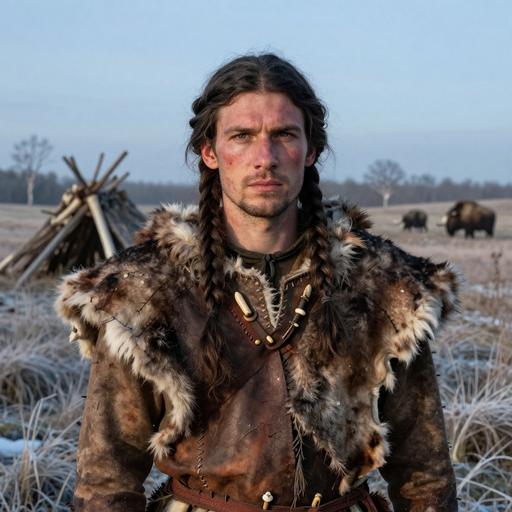
Austria lies within Central Europe’s temperate-to-montane environments, where Upper Paleolithic populations faced climatic variability during the late Pleistocene. River valleys and open landscapes could support animal herds and provide raw materials such as stone for toolmaking. Seasonal movement would have been shaped by temperature fluctuations and changing vegetation.
Historical Context
The interval around 27,000–23,000 BCE falls in the European Upper Paleolithic, a period marked by regional traditions in lithic technology. The Krems-Wachtberg tradition is commonly discussed within broader Gravettian-era developments, reflecting shared tendencies in stone tool production while allowing for local variation. No written sources apply; archaeological patterns provide the main historical evidence.
Populations & Lifeways
The people associated with this horizon are best understood as mobile hunter-gatherers. Their lifeways likely included hunting and scavenging strategies coordinated with seasonal availability of prey, along with movements that followed suitable hunting grounds and resource patches. Toolkits were repeatedly maintained and replaced as groups relocated.
Archaeology & Material Culture
Krems-Wachtberg sites are identified through characteristic lithic assemblages—especially patterned stone-tool production that implies planning and technical knowledge. Durable artifacts indicate cutting and working tasks tied to hunting, hide processing, and butchering, as well as the preparation of other materials. Although organic components may have existed, Central European preservation varies, so the stone assemblage is typically central to cultural attribution.
Culture & Society
Technological traditions such as Krems-Wachtberg reflect learned practices transmitted within social networks. The presence of consistent tool production strategies suggests repeated behaviors and potentially shared norms across wider regions during the Upper Paleolithic. Interpretations of social complexity remain cautious, but the technological coherence points to structured teaching and practice among hunter-gatherer groups.
Legacy & Transition
As the Upper Paleolithic progressed toward later phases of the Pleistocene, regional lithic traditions continued to evolve. Krems-Wachtberg sites are part of the broader evidence used to understand how Central European foragers adapted through changing climates and shifting technological preferences, contributing to the long transition toward subsequent postglacial developments.