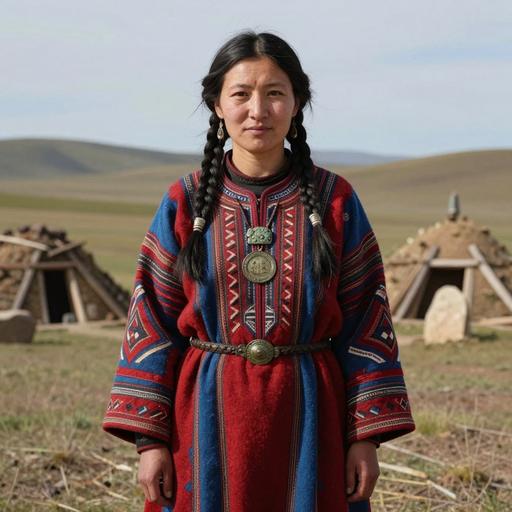
The Tashtyk culture, flourishing roughly between the 1st and 7th centuries CE, represents a significant archaeological and anthropological phenomenon within the context of Proto-Siberian societies. This culture was primarily situated in the Minusinsk Basin, a region now recognized as part of the Russian Federation. Characterized by its unique approach to burial customs, artistry, and social organization, the Tashtyk culture offers invaluable insights into the complexities of ancient Siberian life.
Geographic and Environmental Context
The Minusinsk Basin is nestled between the Sayan and Altai mountain ranges, providing a diverse environment of steppe, forest-steppe, and taiga. This geography facilitated the sustenance of a mixed economy that included agriculture, pastoralism, hunting, and fishing. The environmental heterogeneity would have influenced the settlement patterns, subsistence strategies, and overall lifestyle of the Tashtyk people, necessitating adaptability and innovation.
Origins and Influences
The Tashtyk culture is understood to be an amalgamation of indigenous Siberian traditions and external influences from contact with neighboring civilizations. Archaeological findings suggest links and interactions with the Scythian-Saka cultures, as well as potential connections with East Asian and Central Asian peoples, likely due to migration and trade routes that traversed the Eurasian steppes.
Social Structure and Lifestyle
Societal organization within the Tashtyk culture remains partly speculative due to limited textual records, relying heavily on archaeological interpretation. Evidence points towards a stratified society with discernible social classes, likely headed by local chieftains or elite families who exerted control over trade and agriculture. The discovery of fortified settlements indicates that security and defense were paramount, possibly due to the threat of raids or intertribal conflict.
Art and Craftsmanship
The Tashtyk culture is distinguished by its sophisticated artistry, particularly in the form of ceramics, metallurgy, and textiles. Pottery from this era often features intricate painted or incised decorations, while metalwork showcases both utilitarian and ornamental objects crafted from bronze, iron, and precious metals. The exceptional skill evident in these crafts suggests a high degree of specialization and a society that placed significant value on aesthetic expression.
Burial Practices and Spiritual Beliefs
The Tashtyk people are renowned for their unique funerary practices, which involved elaborate burial mounds and the use of anthropomorphic clay masks. These masks, fashioned with detailed facial features, were placed over the faces of the deceased, indicating a belief in preserving the identity of the individual in the afterlife. This practice, along with the inclusion of personal belongings and sacrifices in graves, implies a complex system of beliefs regarding life after death and ancestor worship.
The use of cremation alongside inhumation within stone cists or wooden chambers points to a variety of practices and possibly the coexistence of multiple belief systems within the culture. Some researchers theorize that these practices denote a polytheistic or animist religious framework, reflecting the varied spiritual landscapes of ancient Siberian cultures.
Conclusion and Legacy
The Tashtyk culture exemplifies the confluence of indigenous Siberian traditions with external cultural influences, contributing to a vibrant and dynamic society. Although it eventually declined and was absorbed by successive cultures, its legacy endures through the archaeological record, offering a glimpse into the rich tapestry of Proto-Siberian civilization.
Understanding the Tashtyk culture not only enriches our knowledge of Siberian prehistory but also enhances our appreciation of the diverse cultural developments that have shaped human history across vast geographic expanses. As ongoing archaeological investigations continue to unearth more about this enigmatic culture, the Tashtyk people remain a focal point of fascination and scholarly inquiry.