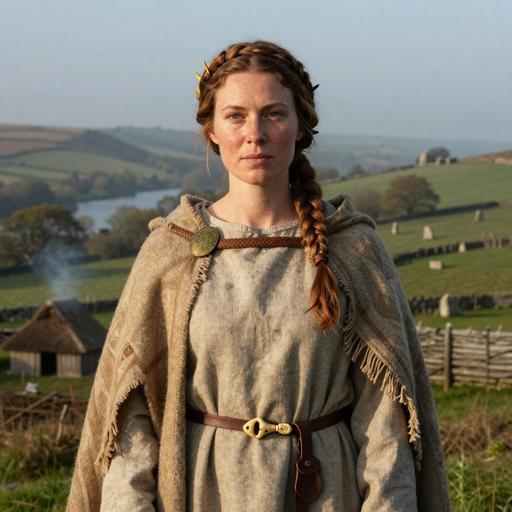
The Iron Age in England, which began around 800 BCE and lasted until the Roman invasion in 43 CE, is a period defined by the use of iron for tools and weapons, and it marks a significant cultural and technological evolution from the preceding Bronze Age. This era is often associated with the Celts, who were a collection of tribes with shared cultural traits spread across Western Europe. Iron Age England is part of a larger tapestry of Celtic culture known for its intricate art, fierce warfare, and complex societal structures.
Geography and Settlement:
During the Iron Age, the landscape of what is now modern England was a patchwork of dense woodlands, rolling hills, and open fields. This environment influenced settlement patterns, with communities typically located near rivers or on hilltops. Hillforts were a characteristic feature of this period, serving as tribal centers, refuges, and symbols of power. Prominent examples include Maiden Castle in Dorset and Danebury in Hampshire.
Society and Culture:
The social structure of Iron Age England was tribal and hierarchical. At the top were chieftains or kings who controlled tribes made up of family groups led by local chiefs. Society was organized around kinship and clans, with each family unit having its own duties and responsibilities. Druidism played an essential role in the spiritual and daily lives of the Celts, with druids acting as priests, judges, and scholars.
Celtic culture in England was richly expressive, especially evident in their art and mythology. The La Tène style, characterized by intricate patterns and curved motifs, dominated artistic expression in metalwork, pottery, and jewelry. This style often depicted natural forms—spirals, leaves, and animal figures—reflecting the Celts' close relationship with nature.
Economy and Technology:
The economy was primarily agrarian, with communities practicing mixed farming. They cultivated cereals like wheat and barley and raised livestock, including cattle, sheep, and pigs. This period also saw advances in agricultural techniques, such as the introduction of the rotational system of farming and the use of iron-tipped plows, which improved productivity.
Ironworking was the defining technological advancement of this era. The ability to smelt and forge iron revolutionized agriculture, warfare, and daily life. Iron tools and weapons were stronger and more durable than their bronze counterparts. The widespread use of iron allowed for more efficient farming implements, leading to increased agricultural production, and it changed warfare significantly, with tribes employing iron swords, spears, and chariots in battles.
Trade and Interaction:
Trade flourished during the Iron Age, with evidence of extensive trade networks that reached across the British Isles and into continental Europe. Goods such as metals, salt, textiles, and pottery were exchanged. The construction of trackways and roads facilitated trade and communication within and between tribes.
Warfare:
The Iron Age was a time of tribal warfare, with conflicts often arising over territory or resources. Celtic warriors were known for their fierce and fearless nature, often fighting naked except for painted bodies and helmets. Chariot warfare was an iconic element of their military tactics. Fortifications, like hillforts, served both as defensive strongholds and status symbols for powerful tribes.
Legacy:
The legacy of Iron Age England is profound. The period laid the foundations for the eventual Roman conquest and transformation of British society. The Celts’ cultural influence persisted long after their societal changes, with their mythology, art, and language shaping the historical and cultural landscape of Britain.
The Iron Age in England represents a complex and dynamic period of history characterized by innovative technology, vibrant culture, and social development. Understanding this era offers valuable insights into the ancestors of the British Isles and the early histories that shape modern England.