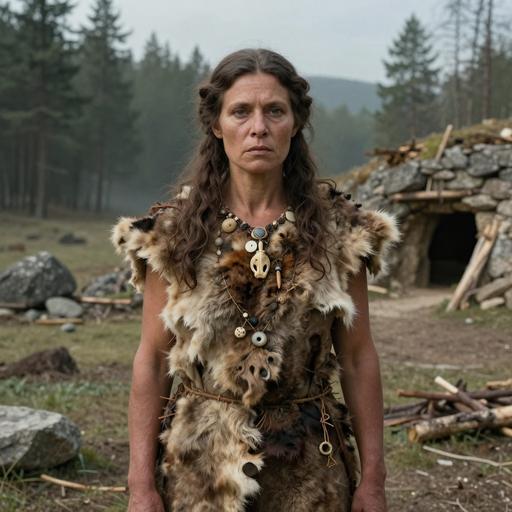
The Mezmaiskaya 1 Neanderthal refers to remains discovered in the Mezmaiskaya Cave, located in the foothills of the North Caucasus in Russia. This site holds significant importance in paleoanthropological and archaeological studies, providing substantial insights into the life and environment of Neanderthals who lived in this region.
Discovery and Site
The Mezmaiskaya Cave was discovered and excavated in the mid-1990s. It is one of the most well-preserved Neanderthal sites, with stratified layers of sediment that have provided a rich collection of archaeological and paleontological data. The site contains evidence of occupation by Neanderthals dating back to the Mousterian cultural phase, which is typically associated with Neanderthal populations in Europe and parts of Asia.
Dating and Climate
The Mezmaiskaya 1 Neanderthal remains have been dated to approximately 60,000 to 70,000 years ago. This period falls within the Middle Paleolithic era, a time when the climate in the region fluctuated between cold and temperate phases due to glacial cycles. These climatic changes would have influenced the availability of resources, shaping the lifestyle and survival strategies of the Neanderthal inhabitants.
Physical Anthropology
The Mezmaiskaya 1 remains consist of an infant Neanderthal, one of the most complete skeletons of a Neanderthal child found to date. The remains have provided crucial insight into the physical development and morphology of Neanderthal children, including aspects like dental formation, cranial structure, and overall growth patterns that distinguished them from anatomically modern humans.
Tools and Technology
The Neanderthals of Mezmaiskaya Cave are associated with the Mousterian tool industry. This industry is characterized by the production of flake tools made using the Levallois technique, which involved preparing a core stone to produce flakes of predetermined shapes and sizes. Tools found at the site include scrapers, points, and knives, indicative of a sophisticated understanding of stone tool manufacturing and usage.
Subsistence and Diet
Evidence from the Mezmaiskaya site suggests that Neanderthals had a varied diet, primarily consisting of large mammals such as bison, deer, and horses. The presence of animal bones with cut marks indicates that they engaged in hunting and butchering activities. Additionally, they likely gathered plant foods and possibly consumed smaller animals, though direct evidence of plant consumption is limited due to preservation issues.
Social Behavior and Culture
The remains and artifacts found at Mezmaiskaya provide insights into the social structure and cultural practices of Neanderthals. The careful burial of the Mezmaiskaya 1 child suggests that Neanderthals might have engaged in complex social behaviors and rituals, reflecting a sense of community and possibly spiritual beliefs. Additionally, the spatial organization of tool production and living areas within the cave offers a glimpse into their daily life and social organization.
Interaction with Environment
Neanderthals living in the Mezmaiskaya region would have had to adapt to a harsh, changing climate. Their tool-making skills, combined with their hunting strategies, suggest a highly adaptive culture capable of surviving in diverse and challenging environments. This adaptability likely played a crucial role in their ability to persist through various climatic shifts.
Genetic Studies
Genetic analysis of the Mezmaiskaya 1 remains has provided researchers with information about Neanderthal genetic diversity and their relationship to modern humans. Studies indicate that Neanderthals and modern humans share a common ancestor, and there was likely some level of interbreeding between the two groups in various regions.
In summary, the Mezmaiskaya 1 Neanderthal remains offer a window into a world that balanced survival with cultural and social complexity. The findings from this site contribute to our understanding of Neanderthal life and their capacity for adaptation and innovation in the face of environmental challenges.