Menu
Store
Blog
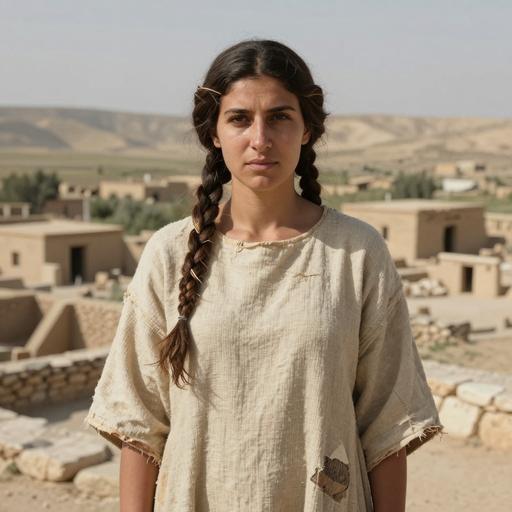
Portrait reconstruction of NEV014
Ancient Individual

A woman buried in Turkey in the Pre-Pottery Neolithic era

NEV014
8527 BCE - 8277 BCE
Female
Pre-Pottery Neolithic Culture of Nevalı Çori
Turkey
Scroll to begin
Chapter I

Identity

The biological and cultural markers that define this ancient individual

Sample ID

NEV014

Date Range

8527 BCE - 8277 BCE

Biological Sex

Female

mtDNA Haplogroup

Not available

Cultural Period

Pre-Pottery Neolithic Culture of Nevalı Çori

Chapter II

Place

Where this individual was discovered

Country Turkey
Locality NevalıÇori (Şanlıurfa Province)
Coordinates 37.5190, 38.6060
Chapter III

Time

When this individual lived in the broader context of human history

NEV014 8527 BCE - 8277 BCE
Chapter IV

Story

The narrative of this ancient life

The Pre-Pottery Neolithic culture of Nevalı Çori represents one of the earliest and most intriguing periods of human development in the history of Anatolia, a region that forms a bridge between the East and West, offering a fascinating insight into the dawn of civilization. This culture, dating back to approximately 8500-8000 BCE, marks a significant transitional phase from hunter-gatherer societies to more settled agricultural communities.

Geographical and Environmental Context

Nevalı Çori is situated in southeastern Anatolia, modern-day Turkey, along the banks of the Euphrates River. This region's geography, characterized by fertile plains and rolling hills, provided an ideal setting for early agricultural development. The climate during the Pre-Pottery Neolithic was relatively temperate, contributing to the cultivation of early domesticated plants and the herding of animals. This environment supported a mixed economy that gradually transitioned from foraging to farming, which was revolutionary for human society.

Architectural Developments

The architecture of Nevalı Çori is particularly notable for its innovation and complexity for this period. Excavations reveal communal buildings that served both residential and ceremonial purposes. Houses were built with a distinct layout, typically rectangular in shape, and made from mud-brick. The floors were often plastered and sometimes painted, indicative of an emerging aesthetic sensibility.

One of the most remarkable architectural features at Nevalı Çori is the presence of a well-organized, large communal building believed to have served as a temple or shrine. This building had a T-shaped limestone pillar, a precursor to the more famous pillars found at nearby Göbekli Tepe, decorated with intricate carvings of animals and abstract symbols. These structures suggest the beginnings of organized religious practices and complex social structures.

Economy and Subsistence

During this period, the community of Nevalı Çori practiced a mixed subsistence strategy that included both hunting-gathering and early forms of agriculture. Archaeobotanical evidence indicates the cultivation of cereals such as einkorn wheat and barley. Animal domestication was also in progress, with evidence of selectively bred sheep and goats, providing a more stable and reliable food source.

This shift towards agriculture is pivotal in human history as it allowed for permanent settlements and the development of surplus food production, leading to population growth and social complexity. By cultivating crops and domesticating animals, the inhabitants of Nevalı Çori were able to ensure a more consistent and controllable food supply, which was a crucial step towards the rise of civilizations.

Social and Cultural Aspects

The society at Nevalı Çori likely had a complex social structure, as suggested by the communal nature of its buildings and its sophisticated art and craftsmanship. The presence of communal or religious buildings indicates some form of social hierarchy or community organization necessary to organize such construction projects.

Artifacts found at the site, including intricately carved stone sculptures and tools, reflect a high level of craftsmanship. These objects, particularly the anthropomorphic figurines and abstract carvings, suggest that art played an important role in the spiritual and communal life of the inhabitants. These items could have served religious or ritualistic purposes, reflecting the society's beliefs and values.

Religious and Ritual Practices

The ritual and religious life of Nevalı Çori’s inhabitants can be inferred from its archaeological remains, indicating the early development of spiritual life. The T-shaped pillars found in the communal building, adorned with carvings of hands, arms, and wild animals, may have had spiritual significance, possibly representing deities or ancestral spirits. This symbolism might suggest early animist beliefs or ancestor worship, integral to their culture’s worldview.

Technological Advances

Technologically, Nevalı Çori exhibits significant advancements. The community used polished stone tools, a hallmark of Neolithic technology, which marks a dramatic improvement over the cruder tools used previously. These tools were crucial for agriculture, hunting, and building, and their development is indicative of the increasing sophistication of the society’s adaptive strategies.

Conclusion

The Pre-Pottery Neolithic culture of Nevalı Çori is emblematic of a transformative era in human history. It encapsulates the shift from mobile hunter-gatherer groups to settled agricultural communities, with profound implications for social structures, economic practices, and cultural developments. As one of the cradles of civilization, Nevalı Çori offers invaluable insights into the adaptive innovations and the complex societal changes that laid the groundwork for the subsequent rise of civilizations throughout ancient Anatolia and beyond. Through its archaeological remains, this culture continues to inform our understanding of human history, showcasing the enduring impacts of these early communities on modern life.

Chapter V

Context

Other ancient individuals connected to this sample

Sources

References

Scientific publications and genetic data

Scientific Publication

Isotopic and DNA analyses reveal multiscale PPNB mobility and migration across Southeastern Anatolia and the Southern Levant

Authors Wang X, Skourtanioti E, Benz M
Abstract

Growing reliance on animal and plant domestication in the Near East and beyond during the Pre-Pottery Neolithic B (PPNB) (the ninth to eighth millennium BC) has often been associated with a "revolutionary" social transformation from mobility toward more sedentary lifestyles. We are able to yield nuanced insights into the process of the Neolithization in the Near East based on a bioarchaeological approach integrating isotopic and archaeogenetic analyses on the bone remains recovered from Nevalı Çori, a site occupied from the early PPNB in Turkey where some of the earliest evidence of animal and plant domestication emerged, and from Ba'ja, a typical late PPNB site in Jordan. In addition, we present the archaeological sequence of Nevalı Çori together with newly generated radiocarbon dates. Our results are based on strontium (87Sr/86Sr), carbon, and oxygen (δ18O and δ13Ccarb) isotopic analyses conducted on 28 human and 29 animal individuals from the site of Nevalı Çori. 87Sr/86Sr results indicate mobility and connection with the contemporaneous surrounding sites during the earlier PPNB prior to an apparent decline in this mobility at a time of growing reliance on domesticates. Genome-wide data from six human individuals from Nevalı Çori and Ba'ja demonstrate a diverse gene pool at Nevalı Çori that supports connectedness within the Fertile Crescent during the earlier phases of Neolithization and evidence of consanguineous union in the PPNB Ba'ja and the Iron Age Nevalı Çori.
Use code for 40% off Expires Feb 27
