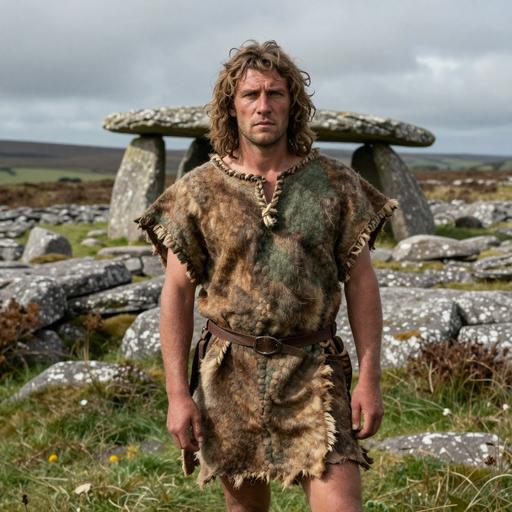
Early Neolithic Ireland, spanning approximately from 4000 to 2500 BCE, marks a transformative period in the history of Ireland as it transitions from a society of hunter-gatherers to one of sedentary agriculturalists. This era, preceding the well-documented Celtic culture by several millennia, is characterized by significant socio-economic, technological, and cultural developments that laid the groundwork for future societies.
Settlement and Architecture
Early Neolithic communities in Ireland began establishing permanent or semi-permanent settlements, a departure from the nomadic lifestyle of their Mesolithic predecessors. These settlements were typically small and consisted of a handful of dwellings. Excavations have revealed evidence of simple, rectangular, and occasionally circular timber houses. The walls of these dwellings were often constructed using wattle and daub, and the roofs were likely thatched with reeds or other plant materials.
Agriculture and Livelihood
The advent of agriculture was the pivotal change during this era. Early Neolithic people introduced domesticated plants and animals to Ireland, likely through migration and cultural exchange with continental Europe. They cultivated crops such as wheat and barley and domesticated animals like cattle, sheep, and pigs. This agricultural base provided a more reliable food source, allowing populations to grow and societies to stabilize.
Alongside farming, they continued to engage in hunting and fishing, supplementing their diets with wild resources. The integration of agriculture had profound effects, leading to more complex societal structures and increased manipulation of the landscape, such as forest clearance for farming and pasture.
Tools and Technology
Neolithic communities saw advancements in tool-making techniques. Stone tools, particularly those made from flint and other durable materials, became increasingly sophisticated. Axes, adzes, and arrowheads were commonly used and have been found in significant quantities at various archaeological sites. The establishment of polished stone tool production indicates not only practical utility but also potential social significance, possibly linked to trade or status within communities.
Megalithic Monuments
One of the most remarkable cultural developments of Early Neolithic Ireland is the construction of megalithic monuments. These structures, which include dolmens, passage tombs, and court cairns, are among the most visually striking and enduring legacies of the people of this era. Notable examples include Newgrange, Knowth, and Dowth in the Boyne Valley.
The construction of these monuments required considerable communal effort and suggests a high degree of social organization. Their purposes were likely multifaceted, serving as tombs, ceremonial sites, and social gathering places. The alignment of some structures with astronomical events indicates advanced knowledge of the solar and lunar cycles, hinting at their role in ritual or calendrical functions.
Society and Culture
While specific details about the social organization of Early Neolithic communities remain speculative, the construction of monuments and the development of farming suggest increasingly complex social structures. There may have been emerging social hierarchies, with kinship groups or clans possessing different roles and statuses within the community.
They likely had rich oral traditions, storytelling, and possibly early forms of spiritual or religious beliefs tied to natural phenomena and the seasons. The presence of burial practices and the construction of tombs also indicate a belief in an afterlife or reverence for ancestors.
Conclusion
Although not Celtic in the cultural sense, Early Neolithic Ireland was a foundational period that significantly shaped the island's prehistoric landscape. The developments in agriculture, settlement, toolmaking, and social organization laid the groundwork for the complex societies that would follow, including the Iron Age Celts. The enigmatic megalithic structures remain as testament to the ingenuity and communal spirit of these early inhabitants, continuing to captivate and inspire to this day.