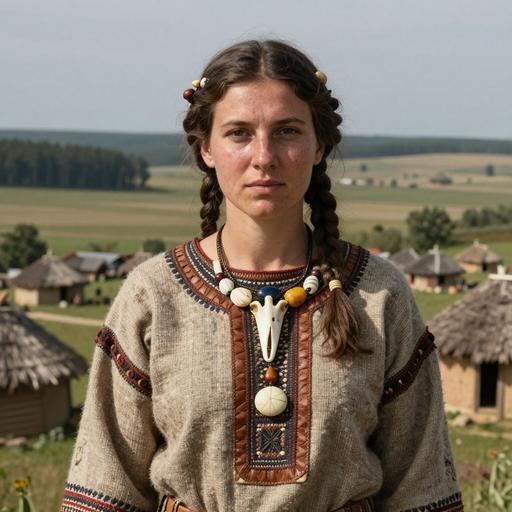
The Pocrovca Culture refers to an archaeological culture that existed in the region of present-day Moldova during the early part of the prehistoric timeline, often associated with the Late Copper Age and Early Bronze Age periods. While detailed information on specific early Moldovan cultures like Pocrovca might be limited, we can explore the broader context of the era and the cultural elements that likely characterized the societies of this region during this time frame.
Geographic Setting
The area of Moldova during the early prehistoric era was characterized by a landscape of rolling hills, fertile plains, and river valleys, most notably the Dniester and Prut rivers. These geographical features provided rich agricultural lands and an abundance of natural resources, which significantly influenced the settlement patterns and lifestyles of the inhabitants.
Societal Structure and Lifestyle
The Pocrovca Culture, like other early cultures in this region, was predominantly agrarian, with communities engaged in farming, animal husbandry, and possibly early forms of trade. Settlements were typically small, consisting of clusters of semi-permanent dwellings made from local materials such as wood, clay, and thatch.
Social Organization:
The society was likely organized into small kinship groups or clans, with social structures centered around family units and communal cooperation. Leadership might have been based on age, wisdom, or prowess in agriculture and trade rather than formal hierarchical systems.
Economy and Technological Innovations
Agriculture and Domestication:
The economy was primarily based on agriculture. Cultivation of grains such as wheat, barley, and millet was common, along with vegetables and legumes. Domesticated animals included cattle, sheep, goats, and pigs, which provided meat, milk, wool, and leather.
Technological Advances:
During this era, there might have been significant developments in tool-making. Stone and bone tools were refined, and the use of copper began to take hold, marking a transition from the Neolithic reliance on stone tools. This era could have seen the early stages of metalworking innovations, laying the groundwork for more advanced metallurgy in subsequent cultures.
Trade and Interaction
Evidence suggests that early Moldovan cultures participated in long-distance trade networks. The Dniester and Prut rivers provided crucial routes for trade and communication, facilitating the exchange of materials such as flint, obsidian, metals, and pottery. Interaction with neighboring cultures likely influenced technological and cultural developments, introducing new techniques and ideas.
Cultural and Spiritual Life
Artistic Expression:
Artifacts from the era, such as pottery fragments or figurines, often exhibit intricate designs, indicating a rich tradition of artistic expression. Pottery might have been both functional and decorative, featuring motifs that are geometric or representational of their environment.
Spiritual Beliefs:
Spiritual beliefs were likely animistic or shamanistic, with an emphasis on nature and ancestor worship. Burial practices from this period might reveal insights into their beliefs about life, death, and the afterlife. Ritual items and grave goods could signify status, spiritual beliefs, and connections to the world beyond.
Environmental and Climatic Conditions
The early Moldovan region benefitted from a relatively mild climate, favorable for agriculture and settlement. The environment would have provided ample resources such as water, wood, and game. Seasonal changes dictated agricultural cycles, and communities likely developed strategies to cope with environmental challenges such as floods or droughts.
Conclusion
The Pocrovca Culture, as part of the early Moldovan prehistoric cultural milieu, symbolizes a crucial phase in the development of human societies in Eastern Europe. It was an era marked by gradual technological progress, increasing social complexity, and burgeoning interaction with neighboring regions. The legacy of these early cultures can be seen in the later developed Bronze and Iron Age societies, laying foundational aspects of agricultural, metallurgical, and social practices that would evolve in the centuries to come.