


| Sample ID | Culture/Period | Date | Location | Action |
|---|---|---|---|---|
| Tianyuan | Tianyuan Period China | 38896 BCE | Tianyuan, China | View |
| Sample ID | Culture/Period | Date | Location | Action |
|---|---|---|---|---|
| Tianyuan | Tianyuan Period China | 38896 BCE | Tianyuan, China | View |


Preparing your ancestry journey
Connecting to ancient matches...
Preparing your report
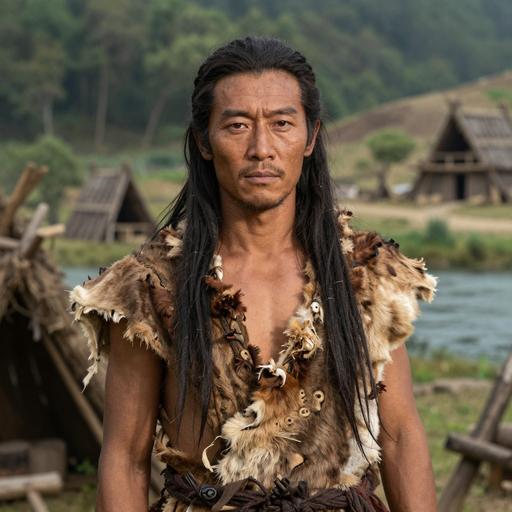
A man buried in China during the Tianyuan Period China
A fragment of the ancient world, preserved across millennia in strands of DNA.
The biological and cultural markers that define this ancient individual
Tianyuan
38896 BCE - 36130 BCE
Tianyuan Period China
Male
B4'5*
K-YSC0000186
Hunter (AI estimate, era-typical)
Where this individual was discovered
When this individual lived in the broader context of human history
The narrative of this ancient life
The Tianyuan period, named after the Tianyuan Cave in Zhoukoudian near Beijing, represents a significant era in the East Asian Paleolithic, often dated to around 40,000 to 30,000 years ago. This period is crucial for understanding the early presence of anatomically modern humans in East Asia and offers valuable insights into their lifestyle, technology, and culture.
The Tianyuan period is primarily identified through the discovery of the Tianyuan Man, partial human remains uncovered in the aforementioned cave. This find is one of the oldest and most complete specimens of early modern humans found in East Asia, providing critical evidence of migration and adaptation patterns of Homo sapiens during the Upper Paleolithic.
Tianyuan humans displayed physical characteristics typical of early modern humans, such as a rounded skull, small and retracted face, and a lightly built skeleton. Paleogenetic studies suggest a genomic affinity with both ancient and contemporary East Asian populations, as well as shared ancestry with early European Upper Paleolithic populations. This points to a complex web of human migration and gene flow across Eurasia during this time.
The Tianyuan period is marked by a transition from the Middle Paleolithic to the Upper Paleolithic tool technologies. This transition showcases significant developments, including the creation of more refined and specialized stone tools. The toolkit typically features blades, points, and scrapers crafted through pressure flaking techniques, indicating advanced cognitive and motor skills. Organic tools made from bone and antler, although less commonly preserved, were also likely part of the technological repertoire.
Subsistence strategies during the Tianyuan period were predominantly based on hunting and gathering. Faunal remains around the Tianyuan site indicate that early humans engaged in the hunting of large and small game, supplemented by the gathering of plant resources. The diversity of animal bones found at the site suggests a broad-spectrum foraging strategy tailored to the varying environments of the region.
The cultural framework of the Tianyuan people, like many Upper Paleolithic societies, may have included elements of symbolic expression and social organization. While direct evidence for art or complex societal structures at the Tianyuan site itself is limited, parallels with contemporaneous sites in Europe and other parts of Asia suggest the possibility of symbolic behavior, such as the use of personal ornaments, body decoration, and perhaps even rudimentary forms of spirituality.
During the Tianyuan period, East Asia was undergoing significant ecological changes due to climatic fluctuations associated with the latter phases of the Pleistocene. This environmental dynamism would have influenced human settlement patterns, resource availability, and technological innovations, requiring adaptability and resilience among the Tianyuan communities.
The Tianyuan period plays a critical role in the narrative of human evolution, particularly concerning the spread of modern humans across Asia. It underscores the adaptability and innovation of early human populations in responding to diverse environmental challenges. Moreover, it highlights the intricate connections between global human populations during the Upper Paleolithic, contributing to a broader understanding of human prehistory and evolution.
In conclusion, the Tianyuan period of East Asian Paleolithic encapsulates a vital chapter in human prehistory, marked by important technological innovations, adaptive strategies, and the emergence of modern human traits in Asia. This era not only enriches our understanding of the prehistoric past but also establishes a foundational context for the study of subsequent cultural developments in East Asia.
This individual exists within a broader network of ancient samples. No ancient genome stands alone.
Scientific publications and genetic data that inform this profile.
By at least 45,000 years before present, anatomically modern humans had spread across Eurasia [1-3], but it is not well known how diverse these early populations were and whether they contributed substantially to later people or represent early modern human expansions into Eurasia that left no surviving descendants today. Analyses of genome-wide data from several ancient individuals from Western Eurasia and Siberia have shown that some of these individuals have relationships to present-day Europeans [4, 5] while others did not contribute to present-day Eurasian populations [3, 6]. As contributions from Upper Paleolithic populations in Eastern Eurasia to present-day humans and their relationship to other early Eurasians is not clear, we generated genome-wide data from a 40,000-year-old individual from Tianyuan Cave, China, [1, 7] to study his relationship to ancient and present-day humans. We find that he is more related to present-day and ancient Asians than he is to Europeans, but he shares more alleles with a 35,000-year-old European individual than he shares with other ancient Europeans, indicating that the separation between early Europeans and early Asians was not a single population split. We also find that the Tianyuan individual shares more alleles with some Native American groups in South America than with Native Americans elsewhere, providing further support for population substructure in Asia [8] and suggesting that this persisted from 40,000 years ago until the colonization of the Americas. Our study of the Tianyuan individual highlights the complex migration and subdivision of early human populations in Eurasia.