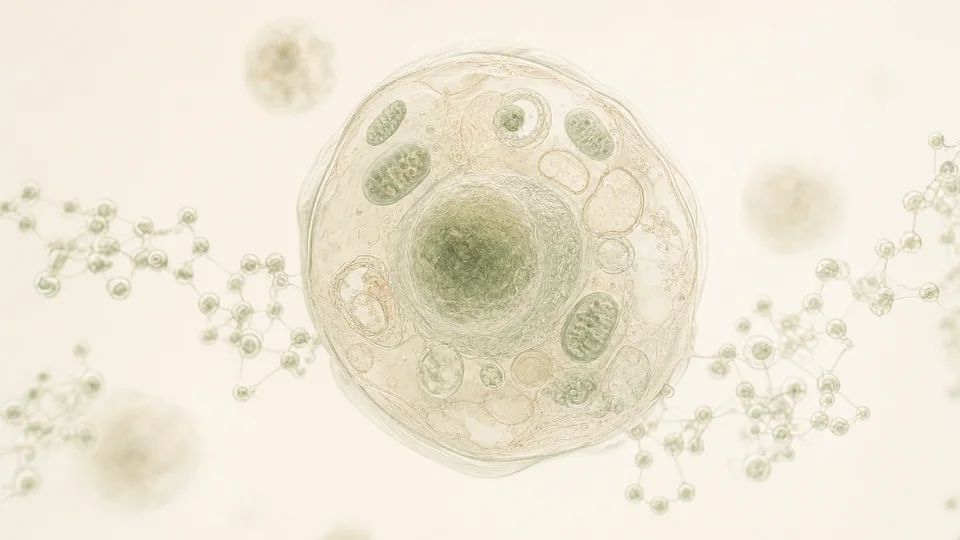
Explore how your HLA-region DNA compares with reference populations around the world.
These results describe statistical genetic similarity, not proof of genealogy or a medical diagnosis.
Percentages describe similarity to reference populations; they do not establish direct descent.
Chapter I
Understanding Your HLA Heritage
The results of this analysis show that your immune system DNA shares patterns with
populations around the world. The HLA region on chromosome 6 is one of the most
variable parts of the human genome: a diversity preserved across hundreds of
thousands of years.
This is not a full-genome analysis. It focuses specifically on the HLA region,
which has a lower recombination rate than other parts of your DNA. This means
HLA patterns can reflect ancient admixture: connections that may predate
what you'd find in standard autosomal ancestry tests.
"HLA carries the memory of what humanity encountered:
a biological archive written by survival itself."
Ancient Immune Patterns
HLA genes helped your ancient matches recognize and fight pathogens.
These patterns were passed down with remarkable continuity.
Chromosome 6 Focus
This analysis examines the HLA region specifically, revealing
ancestral connections that standard tests may not detect.
Chapter II
Your HLA Composition
Click any region to explore its details
01
Southern European
53.1%
02
Central & West Asian
27.5%
03
Amerindian-Siberian
14.2%
04
West African
3.3%
05
North African
1.9%
Chapter III
Global Distribution
Your HLA heritage mapped across the world
The highlighted areas on this map are a visual guide and should not be
interpreted as exact or definitive ancestry borders. HLA patterns reflect
population genetics, not political boundaries.
Chapter IV
Explore Your Regions
Discover the detailed HLA characteristics of each reference region
53.1%
Southern European
General
Learn More
27.5%
Central & West Asian
General
Learn More
14.2%
Amerindian-Siberian
General
Learn More
3.3%
West African
General
Learn More
1.9%
North African
General
Learn More
Chapter V
The Science Behind the Analysis
Understanding the methodology and its context
Sample Database Updated
01 May 2023
Algorithm Version
v1.0
HLA, or Human Leukocyte Antigens, are proteins found on the surface
of white blood cells and other immune cells. Located on chromosome 6, they are among
the most polymorphic genes in the human genome, meaning they come in many different
types, with each individual carrying a unique combination.
This extraordinary diversity isn't random. It reflects the accumulated encounters
of human populations with their environments across millennia. HLA variation has
been preserved through natural selection, creating a living record of human adaptation.
HLA Class I
Found on all nucleated cells, Class I proteins (HLA-A, -B, -C) help recognize
and destroy infected or abnormal cells. They present cellular contents to
cytotoxic T cells.
HLA Class II
Found on immune cells like T and B cells, Class II proteins (HLA-DR, -DQ, -DP)
activate the immune response by presenting external antigens to helper T cells.
Medical Significance
HLA typing is crucial for organ and tissue transplantation compatibility,
helping match donors and recipients to reduce rejection risk.
Analysis Limitations
Limited to chromosome 6 HLA region only
Represents ancient admixture patterns
Not a full genome analysis
Results may differ from autosomal ancestry tests
Chapter VI
AI-Powered Insights
Get personalized analysis of your HLA heritage
AI ASSISTANT by DNAGENICS
Enabled until 2027-10-16
This AI analysis is limited to HLA regions and percentage distributions only.
No additional data or personal information is included in this analysis.
AI-generated interpretation of genetic similarity, not proof of ancestry. Informational only, not professional advice.
Read full notice
Before you continue: the analysis you are about to generate is produced by an AI model. AI output can be incomplete, inaccurate, or simply wrong. It describes statistical genetic similarity to reference populations and is not proof of ancestry, ethnicity, identity, or descent. It is provided for informational and educational purposes only, and is not medical, diagnostic, genealogical, legal, or other professional advice. Do not rely on it to make health, financial, legal, or family decisions. To the fullest extent permitted by applicable law, DNA Genics, S.L. accepts no liability for any loss or decision arising from your use of this AI output.
Try these questions:
Your HLA heritage is a window into deep time:
patterns shaped by survival, preserved across generations.
DEMOSample report with example data. Not your results.
SAMPLE REPORT Example DNA profileThis is a sample report with example data. It is not your personal report, and the results do not describe you.