Y-DNA · Paternal lineage

E1B1B1B2A

Y-DNA Haplogroup E1B1B1B2A

A reference profile for one lineage branch. Shared haplogroups do not establish a family relationship or cultural identity.

Reference profile

Branch background

Historical context for Y-DNA lineage branch E1B1B1B2A

Origins and Evolution

Y-DNA haplogroup E1B1B1B2A is a downstream branch of the North African E-M81 lineage (often reported in older nomenclature as E1b1b1b2). Based on the parent clade's estimated emergence in the Maghreb during the Bronze Age and patterns of diversity within downstream lineages, E1B1B1B2A most plausibly arose in Northwest Africa (the Maghreb) during the late Bronze Age to Iron Age transition (on the order of ~2,200 years ago, +/- a few centuries). Its phylogenetic position as a nested subclade of E-M81 means it inherits the broad North African signature of E-M81 while showing additional private variants consistent with regional founder events.

Genetic surveys and high-resolution STR/SNP studies of North African and nearby Mediterranean populations show that lineages derived from E-M81 frequently form localized, high-frequency clusters reflecting demographic expansions from small founder populations. E1B1B1B2A fits this pattern: it is often concentrated in particular Amazigh groups and island populations where drift and isolation amplified its frequency.

Subclades

As a named subclade (the "A" branch of E1B1B1B2), E1B1B1B2A may itself split into further downstream branches that are identifiable by private SNPs in sequencing or targeted SNP panels. In population studies this level often reveals very localized branches (island-specific or tribe-specific) indicative of recent founder effects (within the last 1–2 thousand years). Where high-resolution data exist, these downstream subbranches can trace lineages within particular Amazigh confederations, Guanche (Canary Island) founder lineages, or coastal Moroccan clans.

Geographical Distribution

The highest frequencies and greatest haplotype diversity of E1B1B1B2A are observed in Northwest Africa, particularly among Amazigh (Berber) groups in Morocco, Algeria and Tunisia, reflecting an origin and deep presence in the Maghreb. Island populations such as the Canary Islanders (descended from the pre-Hispanic Guanche) often carry elevated frequencies due to island founder events. Secondary presence is detected at lower frequencies in southern Iberia (western Andalusia, Portugal) and parts of Sicily and the central Mediterranean, consistent with millennia of maritime contact, trade, and episodic migrations (Phoenician/Punic, Roman, Islamic and later historical movements). Low-frequency occurrences are documented in parts of the Sahel and West Africa (likely through north–south gene flow) and among diasporic African-descended populations in the Americas and Caribbean due to the transatlantic slave trade.

Historical and Cultural Significance

E1B1B1B2A's distribution and demographic signal link it closely to Amazigh populations and to island founder events (e.g., Guanche ancestry in the Canaries). Its rise in frequency within localized groups is consistent with founder-driven expansions and social structures that preserve paternal lineages (patrilocal residence, clan-based inheritance). Historical contacts that could have redistributed E1B1B2A include Phoenician/Punic maritime networks, Roman and late-Antiquity movements across the western Mediterranean, and later Medieval/early historic interactions (including trans-Saharan and trans-Mediterranean trade and, in the last millennium, the Arab expansions). In island contexts, the lineage functions as a useful genetic marker to reconstruct colonization events and subsequent demographic bottlenecks.

Genetically, E1B1B1B2A often co-occurs with North African maternal lineages such as mtDNA U6 as well as various Sub-Saharan mtDNA lineages in admixed populations, reflecting the complex maternal history of the region.

Conclusion

E1B1B1B2A is best understood as a regional Maghrebi derivative of the E-M81 complex that exemplifies how localized founder events and historical connections across the western Mediterranean shaped Y-chromosome variation. Where present at high frequency, it serves as a marker of Amazigh paternal ancestry and of island founder histories (notably the Canary Islands), while its lower-frequency presence outside North Africa documents centuries of maritime and continental gene flow across the Mediterranean and into Iberia.

Key Points

  • Origins and Evolution
  • Subclades
  • Geographical Distribution
  • Historical and Cultural Significance
  • Conclusion
Reference profile

Tree & Relationships

Phylogenetic context and subclades

Evolution Path

Follow the recorded parent branches toward E1B1B1B2A. Dates are estimates and can change as reference data is revised.

Steps Haplogroup Age Estimate Archaeology Era Time Passed Immediate Descendants Tested Modern Descendants Ancient Connections
1 E1B1B1B2A Current ~2,000 years ago Classical Antiquity 2,200 years 1 143 2
2 E1B1B1B2 ~3,000 years ago Iron Age 3,000 years 2 177 0
3 E1B1B1B ~4,000 years ago Bronze Age 4,500 years 2 405 0
4 E1B1B1 ~22,000 years ago Mesolithic 22,000 years 2 1,055 0
5 E1B1B ~26,000 years ago Paleolithic 26,000 years 1 1,116 2
6 E1B1 ~28,000 years ago Paleolithic 28,000 years 2 1,572 0
7 E1B ~30,000 years ago Paleolithic 30,000 years 1 1,583 0
8 E1 ~50,000 years ago Paleolithic 50,000 years 2 1,667 2
9 E ~50,000 years ago Paleolithic 50,000 years 3 1,813 3

Siblings (1)

Other branches from the same parent haplogroup

Reference profile

Where in the World

Geographic distribution and modern presence

Recorded origin

Northwest Africa (Maghreb)

Modern Distribution

The populations where Y-DNA haplogroup E1B1B1B2A is found include:

  1. Amazigh (Berber) populations of Morocco, Algeria and Tunisia
  2. Canary Islanders (pre-Hispanic Guanche descendants and modern island populations)
  3. Coastal North African groups (Moroccans, Algerians, Tunisians, some Libyans)
  4. Southern Iberian populations (western Andalusia, Portugal) and parts of Sicily
  5. Sahelian and West African groups at low frequencies (regional admixture)
  6. Small numbers in Near Eastern and eastern Mediterranean populations (historical gene flow)
  7. African-descended populations in the Americas and Caribbean (diaspora presence)
  8. Isolated communities showing founder effects (local Amazigh enclaves and island populations)

Regional Presence

North Africa (Maghreb) High
Northwest Africa (Atlantic coast and islands) Moderate
Southwest Europe (southern Iberia) Low
Western Africa (Saharan-edge) Low
Western Asia / Eastern Mediterranean Low
Northern Africa (Maghreb) High
Southern Europe (Iberia, Sicily) Moderate
Western Europe (Canary Islands as Atlantic/island context) High
Caribbean / Americas (diaspora) Low
Historical context

A branch through time

Estimated formation in a broad historical timeline. Period markers provide context and do not imply a connection with particular cultures.

  1. ~10k years ago

    Neolithic Revolution

    Agriculture begins, settled communities form

  2. ~5k years ago

    Bronze Age

    Metalworking, writing, and early civilizations

  3. ~3k years ago

    Iron Age

    Iron tools, expanded trade networks

  4. ~2.5k years ago

    Classical Antiquity

    Greek and Roman civilizations flourish

  5. ~2.2k years ago

    Haplogroup E1B1B1B2A

    Estimated formation of this Y-DNA branch; dates and locations are reference estimates.

    This branch
  6. Present

    Present Day

    Modern era

Reference profile

Archaeological context

Recorded archaeological associations for Y-DNA branch E1B1B1B2A

Recorded associations

These labels describe archaeological contexts recorded for reference samples linked to E1B1B1B2A. An association does not establish that all carriers belonged to a culture or followed a particular migration route.

Baja PPNB Canaanite Early Bronze Anatolia Farkhor Culture German Jewish Ghassulian Italy_Sicily_IA_b_Punic Natufian Swat Valley Transition
Culture assignments are based on archaeological context of ancient DNA samples and may represent regional associations during specific time periods.
Reference profile

Sample Catalog

2 subclade carriers of haplogroup E1B1B1B2A (no direct carriers in the current reference selection)

2 shown · 2 matching samples

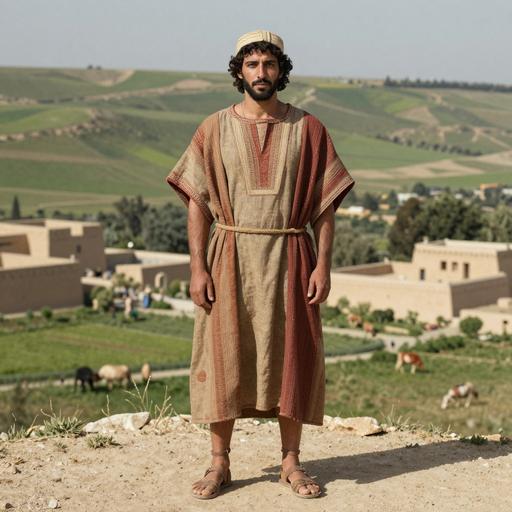
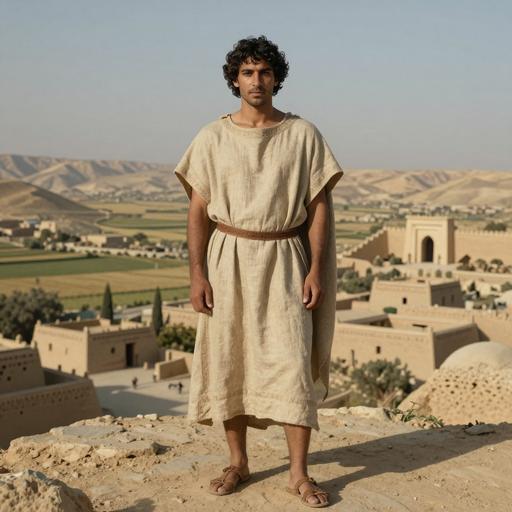
Portraits are AI-generated illustrations. Sample labels and accession IDs identify the reference records.

Portrait Sample Country Era Date Culture Y-DNA Match
AI-generated illustrative portrait of MLBA individual, Megiddo. Jezreel Valley, Israel (1,550-1,450 BCE)
Sample ID: I10769
Israel Israel MLBA 1550-1450 BCE Canaanite E1b1b1b2a1 Subclade
AI-generated illustrative portrait of MLBA individual, Megiddo. Jezreel Valley, Israel (1,550-1,450 BCE)
Sample ID: I10770
Israel Israel MLBA 1550-1450 BCE Canaanite E1b1b1b2a1 Subclade
PATERNAL LINEAGE · ANCIENT DNA

Ancient lineage evidence map

Follow parent clades toward this branch and explore where ancient carriers were found.

Loading ancient observations…

Markers are archaeological find locations. A dashed connector is an uncertain, proposed geographic transition between consecutive branches supported by multiple dated observations; it is not an exact travel route, birthplace or proof of direct descent. Parent-clade samples may belong to other descendant branches. Gaps remain where evidence is insufficient. Sample dates differ from haplogroup formation dates.

Reference profile

Carrier Distribution Map

Geographic distribution of 2 ancient DNA samples (direct and subclade carriers of E1B1B1B2A)

Subclade carrier
Time Period Filter
All Time Periods
Showing all samples
Reference profile

Temporal Distribution

Distribution of carriers across archaeological periods

Reference profile

Geographic Distribution

Counts by recorded sample country. These reflect the available reference selection, not population frequencies.

Reference profile

Country × Era Distribution

Compare recorded sample counts across countries and archaeological periods. Select a populated cell to inspect a sample.

Data

Data & Provenance

Source information and data quality

Last Updated 2026-06-15
Confidence Score 50/100
Coverage Low

Data Source

Classification, estimated dates and geographic context reflect the recorded reference data and may change as evidence is revised. Sample coverage is uneven; recorded locations and archaeological associations do not establish personal origin or cultural identity.