Menu
Y-DNA Haplogroup • Paternal Lineage

E1B1B1B2

Y-DNA Haplogroup E1B1B1B2

~4,000 years ago
Northwest Africa (Maghreb)
2 subclades
Scroll to explore
Chapter I

The Story

The journey of Y-DNA haplogroup E1B1B1B2

Origins and Evolution

Y-DNA haplogroup E1B1B1B2 is a downstream lineage that branches from the well-known Northwest African haplogroup E-M81 (E1B1B1B). Based on the phylogenetic position under E-M81 and the time depth of its parent clade, E1B1B1B2 most likely arose in the Maghreb during the late Holocene (roughly the late 3rd to early 2nd millennium BCE, on the order of ~3.5 kya). As a subclade of a lineage that expanded within Northwest Africa, E1B1B1B2 represents a more geographically restricted diversification event within local Berber-speaking or pre-Berber populations.

Mutations defining E1B1B1B2 are expected to be downstream of the primary E-M81 bifurcation; while the precise SNP name(s) for every downstream branch continue to be clarified in ongoing Y-chromosome phylogenetic work, population-genetic patterns indicate that E1B1B1B2 formed after the initial Maghrebi spread of E-M81 and likely reflects later, more localized demographic processes.

Subclades

As a subclade of E-M81, E1B1B1B2 may itself include further downstream branches with restricted geographic distributions. Published population surveys and targeted regional sequencing have shown multiple localized E-M81-derived sublineages in Berber groups; E1B1B1B2 should be considered part of that fine-scale structure. Continued targeted sequencing and ancient DNA sampling in North Africa and adjacent regions will resolve the internal branching order and ages of any subclades.

Geographical Distribution

The highest frequencies of E1B1B1B2 are expected in Northwest Africa (the Maghreb), particularly among Berber (Amazigh) populations in Morocco, Algeria and Tunisia, where the parent E-M81 is common. Secondary presences occur in the Canary Islands (reflecting indigenous Guanche ancestry and historic migrations) and in southern Iberia (southern Spain and Portugal), which have multiple lines of prehistoric and historic contact with Northwest Africa. Lower-frequency occurrences appear along Atlantic and Mediterranean coastal zones of northwest Africa (Mauritania, Western Sahara) and at low levels in the broader Mediterranean/Near East because of Phoenician, Roman, and later Arab/Islamic-era mobility.

It is important to note that sampling density strongly affects observed frequencies: focused sampling of Berber groups amplifies the signal, whereas sparse sampling of interior Saharan and some coastal groups may under-represent the true local diversity of downstream E-M81 lineages.

Historical and Cultural Significance

E1B1B1B2 most likely reflects the local demographic history of Northwest Africa after the initial establishment of E-M81. Its distribution is consistent with several interacting processes:

  • Prehistoric maritime and coastal contact across the Strait of Gibraltar and along the southwestern Iberian and North African coasts, which can explain the presence of Maghrebi lineages in southern Iberia and the indigenous Canary Islanders (Guanche).
  • Iron Age and Classical period contacts (Phoenician/Punic, Carthaginian) that moved people and genes across the western Mediterranean, producing detectable admixture between North Africa and Iberia.
  • Later historical movements, including medieval Islamic expansions and historic trans-Saharan contacts, which further redistributed North African paternal lineages at lower levels across the Mediterranean and into parts of the Near East.

Archaeogenetic sampling has identified E-M81-related lineages in a limited number of ancient individuals from North Africa and Iberia; where E1B1B1B2 is specifically recognized, it helps link archaeological contexts (e.g., Guanche burials, historic coastal sites) to local Maghrebi paternal ancestry.

Conclusion

E1B1B1B2 represents a geographically focused branch of the broader Maghrebi E-M81 paternal lineage, with an origin in the late Holocene in the Maghreb and subsequent local diversification. Its modern distribution—highest in Berber-speaking populations, detectable in the Canary Islands and southern Iberia, and present at low levels elsewhere in the Mediterranean—mirrors patterns of prehistoric coastal contact and later historical movements. Continued high-resolution Y-chromosome sequencing and increased ancient DNA sampling across North Africa and the western Mediterranean will clarify the precise age, internal structure, and migration history of E1B1B1B2.

Key Points

  • Origins and Evolution
  • Subclades
  • Geographical Distribution
  • Historical and Cultural Significance
  • Conclusion
Chapter II

Tree & Relationships

Phylogenetic context and subclades

Evolution Path

This haplogroup's evolutionary journey from its earliest ancestor to the present.

Steps Haplogroup Age Estimate Archaeology Era Time Passed Immediate Descendants Tested Modern Descendants Ancient Connections
1 E1B1B1B2 Current ~4,000 years ago 🔶 Bronze Age 3,500 years 2 4 0

Siblings (1)

Other branches from the same parent haplogroup

Chapter III

Where in the World

Geographic distribution and modern presence

Place of Origin

Northwest Africa (Maghreb)

Modern Distribution

The populations where Y-DNA haplogroup E1B1B1B2 is found include:

  1. Berber and Maghrebi populations of Morocco, Algeria, and Tunisia
  2. Indigenous Canary Island (Guanche) descendants and modern Canary Islanders
  3. Southern Iberian populations (southern Spain and Portugal), especially in coastal and southwestern areas
  4. Northwest African coastal populations and Saharan-edge groups (Mauritania, Western Sahara)
  5. Low-frequency occurrences in parts of the Near East and wider Mediterranean due to Phoenician, Roman, and Islamic-era contacts

Regional Presence

Northwest Africa (Maghreb) High
Southwestern Europe (Iberia) Moderate
Western Africa / Saharan-edge Low
Near East / Eastern Mediterranean Low
CHAPTER IV

When in Time

Your haplogroup in the context of human history

~10k years ago

Neolithic Revolution

Agriculture begins, settled communities form

~5k years ago

Bronze Age

Metalworking, writing, and early civilizations

~3k years ago

Haplogroup E1B1B1B2

Your Y-DNA haplogroup emerged in Northwest Africa (Maghreb)

Northwest Africa (Maghreb)
~3k years ago

Iron Age

Iron tools, expanded trade networks

~2k years ago

Classical Antiquity

Greek and Roman civilizations flourish

Present

Present Day

Modern era

Your Haplogroup
Historical Era
Chapter IV-B

Linked Cultures

Ancient cultures associated with Y-DNA haplogroup E1B1B1B2

Cultural Heritage

These ancient cultures have been linked to haplogroup E1B1B1B2 based on matching ancient DNA samples from archaeological excavations. The presence of this haplogroup in these cultures provides insights into the migrations and population movements of populations carrying this haplogroup.

Canaanite Danish Medieval Early Avar Elmenteitan Culture German Jewish Hyrax Hill Iron Age Pastoral Lukenya Hill Culture Molo Cave Culture Pastoral Neolithic Tanzanian Prehistoric Tell Atchana Xaro Culture
Culture assignments are based on archaeological context of ancient DNA samples and may represent regional associations during specific time periods.
Chapter V

Sample Catalog

16 subclade carriers of haplogroup E1B1B1B2 (no exact E1B1B1B2 samples sequenced yet)

16 / 16 samples
Portrait Sample Country Era Date Culture Y-DNA Match
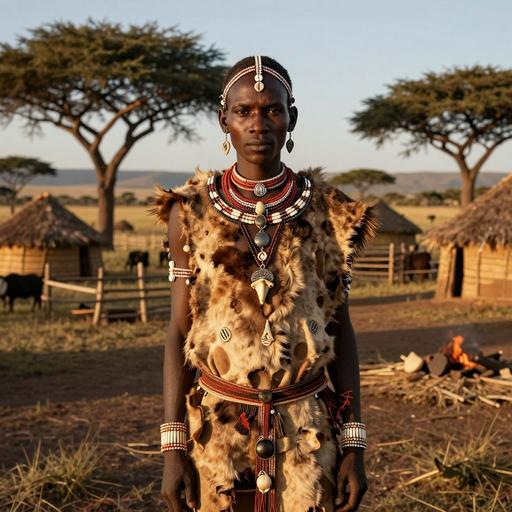
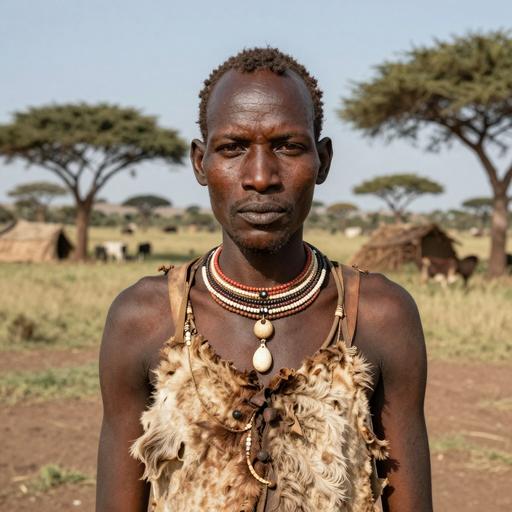
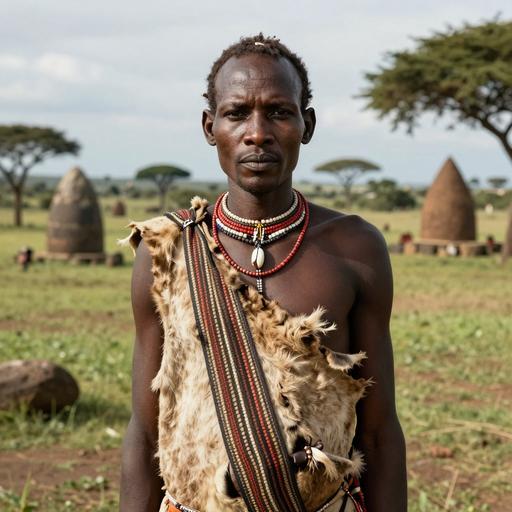
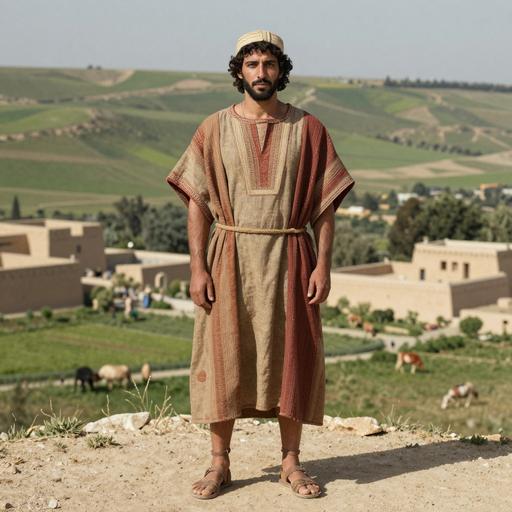
Portrait of ancient individual I13977 from Tanzania, dated 47 BCE - 113 BCE
I13977
Tanzania Prehistoric in Tanzania 47 BCE - 113 BCE Tanzanian Prehistoric E1b1b1b2b2 Downstream
Portrait of ancient individual I13762 from Tanzania, dated 200 BCE - 1 BCE
I13762
Tanzania Prehistoric and Iron Age in Tanzania 200 BCE - 1 BCE Tanzania Multi-Period E1b1b1b2b2a1 Downstream
Portrait of ancient individual I12384 from Kenya, dated 215 BCE - 326 BCE
I12384
Kenya Pastoral Neolithic in Kenya 215 BCE - 326 BCE Pastoral Neolithic E1b1b1b2b2a1 Downstream
Portrait of ancient individual I13972 from Tanzania, dated 245 CE - 368 CE
I13972
Tanzania Prehistoric in Tanzania 245 CE - 368 CE Tanzanian Prehistoric E1b1b1b2b2 Downstream
Portrait of ancient individual MOL001 from Kenya, dated 437 BCE - 600 BCE
MOL001
Kenya Molo Cave Pastoral Neolithic in Kenya 437 BCE - 600 BCE Molo Cave Culture E1b1b1b2b Downstream
Portrait of ancient individual HYR002 from Kenya, dated 513 BCE - 386 BCE
HYR002
Kenya Hyrax Hill Pastoral Neolithic in Kenya 513 BCE - 386 BCE Hyrax Hill E1b1b1b2b Downstream
Portrait of ancient individual XAR002 from Botswana, dated 700 CE - 1000 CE
XAR002
Botswana Xaro Early Iron Age in Botswana 700 CE - 1000 CE Xaro Culture E1b1b1b2b Downstream
Portrait of ancient individual I12398 from Kenya, dated 767 BCE - 519 BCE
I12398
Kenya Pastoral Neolithic Elmenteitan in Kenya 767 BCE - 519 BCE Elmenteitan Culture E1b1b1b2b2a1 Downstream
Portrait of ancient individual I8759 from Kenya, dated 795 BCE - 592 BCE
I8759
Kenya Pastoral Neolithic in Kenya 795 BCE - 592 BCE Pastoral Neolithic E1b1b1b2b Downstream
Portrait of ancient individual I12391 from Kenya, dated 892 BCE - 992 BCE
I12391
Kenya Iron Age Pastoral in Kenya 892 BCE - 992 BCE Iron Age Pastoral E1b1b1b2b Downstream
Chapter VI

Carrier Distribution Map

Geographic distribution of 16 ancient DNA samples (direct and subclade carriers of E1B1B1B2)

Subclade carrier
Time Period Filter
All Time Periods
Showing all samples
Chapter VII

Temporal Distribution

Distribution of carriers across archaeological periods

Chapter VIII

Geographic Distribution

Distribution by country of origin (direct and subclade carriers shown by default)

Chapter IX

Country × Era Distribution

Cross-tabulation of carrier countries and archaeological periods (direct and subclade carriers shown by default)

Data

Data & Provenance

Source information and data quality

Last Updated 2026-02-16
Confidence Score 50/100
Coverage Low
Data Source

We use the latest phylotree for YDNA haplogroup classification and data.