Y-DNA · Paternal lineage

I2A1B1A1A

Y-DNA Haplogroup I2A1B1A1A

A reference profile for one lineage branch. Shared haplogroups do not establish a family relationship or cultural identity.

Reference profile

Branch background

Historical context for Y-DNA lineage branch I2A1B1A1A

Origins and Evolution

Y-DNA haplogroup I2a1b1a1a is a derived branch of the ancient European paternal macro-lineage I2, which is widely associated with Mesolithic hunter-gatherer ancestry in Europe. As a subclade of I2a1b1a1, it is best interpreted as a later postglacial offshoot that likely arose in or near southeastern Europe, where several deep European I2 lineages survived the Last Glacial Maximum and diversified during the early Holocene.

The estimated time depth for this branch is most plausibly in the range of the early to middle Holocene, roughly around 10 thousand years ago, though the exact age depends on the current phylogenetic resolution and future sequencing studies. Like many I2-derived lineages, its distribution today reflects a combination of ancient regional continuity and later demographic expansions, especially those connected with Balkan, Slavic, and broader European population history.

Subclades

As an intermediate-to-downstream branch within I2a1b1a1, this lineage may have several descendant branches not yet fully resolved in public summary datasets. In general, subclades of this type are often characterized by localized founder effects, especially in the Balkans and adjacent regions, followed by dispersal into other parts of Europe.

Because Y-DNA phylogenies are continually updated, the precise internal branching structure of I2a1b1a1a may change as additional high-resolution sequencing identifies new terminal subclades. However, its broader phylogenetic placement strongly suggests a relationship to other southeastern and central European I2 lineages.

Geographical Distribution

This haplogroup is found most often in southeastern Europe, especially among Balkan populations, where I2 lineages have some of their strongest modern frequencies. It is also observed in East Slavic, Central European, Baltic, and Scandinavian populations, consistent with historical population movements across Europe.

Lower-frequency occurrences in German, Austrian, British, Irish, and diaspora populations likely reflect a mixture of prehistoric spread, medieval migrations, and more recent population mobility. In some regions, the lineage may appear at low to moderate frequency but can be locally enriched due to founder effects.

Historical and Cultural Significance

Haplogroup I2a1b1a1a is significant because it belongs to one of the oldest surviving paternal lineages in Europe. Its deeper ancestry is often linked to European hunter-gatherers, while its later distribution reflects the reshaping of Europe during the Neolithic, Bronze Age, Iron Age, and medieval periods.

In the Balkans, I2-derived lineages are frequently discussed in the context of population continuity from pre-Neolithic and postglacial groups, later interacting with incoming farming, steppe-related, and Slavic-associated populations. This makes the haplogroup useful for studying male-mediated continuity and admixture in southeastern and central Europe.

Conclusion

I2a1b1a1a is a downstream branch of the ancient European I2 paternal lineage, most likely originating in southeastern Europe during the postglacial Holocene. Its present distribution across the Balkans and much of Europe reflects both deep local ancestry and later demographic expansions, making it an informative marker for reconstructing the genetic history of European populations.

Key Points

  • Origins and Evolution
  • Subclades
  • Geographical Distribution
  • Historical and Cultural Significance
  • Conclusion
Reference profile

Tree & Relationships

Phylogenetic context and subclades

Evolution Path

Follow the recorded parent branches toward I2A1B1A1A. Dates are estimates and can change as reference data is revised.

Steps Haplogroup Age Estimate Archaeology Era Time Passed Immediate Descendants Tested Modern Descendants Ancient Connections
1 I2A1B1A1A Current ~10,000 years ago Neolithic 10,000 years 2 0 33
2 I2A1B1A1 ~12,000 years ago Neolithic 12,000 years 2 8 0
3 I2A1B1A ~12,000 years ago Neolithic 12,000 years 2 109 5
4 I2A1B1 ~12,000 years ago Neolithic 12,000 years 2 118 0
5 I2A1B ~14,000 years ago Mesolithic 14,000 years 2 213 22
6 I2A1 ~16,000 years ago Mesolithic 16,000 years 2 933 0
7 I2A ~18,000 years ago Mesolithic 18,000 years 2 1,551 24
8 I2 ~20,000 years ago Mesolithic 20,000 years 2 1,785 10
9 I ~25,000 years ago Paleolithic 25,000 years 4 3,486 79

Siblings (1)

Other branches from the same parent haplogroup

Reference profile

Where in the World

Geographic distribution and modern presence

Recorded origin

Southeastern Europe

Modern Distribution

The populations where Y-DNA haplogroup I2a1b1a1a is found include:

  1. Balkan populations
  2. East Slavic populations
  3. Central European populations
  4. Scandinavian populations
  5. German and Austrian populations
  6. British and Irish populations
  7. Baltic populations
  8. Recent diaspora populations in the Americas and Australia

Regional Presence

Southern Europe (Balkans) High
Central Europe (border regions) Moderate
Western Europe (low-frequency outposts) Low
Northern Europe (scattered/rare) Low
Insular Mediterranean (e.g., Sardinia, island pockets) Low
Eastern Europe (scattered occurrences) Low
Southeastern Europe High
Global Diaspora Low
Historical context

A branch through time

Estimated formation in a broad historical timeline. Period markers provide context and do not imply a connection with particular cultures.

  1. ~10k years ago

    Neolithic Revolution

    Agriculture begins, settled communities form

  2. ~10k years ago

    Haplogroup I2A1B1A1A

    Estimated formation of this Y-DNA branch; dates and locations are reference estimates.

    This branch
  3. ~5k years ago

    Bronze Age

    Metalworking, writing, and early civilizations

  4. ~3k years ago

    Iron Age

    Iron tools, expanded trade networks

  5. ~2.5k years ago

    Classical Antiquity

    Greek and Roman civilizations flourish

  6. Present

    Present Day

    Modern era

Reference profile

Archaeological context

Recorded archaeological associations for Y-DNA branch I2A1B1A1A

Recorded associations

These labels describe archaeological contexts recorded for reference samples linked to I2A1B1A1A. An association does not establish that all carriers belonged to a culture or followed a particular migration route.

British Megalithic British Neolithic England_EN_Megalithic Irish Middle Neolithic Scottish Neolithic Welsh Neolithic
Culture assignments are based on archaeological context of ancient DNA samples and may represent regional associations during specific time periods.
Reference profile

Sample Catalog

1 direct carrier and 32 subclade carriers of haplogroup I2A1B1A1A

10 shown · 33 matching samples

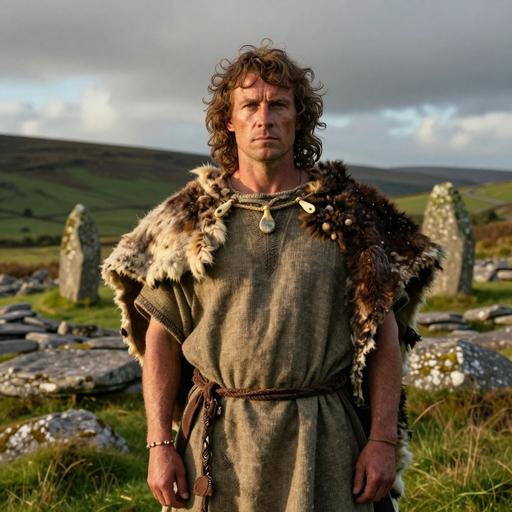
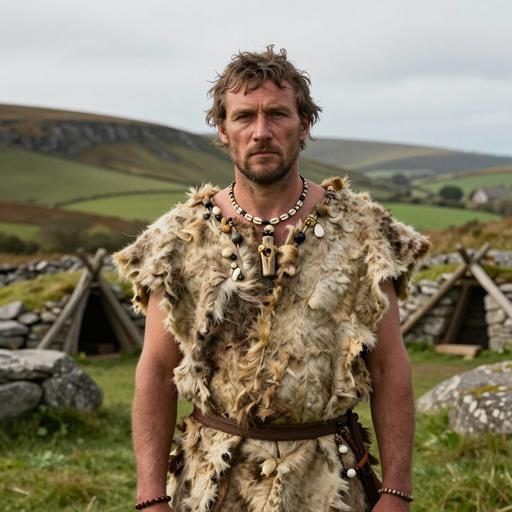
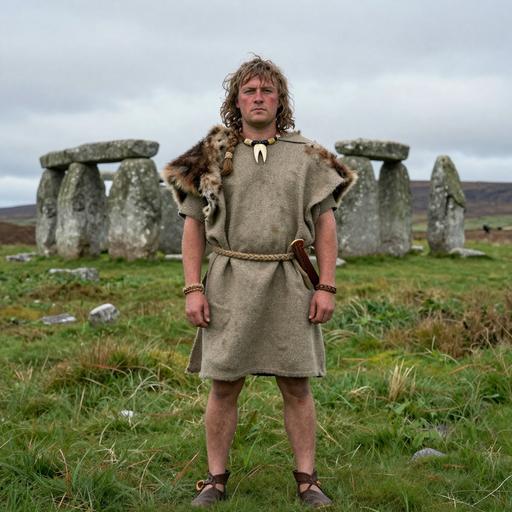
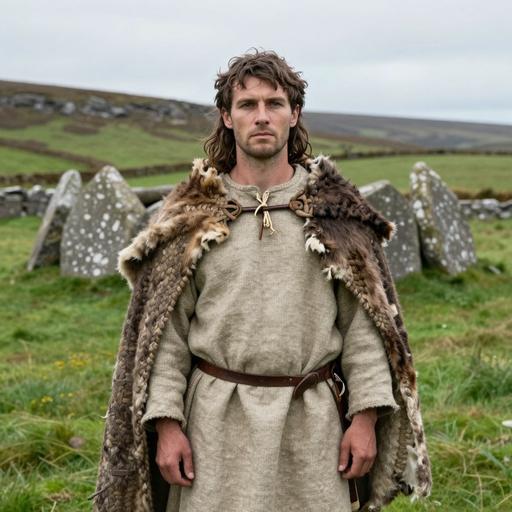
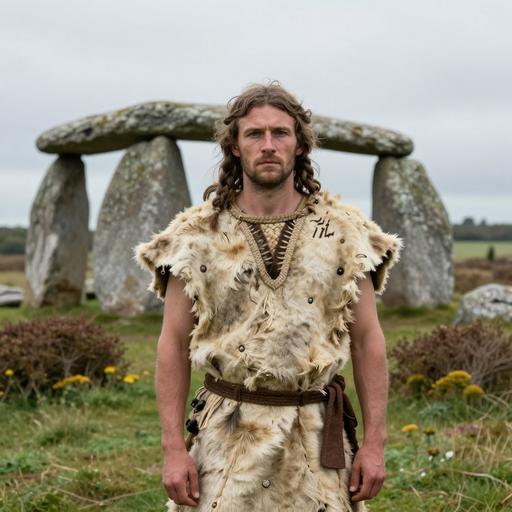
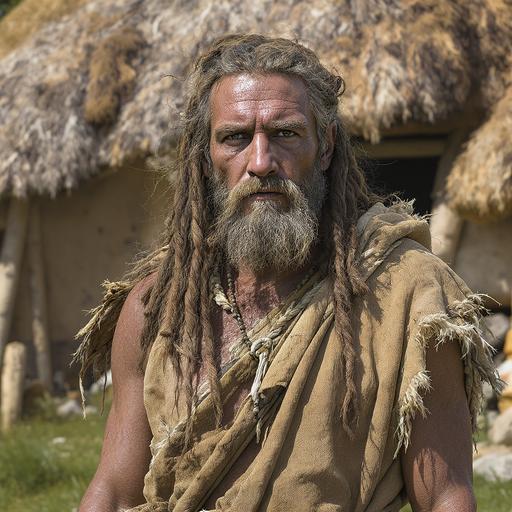
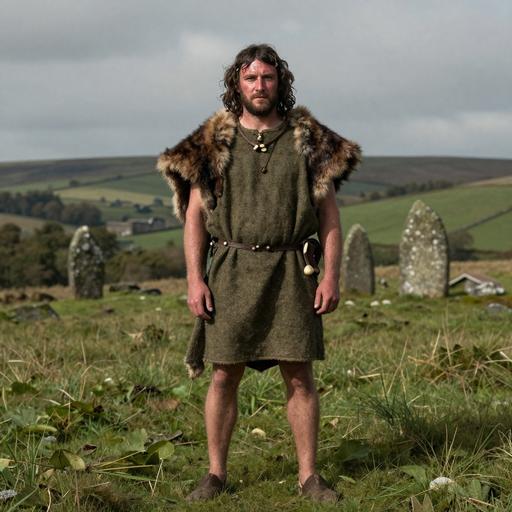
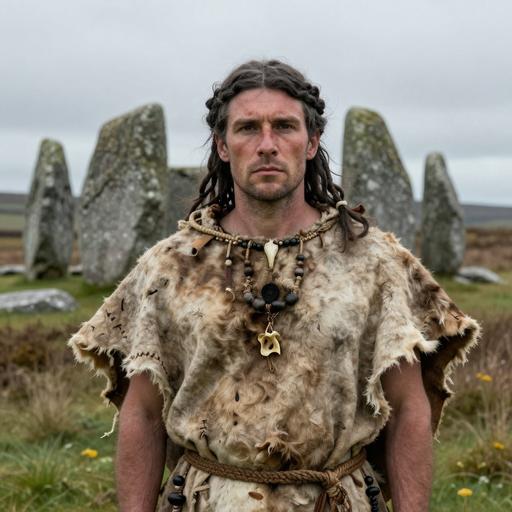
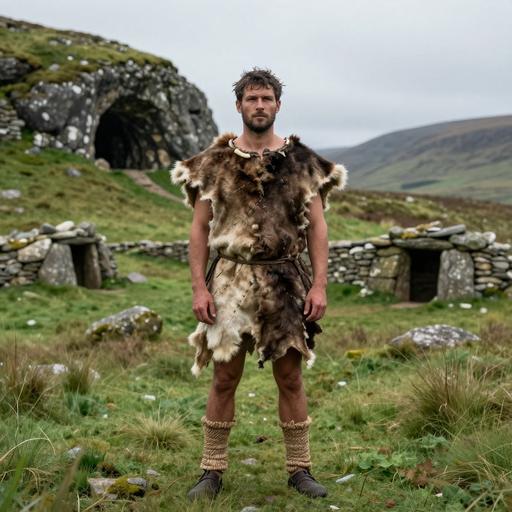
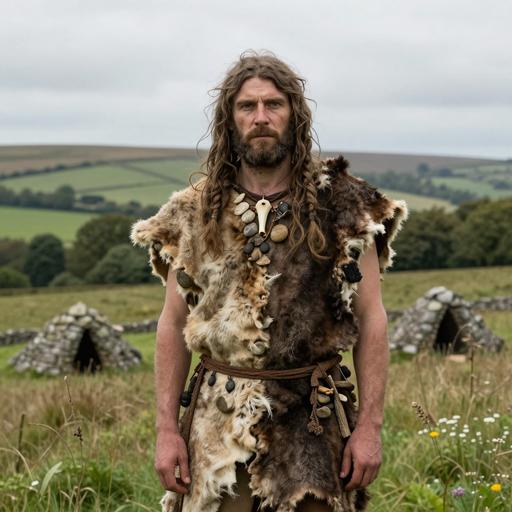
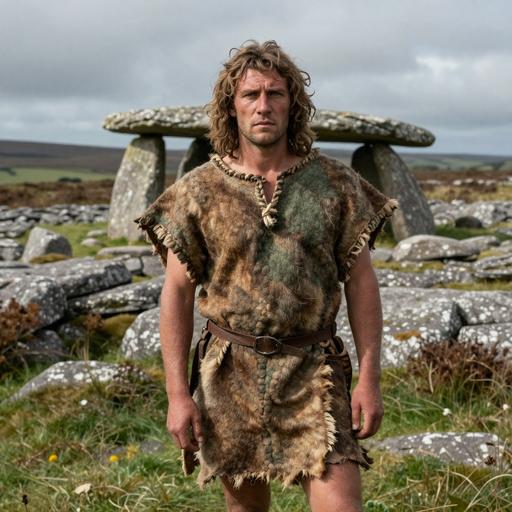
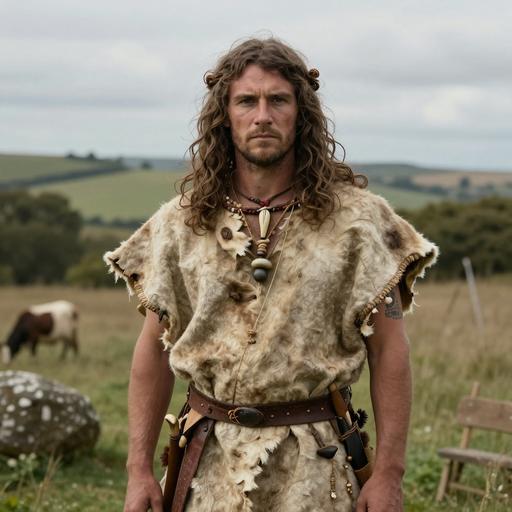
Portraits are AI-generated illustrations. Sample labels and accession IDs identify the reference records.

Portrait Sample Country Era Date Culture Y-DNA Match
AI-generated illustrative portrait of MN individual, Ireland. Limerick. Annagh, Ireland (3,707-3,378 BCE)
Sample ID: ANN2
Ireland Ireland MN 3707-3378 calBCE (4810±60 BP, GrA-1707) Irish Middle Neolithic I2a1b1a1a Direct
AI-generated illustrative portrait of Scotland LIA individual, Scotland. East Lothian. North Berwick. Law Road, United Kingdom (97-107 BCE)
Sample ID: I16418
United Kingdom Scotland LIA 97 calBCE - 107 calCE (2019±30 BP, SUERC-94959) Scottish Iron Age I2a1b1a1a1 Subclade
AI-generated illustrative portrait of England MIA individual, England. Kent. Cliffs End Farm, United Kingdom (372-197 BCE)
Sample ID: I14866
United Kingdom England MIA 372-197 calBCE (2212±21 BP) [R_combine: (2215±30 BP, SUERC-24071), (2244±27 BP, OxA-20795), (2176±27 BP, SUERC-97414)] Middle Iron Age British I2a1b1a1a1 Subclade
AI-generated illustrative portrait of Scotland MBA individual, Scotland. Pabbay Mor, United Kingdom (1,445-1,268 BCE)
Sample ID: I2655
United Kingdom Scotland MBA 1445-1268 calBCE (3105±35 BP, SUERC-9172) Scottish Bronze Age I2a1b1a1a1 Subclade
AI-generated illustrative portrait of England Bell Beaker-ohigh EEF individual, England. County Durham. Stockton-on-Tees. Windmill Fields, United Kingdom (2,202-1,978 BCE)
Sample ID: I1767
United Kingdom England BellBeaker 2202-1978 calBCE (3705±35 BP, OxA-8651) Bell Beaker I2a1b1a1a1 Subclade
AI-generated illustrative portrait of England EBA individual, England. Oxfordshire. Radley. Barrow Hills, United Kingdom (2,288-1,776 BCE)
Sample ID: I7638
United Kingdom Chalcolithic to Early Bronze Age England 2288-1776 calBCE (3660±80 BP, OxA-4357) British Chalcolithic I2a1b1a1a1 Subclade
AI-generated illustrative portrait of LN individual, Ireland. Sligo. Carrowkeel, Ireland (2,834-2,466 BCE)
Sample ID: CAK68
Ireland Ireland LN 2834-2466 calBCE (4031±37 BP, UBA-30808) Irish Late Neolithic I2a1b1a1a1 Subclade
AI-generated illustrative portrait of Wales N individual, Wales. Denbighshire. Llanferres. Orchid Cave, United Kingdom (2,876-2,680 BCE)
Sample ID: I16491
United Kingdom Wales N 2876-2680 calBCE (4170±100 BP, OxA-3817) Welsh Neolithic I2a1b1a1a1 Subclade
AI-generated illustrative portrait of LN individual, Ireland. Sligo. Carrowkeel, Ireland (2,883-2,625 BCE)
Sample ID: CAK531
Ireland Ireland LN 2883-2625 calBCE (4160±38 BP, UBA-38306) Irish Late Neolithic I2a1b1a1a1 Subclade
AI-generated illustrative portrait of LN individual, Ireland. Sligo. Carrowkeel, Ireland (3,013-2,890 BCE)
Sample ID: CAK532
Ireland Ireland LN 3013-2890 calBCE (4321±30 BP, OxA-35326) Irish Late Neolithic I2a1b1a1a1 Subclade
PATERNAL LINEAGE · ANCIENT DNA

Ancient lineage evidence map

Follow parent clades toward this branch and explore where ancient carriers were found.

Loading ancient observations…

Markers are archaeological find locations. A dashed connector is an uncertain, proposed geographic transition between consecutive branches supported by multiple dated observations; it is not an exact travel route, birthplace or proof of direct descent. Parent-clade samples may belong to other descendant branches. Gaps remain where evidence is insufficient. Sample dates differ from haplogroup formation dates.

Reference profile

Carrier Distribution Map

Geographic distribution of 33 ancient DNA samples (direct and subclade carriers of I2A1B1A1A)

Direct carrier Subclade carrier
Time Period Filter
All Time Periods
Showing all samples
Reference profile

Temporal Distribution

Distribution of carriers across archaeological periods

Reference profile

Geographic Distribution

Counts by recorded sample country. These reflect the available reference selection, not population frequencies.

Reference profile

Country × Era Distribution

Compare recorded sample counts across countries and archaeological periods. Select a populated cell to inspect a sample.

Data

Data & Provenance

Source information and data quality

Last Updated 2026-06-17
Confidence Score 50/100
Coverage Low

Data Source

Classification, estimated dates and geographic context reflect the recorded reference data and may change as evidence is revised. Sample coverage is uneven; recorded locations and archaeological associations do not establish personal origin or cultural identity.