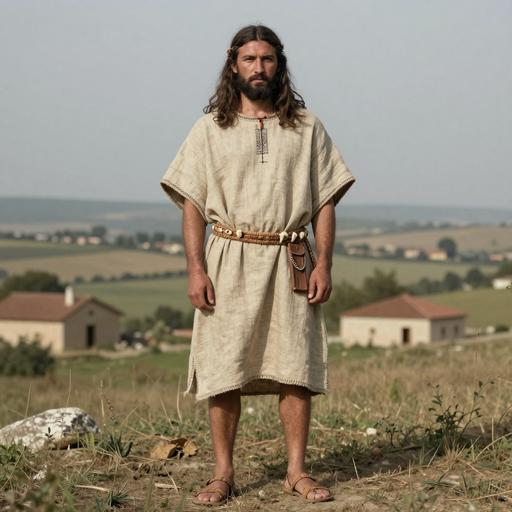
The Story
The journey of Y-DNA haplogroup I2
Origins and Evolution
Y-DNA haplogroup I2 is a major branch of haplogroup I (M170), which itself descends from the broader IJ lineage that arose after modern humans left Africa. Haplogroup I2 is generally interpreted as an ancient European lineage that diversified during the Upper Paleolithic or early Mesolithic, with many of its downstream branches strongly linked to European hunter-gatherer populations.
Population genetics research indicates that haplogroup I2 was widespread in prehistoric Europe, especially among Mesolithic groups, but its distribution changed substantially with the arrival of Neolithic farmers and later Bronze Age migrations. While some I2 lineages declined in frequency in many western and central European regions, others persisted or expanded, especially in the Balkans, the Carpathian Basin, eastern Europe, and parts of Scandinavia.
Subclades
Haplogroup I2 contains several important subclades, many of which have distinct geographic patterns:
- I2a: One of the most prominent branches, particularly frequent in the Balkans and some neighboring regions.
- I2b: Found at lower frequencies in parts of central, northern, and eastern Europe.
- Additional regional sub-branches exist and can show strong founder effects in specific populations.
Some I2 lineages are especially informative for studying the continuity of prehistoric European hunter-gatherer ancestry and later population structure in post-glacial Europe.
Geographical Distribution
Today, haplogroup I2 is found most often in Southeastern Europe, especially the Balkan Peninsula, with meaningful frequencies also present in Central Europe, Eastern Europe, Scandinavia, and the British Isles. Outside Europe, it is mainly encountered through modern migration and diaspora.
Its distribution is highly non-uniform, reflecting a long history of demographic bottlenecks, regional survival, and localized expansions. Some I2 subclades show strong associations with specific populations, including South Slavic groups, Bosnians, Croatians, Serbs, Montenegrins, Romanians, Ukrainians, Poles, Germans, Scandinavians, and Britons/Irish at lower but detectable levels.
Historical and Cultural Significance
Haplogroup I2 is one of the key paternal lineages for studying European prehistory because it is strongly associated with Mesolithic and post-Mesolithic hunter-gatherer ancestry. Its persistence into the Neolithic and Bronze Age suggests that not all prehistoric European male lineages were replaced by incoming farmer or steppe populations; instead, many were incorporated into later ancestral blends.
In the Balkans, some I2 lineages likely experienced significant demographic growth during the late prehistoric and historic periods, possibly aided by founder effects and regional continuity. In northern Europe, I2 is often interpreted as part of the broader genetic legacy of early post-glacial recolonization and later population interactions.
Although haplogroup I2 is not exclusive to any single named archaeological culture, it has been observed in contexts related to Mesolithic foragers, Neolithic and Copper Age societies, and later Bronze Age and Iron Age European populations. Its modern distribution reflects both deep ancestry and more recent historical expansions.
Conclusion
Y-DNA haplogroup I2 is an ancient and historically important European paternal lineage with deep roots in prehistoric hunter-gatherer populations. Its present-day concentration in southeastern Europe, along with lower-frequency presence across much of Europe, makes it a key marker for reconstructing the peopling and demographic history of Europe from the Mesolithic through the historic era.
Key Points
- Origins and Evolution
- Subclades
- Geographical Distribution
- Historical and Cultural Significance
- Conclusion