Y-DNA · Paternal lineage

I2A1B1A1A2

Y-DNA Haplogroup I2A1B1A1A2

A reference profile for one lineage branch. Shared haplogroups do not establish a family relationship or cultural identity.

Reference profile

Branch background

Historical context for Y-DNA lineage branch I2A1B1A1A2

Origins and Evolution

Y-DNA haplogroup I2a1b1a1a2 is a derived subclade within the wider I2 paternal lineage, one of the major European Y-chromosome branches with deep roots in prehistoric Europe. Its broader ancestral background is associated with European hunter-gatherer populations, especially those that survived and later expanded from refugial areas in southeastern Europe after the Last Glacial Maximum.

At this level of the phylogenetic tree, I2a1b1a1a2 likely represents a relatively recent Bronze Age or late Neolithic-era diversification within the southeastern European sphere, though the exact coalescence time can vary depending on the phylogenetic resolution used. Because it is nested within an already regionally structured Balkan lineage, its origin is best understood as part of the complex paternal continuity and reshaping of populations in the Balkans and adjacent areas during the transition from prehistory to history.

Subclades

As a downstream intermediate clade, I2a1b1a1a2 may contain or connect to more terminal branches that are not always widely reported in public datasets. In general, subclades of this lineage are expected to show strong founder effects, geographic clustering, and lineage expansion within patrilineal communities. This pattern is typical of many Balkan-associated I2 branches, where localized continuity and repeated bottlenecks produced fine-scale Y-DNA structure.

Geographical Distribution

The distribution of I2a1b1a1a2 is expected to be highest in southeastern Europe, especially in the Balkans, with secondary presence in surrounding regions that received historical migration from Balkan and Slavic source populations. Like many descendants of the I2 macrolineage, it may be found at lower frequencies across Central Europe, Eastern Europe, the Baltic region, and parts of Northern Europe due to medieval and post-medieval dispersals.

In modern datasets, such lineages are often detected among populations with known historical ties to Balkan, Slavic, Germanic, and broader European mixed ancestry. Its broader pattern suggests both deep regional continuity and later secondary dispersal.

Historical and Cultural Significance

The paternal history of I2a1b1a1a2 is tied to the long demographic history of Europe, especially the postglacial re-expansion of hunter-gatherer lineages and their later integration into farming and post-farming societies. While this subclade itself cannot be assigned with certainty to a single archaeological culture, its broader I2 background is often discussed in relation to Mesolithic European hunter-gatherers, Neolithic Balkan communities, and later Bronze Age and Iron Age population turnovers.

In the Balkans, lineages within I2 became especially important due to long-term regional continuity and the persistence of indigenous paternal lines through later migrations and state formations. Some descendant branches spread beyond the Balkans during the Slavic expansions, medieval population shifts, and modern diaspora movements, contributing to its presence in multiple parts of Europe and overseas.

Relationship to Other Haplogroups

I2a1b1a1a2 belongs to a paternal clade that is often contrasted with other major European Y-DNA lineages such as R1a, R1b, E1b1b, and J2. These lineages reflect different layers of European population history, including hunter-gatherer continuity, Neolithic farmer expansion, and later steppe-related demographic processes.

Within the broader I2 tree, this branch is genealogically closest to other southeastern and central European I2 subclades. These related lineages often show overlapping geographic distributions, especially in the Balkans, Carpathian Basin, and parts of East-Central Europe.

Conclusion

Y-DNA haplogroup I2a1b1a1a2 is a European paternal subclade with southeastern origins, best interpreted as part of the deep and layered genetic history of the Balkans. Its distribution reflects a combination of ancient regional continuity, founder effects, and later expansions into surrounding European regions.

Key Points

  • Origins and Evolution
  • Subclades
  • Geographical Distribution
  • Historical and Cultural Significance
  • Relationship to Other Haplogroups
Reference profile

Tree & Relationships

Phylogenetic context and subclades

Evolution Path

Follow the recorded parent branches toward I2A1B1A1A2. Dates are estimates and can change as reference data is revised.

Steps Haplogroup Age Estimate Archaeology Era Time Passed Immediate Descendants Tested Modern Descendants Ancient Connections
1 I2A1B1A1A2 Current ~8,000 years ago Neolithic 8,000 years 0 0 0
2 I2A1B1A1A ~10,000 years ago Neolithic 10,000 years 2 0 33
3 I2A1B1A1 ~12,000 years ago Neolithic 12,000 years 2 8 0
4 I2A1B1A ~12,000 years ago Neolithic 12,000 years 2 109 5
5 I2A1B1 ~12,000 years ago Neolithic 12,000 years 2 118 0
6 I2A1B ~14,000 years ago Mesolithic 14,000 years 2 213 22
7 I2A1 ~16,000 years ago Mesolithic 16,000 years 2 933 0
8 I2A ~18,000 years ago Mesolithic 18,000 years 2 1,551 24
9 I2 ~20,000 years ago Mesolithic 20,000 years 2 1,785 10
10 I ~25,000 years ago Paleolithic 25,000 years 4 3,486 79

Subclades (0)

Terminal branch - no recorded subclades

Siblings (1)

Other branches from the same parent haplogroup

Reference profile

Where in the World

Geographic distribution and modern presence

Recorded origin

Southeastern Europe

Modern Distribution

The populations where Y-DNA haplogroup I2a1b1a1a2 is found include:

  1. Balkan populations
  2. East Slavic populations
  3. Central European populations
  4. Scandinavian populations
  5. German and Austrian populations
  6. British and Irish populations
  7. Baltic populations
  8. Recent diaspora populations in the Americas and Australia

Regional Presence

Southeastern Europe (Balkans) High
Central Europe (bordering Balkans) Low
Southern Europe (Mediterranean islands) Low
Western Europe Low
Northern Europe Low
Southeastern Europe High
Eastern Europe Moderate
Historical context

A branch through time

Estimated formation in a broad historical timeline. Period markers provide context and do not imply a connection with particular cultures.

  1. ~10k years ago

    Neolithic Revolution

    Agriculture begins, settled communities form

  2. ~8k years ago

    Haplogroup I2A1B1A1A2

    Estimated formation of this Y-DNA branch; dates and locations are reference estimates.

    This branch
  3. ~5k years ago

    Bronze Age

    Metalworking, writing, and early civilizations

  4. ~3k years ago

    Iron Age

    Iron tools, expanded trade networks

  5. ~2.5k years ago

    Classical Antiquity

    Greek and Roman civilizations flourish

  6. Present

    Present Day

    Modern era

Reference profile

Archaeological context

Recorded archaeological associations for Y-DNA branch I2A1B1A1A2

Recorded associations

These labels describe archaeological contexts recorded for reference samples linked to I2A1B1A1A2. An association does not establish that all carriers belonged to a culture or followed a particular migration route.

British Megalithic British Neolithic England_EN_Megalithic Irish Middle Neolithic Scottish Neolithic Welsh Neolithic
Culture assignments are based on archaeological context of ancient DNA samples and may represent regional associations during specific time periods.
Reference profile

Sample Catalog

1 direct carrier of haplogroup I2A1B1A1A2

1 shown · 1 matching samples

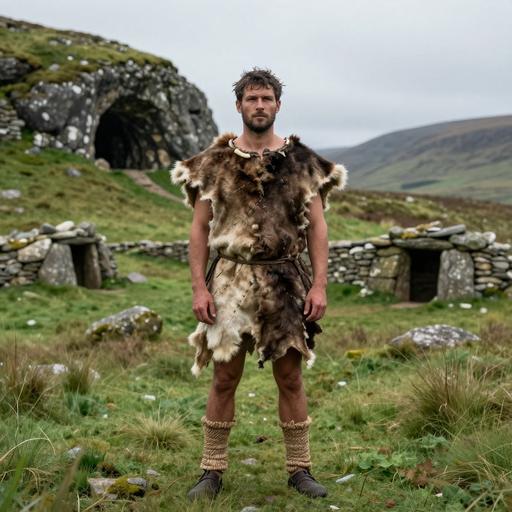
Portraits are AI-generated illustrations. Sample labels and accession IDs identify the reference records.

Portrait Sample Country Era Date Culture Y-DNA Match
AI-generated illustrative portrait of Celtic individual, Scotland. Distillery Cave, United Kingdom (3,710-3,632 BCE)
Sample ID: I2691
United Kingdom Scotland N 3710 BCE - 3632 BCE Scottish Neolithic I2a1b1a1a2 Direct
PATERNAL LINEAGE · ANCIENT DNA

Ancient lineage evidence map

Follow parent clades toward this branch and explore where ancient carriers were found.

Loading ancient observations…

Markers are archaeological find locations. A dashed connector is an uncertain, proposed geographic transition between consecutive branches supported by multiple dated observations; it is not an exact travel route, birthplace or proof of direct descent. Parent-clade samples may belong to other descendant branches. Gaps remain where evidence is insufficient. Sample dates differ from haplogroup formation dates.

Reference profile

Carrier Distribution Map

Geographic distribution of 1 ancient DNA sample (direct and subclade carriers of I2A1B1A1A2)

Direct carrier
Time Period Filter
All Time Periods
Showing all samples
Reference profile

Temporal Distribution

Distribution of carriers across archaeological periods

Reference profile

Geographic Distribution

Counts by recorded sample country. These reflect the available reference selection, not population frequencies.

Reference profile

Country × Era Distribution

Compare recorded sample counts across countries and archaeological periods. Select a populated cell to inspect a sample.

Data

Data & Provenance

Source information and data quality

Last Updated 2026-06-17
Confidence Score 50/100
Coverage Low

Data Source

Classification, estimated dates and geographic context reflect the recorded reference data and may change as evidence is revised. Sample coverage is uneven; recorded locations and archaeological associations do not establish personal origin or cultural identity.